A Masterclass in Storytelling and Combat
Game Introduction
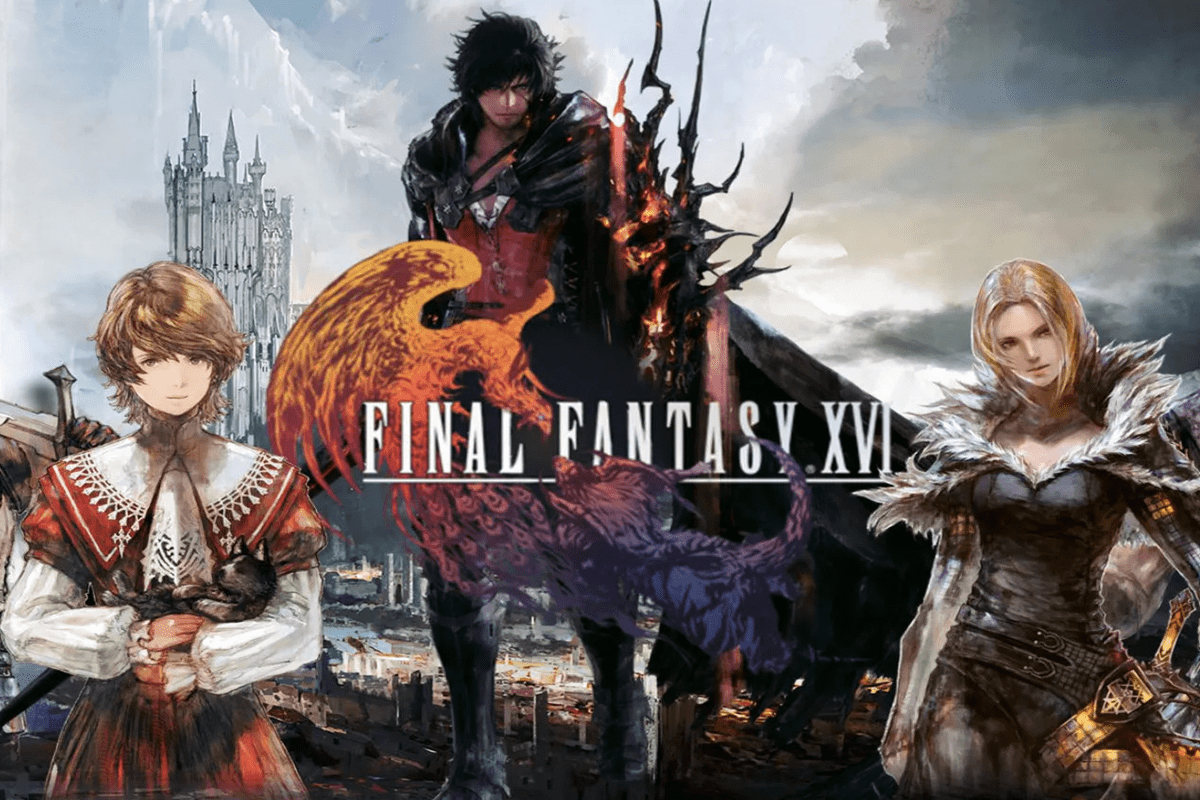
Since its inception, the Final Fantasy series has been synonymous with groundbreaking storytelling, memorable characters, and innovative gameplay. Final Fantasy XVI, the latest entry developed by Square Enix’s Creative Business Unit III, upholds this legacy and redefines it. Departing from traditional turn-based combat, the game embraces a full action and role-playing game (RPG) system while delivering a dark, politically charged narrative reminiscent of epic fantasies like Game of Thrones. Set in the war-torn realm of Valisthea, where nations clash over dominion of magical Crystals and god-like Eikons, Final Fantasy XVI weaves a tale of revenge, sacrifice, and redemption.
Early reviews have hailed it as one of the strongest entries in the franchise, praising its cinematic presentation, emotionally gripping story, and exhilarating combat. But does it truly stand tall among its legendary predecessors? This in-depth review explores every facet of the game, from its refined gameplay mechanics to its breathtaking visuals and sound design.
Gameplay: A Bold Leap into Real-Time Action
Final Fantasy XVI marks a significant evolution for the series with its shift to real-time combat. Gone are the turn-based battles of old—instead, players engage in fast-paced, skill-driven encounters that feel more akin to character action games like Devil May Cry than traditional JRPGs. The combat system, designed by Devil May Cry 5 veteran Ryota Suzuki, is fluid, responsive, and deeply satisfying.
Controlling protagonist Clive Rosfield, players unleash a mix of sword strikes, magical bursts, and devastating Eikon abilities. Each Eikon—summon creatures like Phoenix, Garuda, and Titan—grants Clive a unique set of skills that can be seamlessly chained together. Phoenix’s fiery dashes allow for swift aerial combos, while Titan’s earth-shattering punches deliver raw, brute force. The ability to switch between Eikons mid-battle keeps combat fresh and encourages experimentation, ensuring that no two fights feel the same.
One of the most engaging mechanics is the “Stagger” system, where relentless attacks overwhelm enemies, leaving them vulnerable to a finishing blow. This system rewards aggressive yet tactical play, pushing players to master dodges, counters, and ability rotations. While Clive is the only fully playable character, companions like Torgal the wolf and rebel leader Cidolfus Telamon provide valuable support in battle. Their AI is impressively competent, contributing meaningfully without overshadowing Clive’s role as the central combatant.
Beyond combat, the game offers a semi-open structure with linear main story missions and optional side content. The main quests are tightly paced, driving the narrative forward with cinematic set pieces and jaw-dropping boss battles. Side quests, while occasionally repetitive, flesh out the world and its inhabitants, offering glimpses into the lives of Valisthea’s oppressed citizens. Hunts—elite monster battles—and Chronolith Trials provide additional challenges for those seeking to test their combat prowess.
Character progression is more streamlined compared to past Final Fantasy titles. Clive earns Ability Points (AP) from battles, which can be spent on a branching skill tree to unlock new abilities. Weapons and accessories can be crafted or purchased, though the customization lacks the depth of games like Final Fantasy VII Remake. Despite this, the focus on action ensures that combat remains engaging and dynamic throughout the entire experience.
Story: A Dark and Emotionally Charged Epic
At its core, Final Fantasy XVI is a story of revenge, redemption, and the cost of power. The narrative follows Clive Rosfield, the disgraced firstborn son of the Archduke of Rosaria, as he embarks on a quest for vengeance after witnessing the destruction of his homeland and the death of his younger brother Joshua. The game’s plot unfolds across three major arcs, each delving deeper into Clive’s journey and the larger conflict engulfing Valisthea.
The first arc, set during Clive’s youth, establishes the tragic betrayal that sets his path in motion. The second arc sees him joining Cid’s rebel faction, a group fighting to liberate Bearers—magic-wielding outcasts enslaved by the ruling powers. The final arc unravels the mysteries of the Eikons and the true nature of Valisthea’s blight, culminating in a climactic confrontation that challenges Clive’s understanding of destiny and sacrifice.
What sets Final Fantasy XVI apart is its mature, often brutal storytelling. The game doesn’t shy away from themes of slavery, tyranny, and moral ambiguity, drawing clear inspiration from dark fantasy epics like Game of Thrones. Characters are richly developed, with motivations that blur the line between hero and villain. Clive’s growth from a broken man consumed by rage to a leader grappling with the weight of his actions is portrayed with remarkable depth, thanks in no small part to Ben Starr’s stellar voice performance.
Supporting characters like Cid and Benedikta further elevate the narrative, each bringing their own complexities to the table. Cid, voiced by Ralph Ineson, is a particular standout—a charismatic rebel leader whose wit and wisdom mask a weary soul. The Eikon battles, meanwhile, are narrative highlights, blending spectacle with emotional weight. These colossal clashes, such as Ifrit’s duel with Phoenix or Bahamut’s orbital laser assault, are as much about character drama as they are about visual grandeur.
Graphics and Sound: A Feast for the Senses
Final Fantasy XVI is a technical marvel, pushing the PlayStation 5 to its limits with stunning visuals and seamless performance. The game’s art direction is nothing short of breathtaking, from the gleaming spires of Sanbreque to the desolate wastelands ravaged by the Blight. Character models are exquisitely detailed, with lifelike facial animations that convey a wide range of emotions. Particle effects during combat—especially when summoning Eikon abilities—add a layer of visual splendor that makes every spell feel impactful.
Players can choose between two performance modes: Quality Mode, which prioritizes resolution and visual fidelity at 30 FPS, and Performance Mode, targeting 60 FPS for smoother gameplay. While Performance Mode occasionally suffers from frame rate dips during particularly chaotic scenes, the trade-off is well worth it for those who value fluid combat.
The auditory experience is equally impressive. Composer Masayoshi Soken, known for his work on Final Fantasy XIV, delivers a score that ranges from hauntingly melancholic to explosively triumphant. The English voice acting is exceptional, with motion-captured performances that add authenticity to every emotional beat. The sound design during Eikon battles—earth-shaking roars, crackling energy, and the sheer scale of auditory chaos—immerses players in the heat of these god-like confrontations.
Verdict
The Good
- Engaging Story – One of the most mature, emotionally charged narratives in Final Fantasy history, with Game of Thrones-level political intrigue.
- Revolutionary Combat – Fluid, fast-paced action with deep Eikon ability customization, designed by Devil May Cry 5’s Ryota Suzuki.
- Spectacular Eikon Battles – Jaw-dropping, cinematic clashes between god-like summons (e.g., Ifrit vs. Phoenix).
- Stellar Voice Acting – Ben Starr (Clive) and Ralph Ineson (Cid) deliver powerhouse performances.
- Breathtaking Visuals – PS5-powered graphics with lifelike character models, particle effects, and detailed environments.
- Masterful Soundtrack – Masayoshi Soken (FFXIV) blends orchestral grandeur with haunting melodies.
- Strong Replay Value – New Game+ (Final Fantasy Mode), Ultimaniac difficulty, and Chronolith Trials extend playtime.
The Bad
- Repetitive Side Quests – Filler fetch tasks dilute pacing despite meaningful lore payoffs.
- Streamlined RPG Mechanics – Less customization depth than FFVII Remake or classic entries.
- AI Companions Lack Depth – Party members can’t be controlled directly.
- Performance Mode Dips – Occasional frame-rate drops in 60 FPS mode during chaotic fights.
- Pacing Issues – Some story arcs feel rushed compared to others.
Genre and Release Details
Final Fantasy XVI is an action RPG released on June 22, 2023, for the PlayStation 5, and later was released for PC Games (Via Steam) on September 17, 2024. Its mature storytelling, real-time combat, and stunning presentation set a new standard for the genre, making it a must-play for fans and newcomers alike.
Final Fantasy XVI System Requirements
Minimum
- OS: Windows® 10 / 11 64-bit
- Processor: AMD Ryzen™ 5 1600 / Intel® Core™ i5-8400
- Memory: 16 GB RAM
- Graphics: AMD Radeon™ RX 5700 / Intel® Arc™ A580 / NVIDIA® GeForce® GTX 1070
- DirectX: Version 12
- Storage: 170 GB available space
- Additional Notes: 30FPS at 720p expected. SSD required. VRAM 8GB or above.
Recomended
- OS: Windows® 10 / 11 64-bit
- Processor: AMD Ryzen™ 7 5700X / Intel® Core™ i7-10700
- Memory: 16 GB RAM
- Graphics: AMD Radeon™ RX 6700 XT / NVIDIA® GeForce® RTX 2080
- DirectX: Version 12
- Storage: 170 GB available space
- Additional Notes: 60FPS at 1080p expected. SSD required. VRAM 8GB or above.