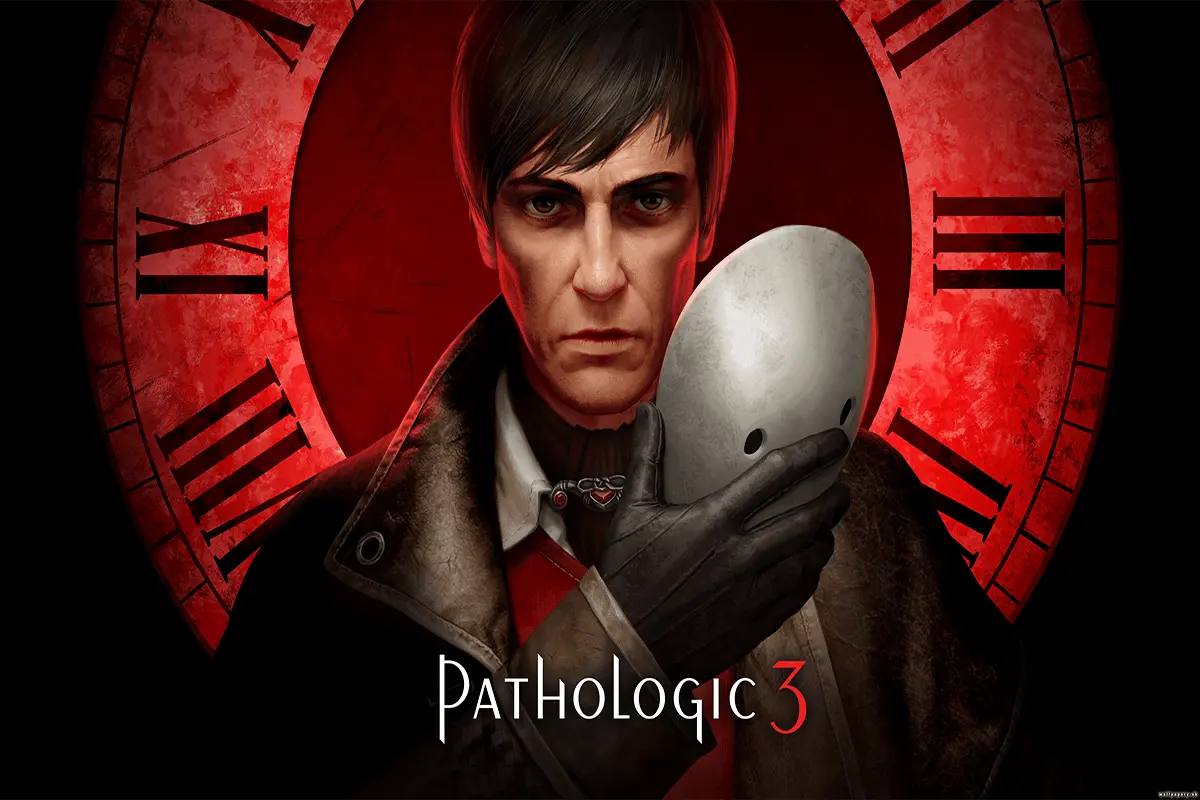
A Haunting Evolution of Psychological Survival Horror
Game Introduction
Pathologic 3 stands as one of the most intellectually demanding and emotionally intense releases in modern gaming. Developed as a continuation of a cult-classic franchise, the game builds upon its predecessors by delivering a deeply immersive experience that blends psychological horror, narrative-driven gameplay, and strategic survival systems. Set in a surreal, plague-ridden town on the Russian steppe, the game places players in the role of a doctor racing against time to save a dying population.
Unlike conventional survival titles, Pathologic 3 is less about physical endurance and more about moral conflict, mental resilience, and decision-making under pressure. It is a game that challenges not only the player’s skills but also their ethics, forcing them to confront difficult choices with lasting consequences. Through its layered storytelling and innovative mechanics, the game has been widely praised as a bold and thought-provoking evolution of the genre.
Gameplay and Features
The gameplay of Pathologic 3 is built around a unique fusion of time management, psychological survival, medical simulation, and narrative decision-making, creating an experience that feels both complex and deeply immersive.


Protagonist and Characters
Players assume the role of Daniil Dankovsky, also known as “The Bachelor,” a highly intellectual but emotionally detached doctor from the capital. His personality plays a central role in shaping the gameplay experience, as his arrogance and logical mindset often clash with the superstitions and desperation of the townspeople.
The town itself is populated by a wide cast of characters, including infected citizens, suspicious officials, and enigmatic figures tied to the town’s secrets. Each character has their own motivations, and interactions are driven by branching dialogue systems that can alter relationships and outcomes.
Core Gameplay Loop
The game operates on a strict 12-day timeline, during which players must attempt to stop a deadly plague from wiping out the town.
Each day introduces new challenges, including:
- Diagnosing infected patients
- Managing limited medical resources
- Investigating the origins of the disease
- Enforcing policies such as quarantines and curfews
- Navigating dangerous, infected districts
This structured progression creates constant urgency, as time becomes the most valuable resource.
Time Manipulation System
One of the most innovative features in Pathologic 3 is its time-travel mechanic. Players can revisit past decisions and alter outcomes, effectively reshaping the narrative.
However, this system is not without consequences. Changing events can lead to unforeseen ripple effects, forcing players to carefully weigh their choices. The inclusion of a “mind map” system allows players to visualize how decisions are interconnected, adding a strategic layer to storytelling.
Medical Simulation and Diagnosis
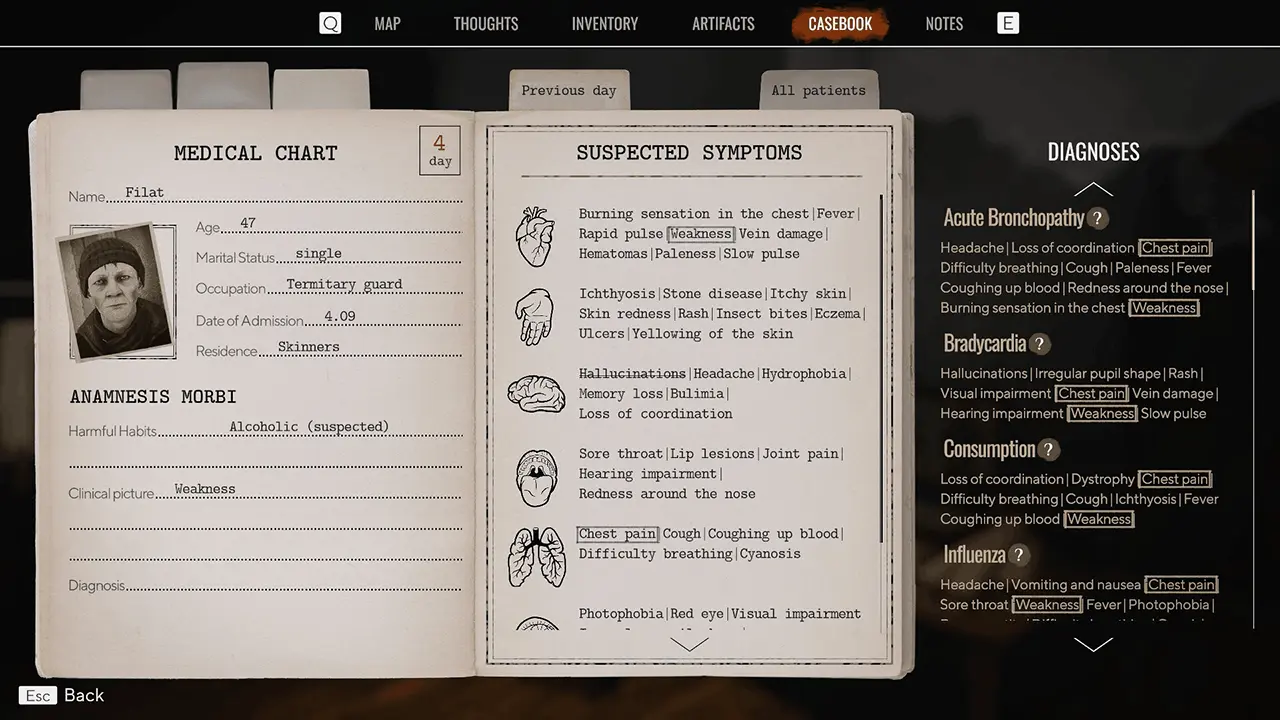
Unlike traditional survival games, Pathologic 3 emphasizes medical gameplay. Players must examine patients, analyze symptoms, and prescribe treatments.
This system functions almost like a detective mechanic, requiring players to:
- Gather information through observation and dialogue
- Cross-reference symptoms
- Experiment with treatments
- Manage hospital operations
The realism and complexity of this system make it one of the most distinctive features of the game.
Sanity and Psychological Systems
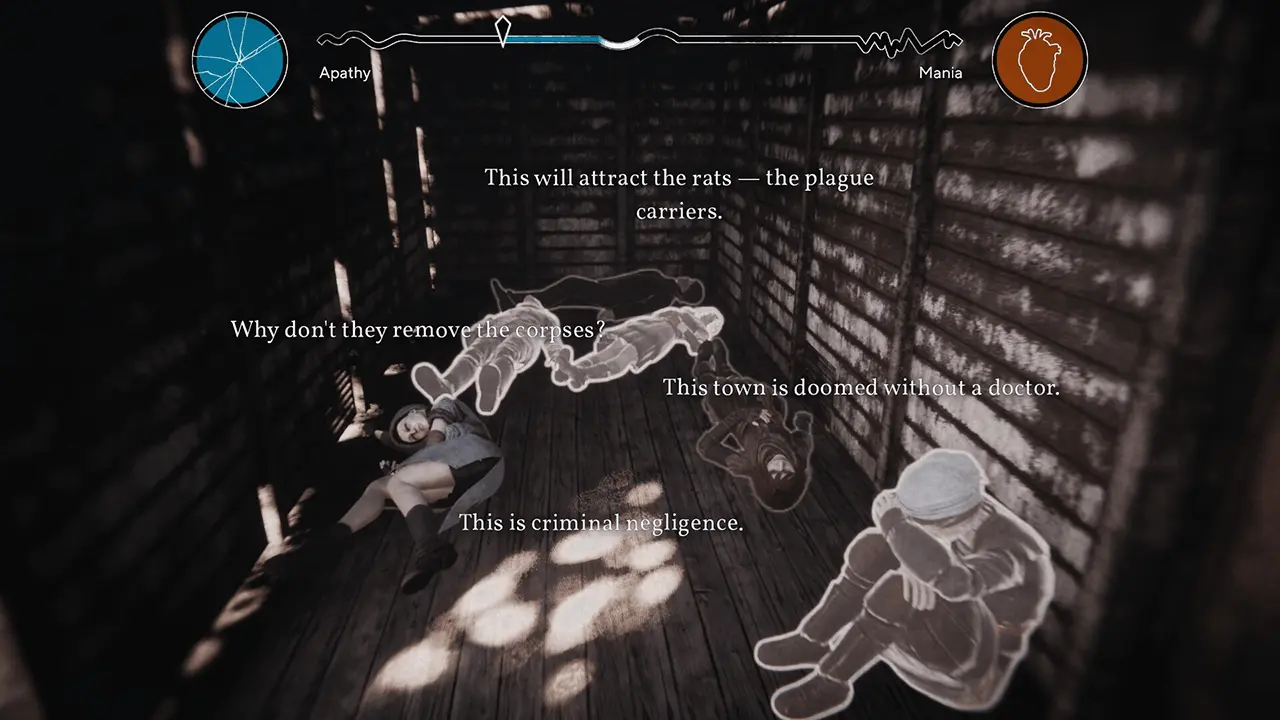
The traditional survival elements of hunger and thirst have been replaced with a psychological system based on Apathy and Mania.
- Apathy slows the character and reduces effectiveness
- Mania increases instability but can enhance certain actions
Balancing these states becomes critical, as the protagonist’s mental condition directly affects gameplay performance and decision-making.
Decree and Authority System
Players are given the power to influence the town through decrees. These include enforcing quarantines, deploying patrols, and controlling the distribution of medicine.
This system introduces a strategic governance element, where decisions can stabilize or destabilize entire districts. It also adds moral complexity, as harsh measures may save lives but damage trust.
Exploration and World Interaction
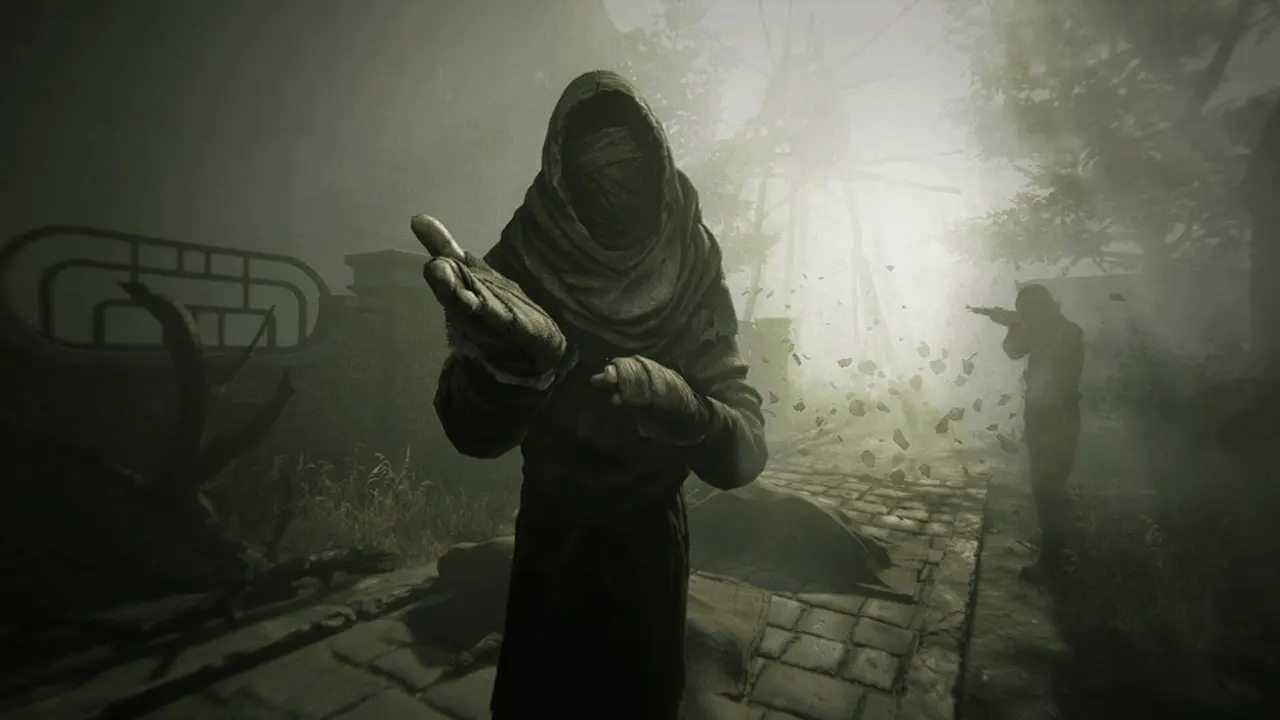
The town is divided into districts, each with its own level of infection and danger. As the plague spreads, areas become increasingly hazardous, filled with hostile entities and environmental threats.
Players must explore these مناطق to gather resources, uncover clues, and complete objectives. However, exploration is always risky, as the environment itself can be deadly.
Combat and Survival
Combat exists but is intentionally minimal. Players can use weapons primarily for self-defense or intimidation rather than confrontation.
In many cases, avoiding conflict is the better option, reinforcing the game’s focus on strategy and survival rather than action.
Mission Structure and Narrative Choices
Rather than traditional missions, the game features interconnected objectives driven by narrative progression. These include:
- Investigating mysterious deaths
- Managing hospital patients
- Negotiating with key characters
- Deciding who receives limited resources
Every choice impacts the story, leading to multiple possible outcomes. The non-linear structure ensures that no two playthroughs are identical.
Story Narrative
The story follows Daniil Dankovsky, a doctor obsessed with defeating death, who arrives in a remote town to investigate rumors of immortality.
Upon his arrival, he discovers that the town is on the brink of collapse due to a mysterious plague known as the Sand Pest. With only twelve days to find a cure, he becomes entangled in a web of political intrigue, cultural conflict, and supernatural phenomena.
As the narrative unfolds, players uncover secrets about the town’s past, the nature of the disease, and the forces controlling events behind the scenes. The introduction of time manipulation adds a unique twist, allowing players to revisit critical moments and reshape the story.
The narrative is deeply philosophical, exploring themes of mortality, sacrifice, and the limits of human understanding. It is not a straightforward tale but a layered experience that rewards careful attention and exploration.
Graphics and Sound Design
Visually, Pathologic 3 maintains the series’ signature surreal and theatrical style while introducing modern graphical enhancements. The environments are richly detailed, with a strong emphasis on atmosphere and mood.
The town feels alive yet decaying, with each district reflecting the progression of the plague. Lighting and environmental effects contribute to a sense of unease, reinforcing the game’s horror elements.
Sound design plays an equally important role. Ambient audio, unsettling music, and environmental sounds create a constant sense of tension. The soundtrack, influenced by haunting compositions, enhances the emotional impact of key moments.
While some technical inconsistencies exist, the overall presentation succeeds in delivering a deeply immersive experience.
Verdict
The Good
- Deep and intellectually engaging narrative
- Innovative time manipulation mechanics
- Unique blend of survival, medical simulation, and strategy
- Strong atmosphere and psychological depth
- High replayability with multiple outcomes
The Bad
- Steep learning curve for new players
- Technical issues and occasional bugs
- Non-linear storytelling can feel confusing
- Limited combat may not appeal to action-focused players
Release Date and Platforms
Pathologic 3 was officially released on January 9, 2026, and is available on PC, PlayStation 5, and Xbox Series X/S.
The game launched with generally favorable reviews and quickly gained attention for its unique approach to storytelling and gameplay. Its availability across modern platforms ensures accessibility for a wide range of players.
Genre
The game belongs to a hybrid genre that combines survival, adventure, and psychological horror.
However, it goes beyond traditional genre definitions by incorporating elements of detective gameplay, narrative RPG mechanics, and simulation systems. This blend creates a distinctive experience that appeals to players seeking depth and complexity rather than straightforward action.
Developer and Publisher
Pathologic 3 is developed by Ice-Pick Lodge and published by HypeTrain Digital.
The studio is known for creating unconventional and thought-provoking games, and this title continues that tradition. Their focus on narrative depth and experimental mechanics has solidified their reputation within the industry.
Pathologic 3 System Requirements
Minimum System Requirements
- OS: Windows 7/8/10/11 (64-bit)
- Processor: i3 / Ryzen 5
- Memory: 8 GB RAM
- Graphics: NVIDIA GeForce GTX 960
- DirectX: Version 11
- Storage: 25 GB available space
- Sound Card: Integrated
- Additional Notes: 64-bit OS is required
Recommended System Requirements
- OS: Windows 7/8/10 (64-bit)
- Processor: i7 / Ryzen 7
- Memory: 16 GB RAM
- Graphics: NVIDIA GeForce GTX 2070
- DirectX: Version 11
- Storage: 25 GB available space
- Sound Card: Integrated
- Additional Notes: Plays best when loaded from an SSD. 64-bit OS is required