A Fresh Leap in Modern Platforming
Introduction
Big Hops emerges as one of the most refreshing indie platformers in recent years, confidently blending classic design philosophies with bold, experimental mechanics. Released at the start of 2026, the game quickly drew comparisons to genre-defining titles while carving out a unique identity of its own. At its core, Big Hops is a 3D action-platformer that emphasizes player freedom, creativity, and fluid movement rather than rigid level design.
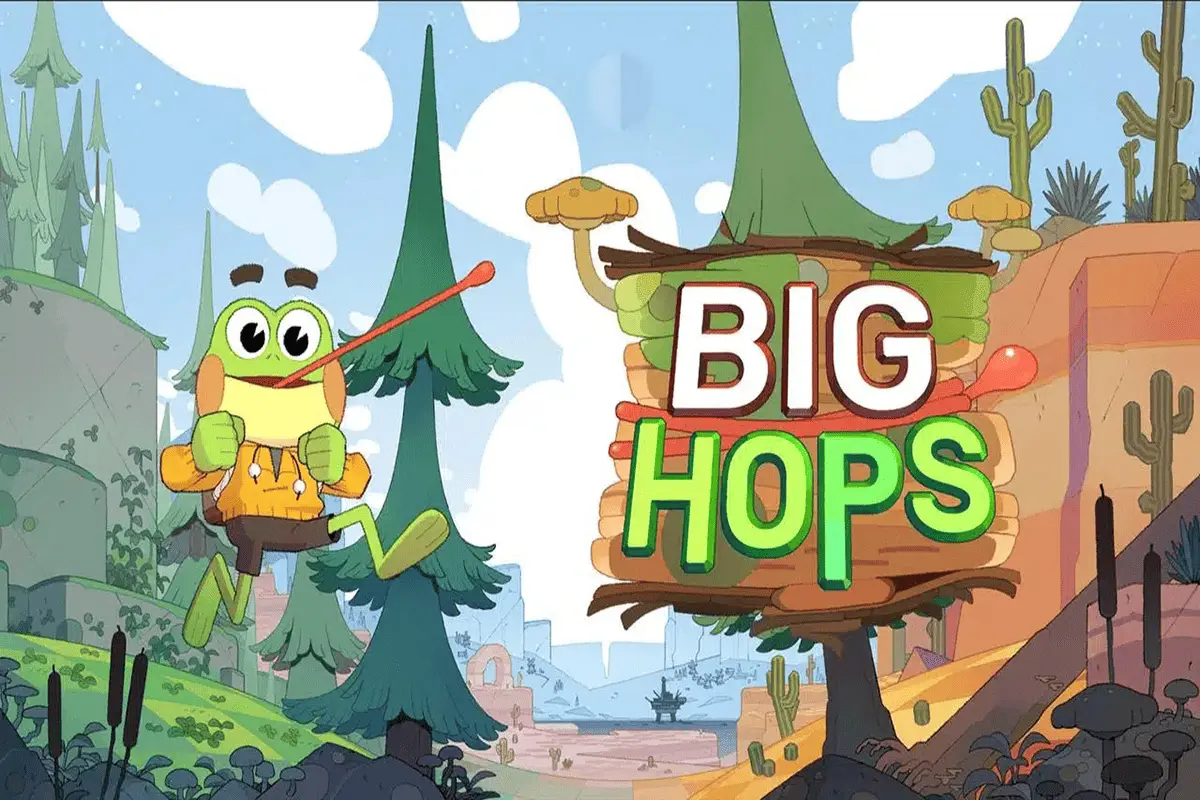
You play as Hop, a charming young frog whose peaceful life is disrupted when he is mysteriously taken from his home. What follows is an adventure filled with imaginative environments, quirky characters, and a gameplay system that encourages players to think beyond traditional platforming rules. Critics widely praised the game for its expressive movement system and open-ended level design, often describing it as a modern evolution of the genre rather than a simple homage.
Gameplay – Deep Mechanics, Creative Freedom, and Unique Systems
The gameplay in Big Hops is where the title truly shines, offering one of the most versatile and layered movement systems seen in a platformer. Unlike traditional games in the genre, which rely heavily on jumping precision alone, Big Hops introduces a multi-layered traversal system built around momentum, experimentation, and player creativity.
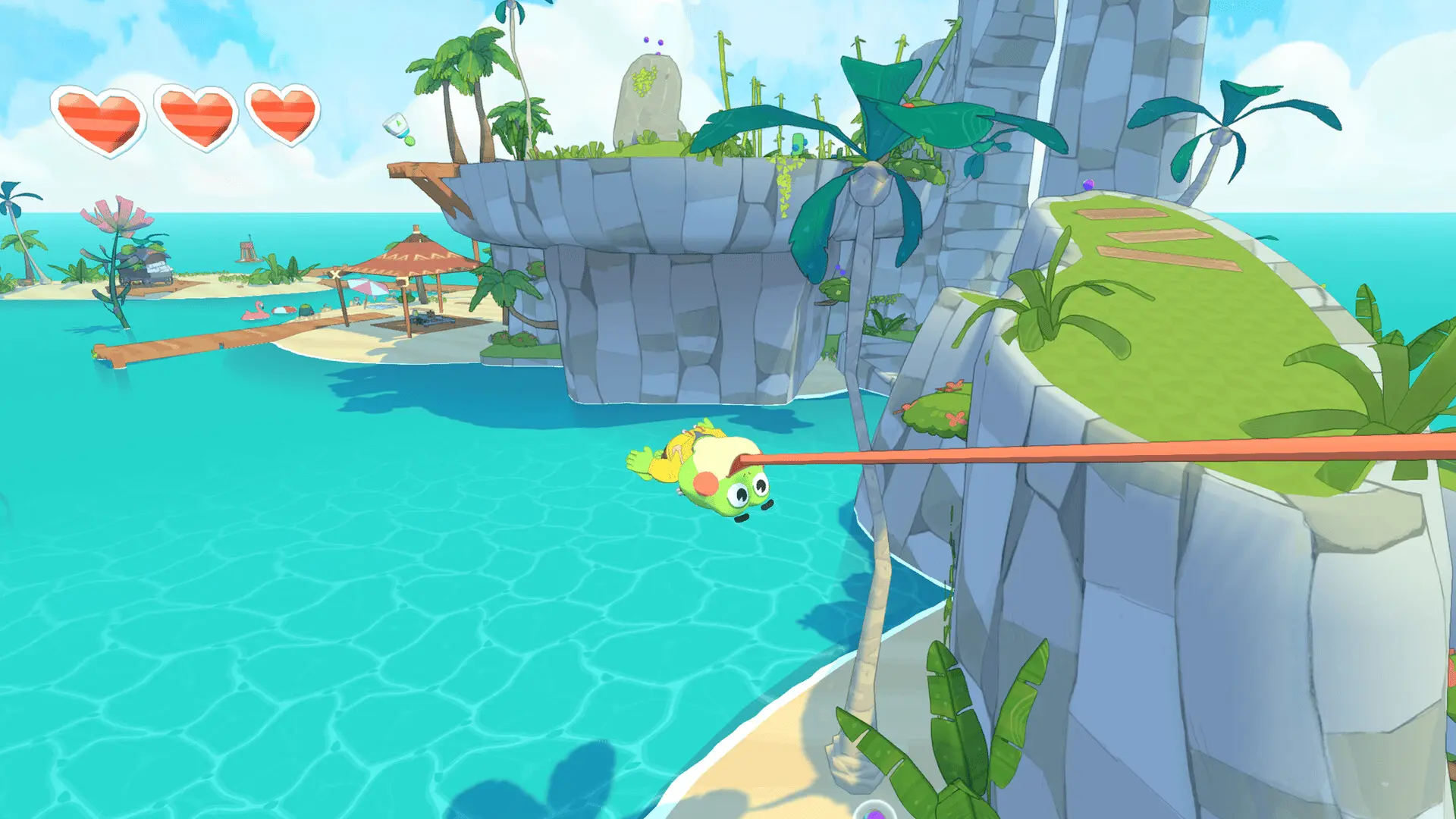
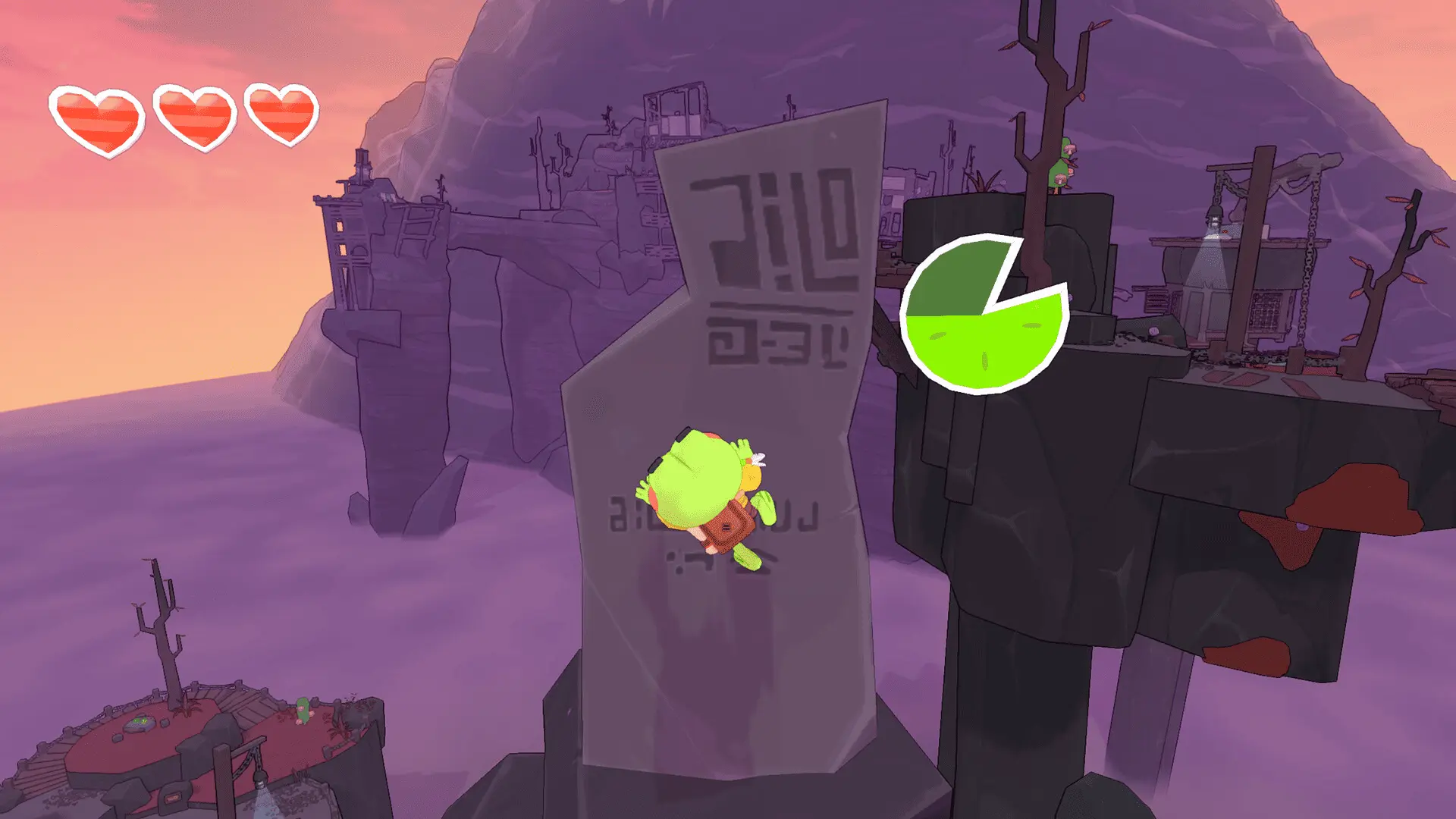
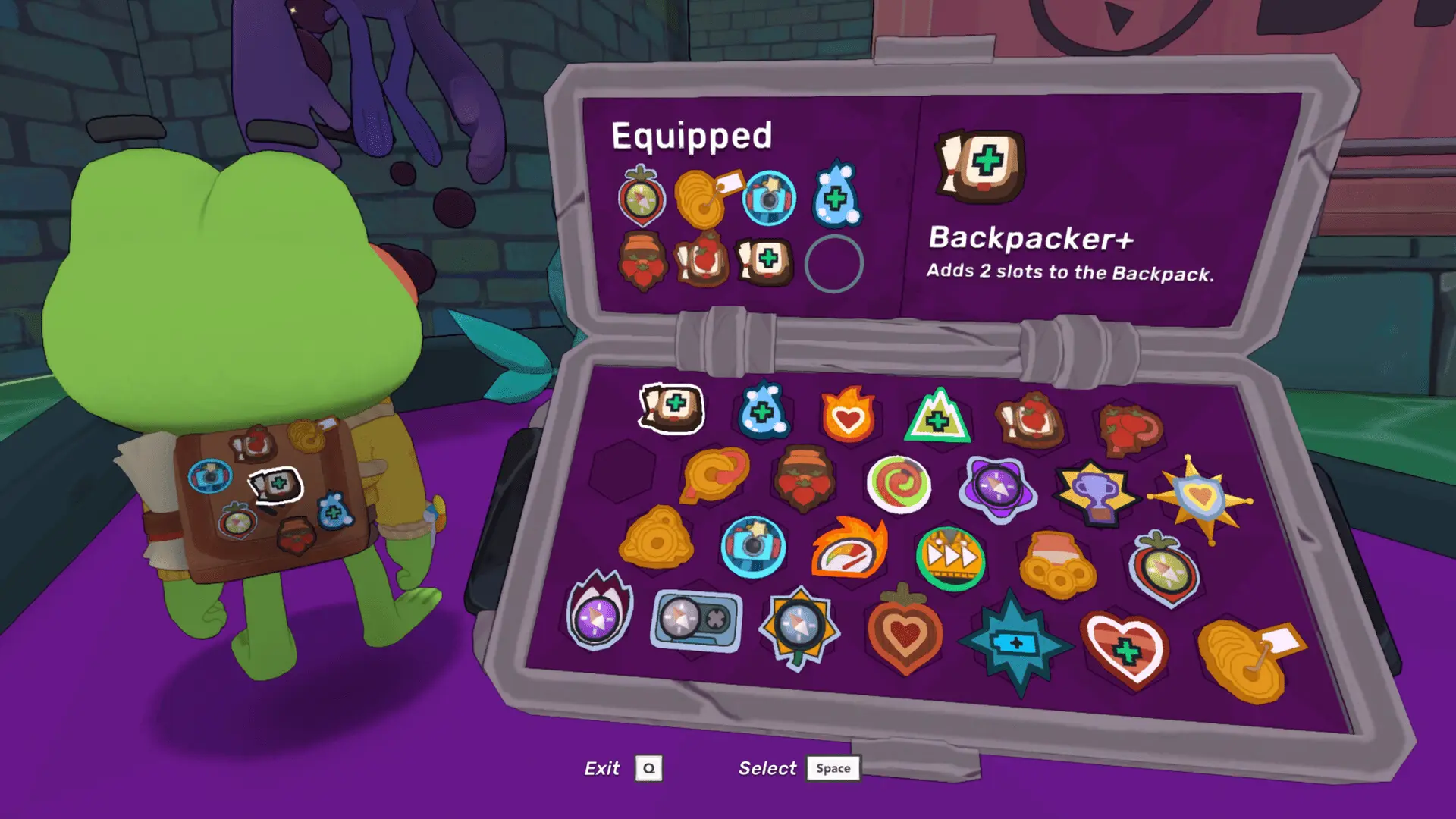
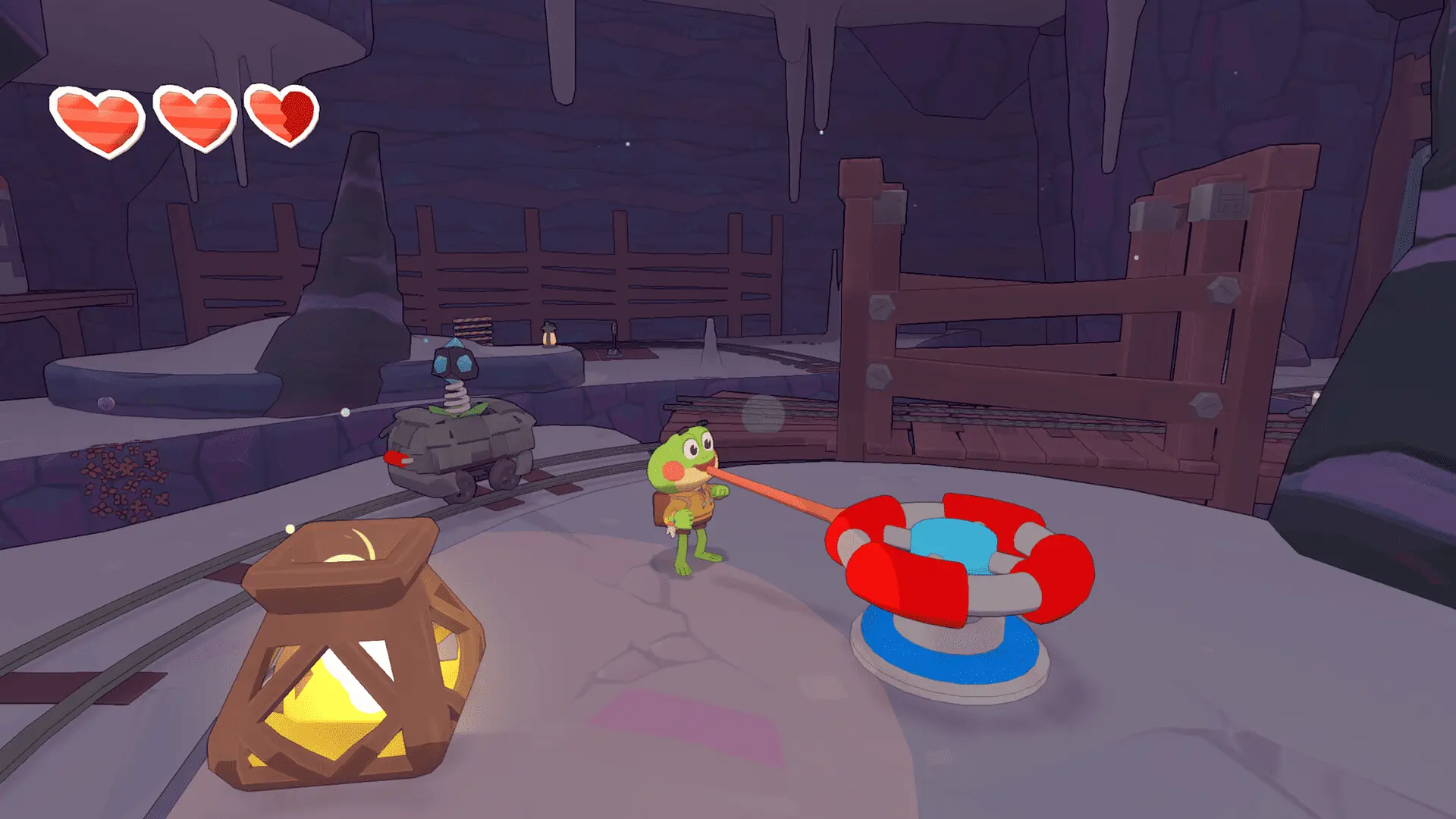
At the center of the gameplay is Hop’s incredibly dynamic moveset. Players can run, jump, double-jump, air-dash, dive, roll, wall-run, climb surfaces, swim, grind rails, and even slide across terrain to maintain speed. These abilities are not isolated mechanics—they seamlessly chain together, allowing players to build momentum and traverse environments in highly creative ways.
The standout feature, however, is Hop’s tongue mechanic. Acting as a grappling hook, interaction tool, and puzzle-solving device, the tongue is central to nearly every aspect of gameplay. Players can use it to latch onto distant objects, swing across gaps, pull items closer, activate switches, and even manipulate environmental objects. This system introduces a level of interactivity rarely seen in platformers, giving players multiple ways to approach challenges.
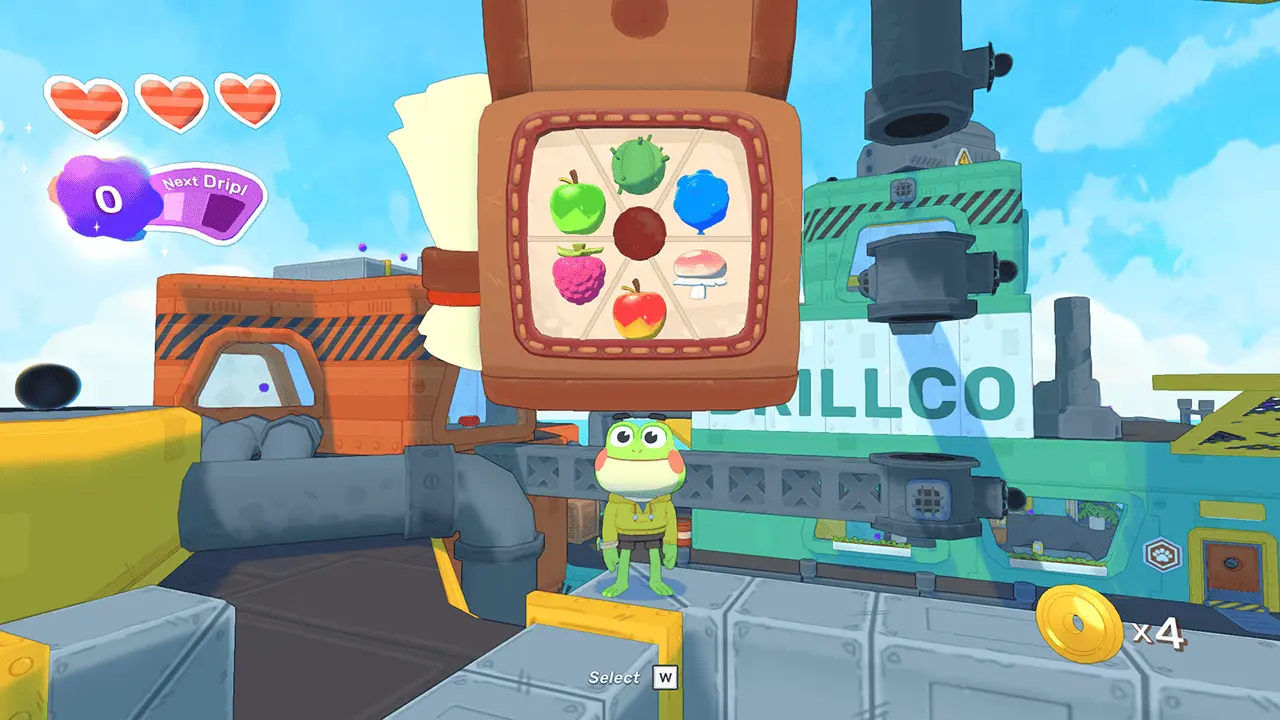
Another defining element is the vegetable-based traversal system. Throughout the game, players collect various types of vegetables, each with unique properties that alter the environment. For example, mushrooms create bounce pads, balloons generate temporary platforms, acorns grow climbable vines, and apples create custom grappling points. These tools allow players to literally build their own paths through levels, turning each puzzle into a sandbox of possibilities rather than a fixed solution.
The game’s mission structure revolves around exploration and collection. Players are tasked with gathering key items such as airship parts and mysterious collectibles while navigating diverse regions like deserts, oceans, and mountainous terrains. Each area introduces new mechanics, environmental hazards, and characters, ensuring that gameplay remains fresh throughout.
Characters also play an important role in gameplay progression. Hop is supported by a variety of NPCs, including a wise raccoon who assists in rebuilding an airship, and other inhabitants across different regions who provide quests, lore, and upgrades. The antagonist, Diss, serves as both a narrative driver and a mysterious force behind the game’s events, adding intrigue to the overall experience.
What makes Big Hops particularly impressive is its emphasis on player choice. Most challenges can be solved in multiple ways, and the game actively encourages experimentation. Whether you prefer speedrunning through levels using advanced movement techniques or carefully constructing paths using environmental tools, the game adapts to your playstyle.
Story Narrative
The narrative of Big Hops is both whimsical and emotionally grounded. The story begins with Hop being taken from his home by a mysterious trickster spirit named Diss. Although Diss claims to have an important mission, Hop’s primary goal is simple: return to his family.
As the journey unfolds, Hop explores a variety of interconnected worlds, each with its own unique inhabitants and stories. Along the way, he learns about the deeper motivations behind Diss’s actions and uncovers secrets tied to the world’s structure and existence.
A key narrative element is the collection of airship parts, which are required to rebuild a vessel capable of taking Hop home. This objective serves as the backbone of the story, guiding players through different regions while allowing for exploration and side activities.
The game also features subtle world-building, including political subplots and environmental storytelling, which add depth without overwhelming the player. The balance between lighthearted charm and underlying mystery makes the narrative engaging throughout.
Graphics and Sound Effects Improvements
Visually, Big Hops adopts a vibrant, stylized art direction that blends nostalgia with modern design. The environments are colorful and diverse, ranging from lush forests to surreal landscapes, each crafted with a painterly aesthetic. The character design, particularly Hop, is expressive and memorable, contributing to the game’s overall charm.
Recent improvements and updates have refined the game’s visuals, addressing early performance issues and enhancing stability across platforms. While initial versions—especially on the Switch—experienced technical hiccups, patches have significantly improved performance and reduced crashes.
The sound design complements the visuals perfectly. The game features a playful and atmospheric soundtrack that adapts to different environments, enhancing immersion. Voice acting is fully implemented, adding personality to characters and bringing the world to life, although some performances vary in quality.
Verdict
The Good
- Exceptionally fluid and expressive movement system
- Unique tongue-based mechanics that redefine interaction
- Creative level design with multiple solutions
- Charming characters and engaging world-building
- High replayability with sandbox-style gameplay
The Bad
- Early technical issues and bugs (especially at launch)
- Occasional inconsistency in physics and controls
- Some voice performances lack polish
Release Date and Platforms
Big Hops was officially released on January 12, 2026, marking a strong start to the year for indie gaming. The game launched simultaneously across multiple platforms, including PC, PlayStation 5, and Nintendo Switch, ensuring accessibility for a wide audience.
Genre
The game falls under the action-platformer genre, with strong elements of adventure and puzzle-solving. While its foundation lies in classic 3D platforming, Big Hops expands the genre by integrating sandbox-style exploration and physics-based interaction systems. This hybrid approach allows it to stand apart from traditional platformers, offering a more dynamic and player-driven experience.
Developer and Publisher
Big Hops was developed and published by Luckshot Games, an indie studio that has demonstrated remarkable ambition with this project. The studio’s attention to detail, combined with its willingness to experiment with unconventional mechanics, has resulted in a game that rivals even big-budget platformers in creativity and design.
Big Hops System Requirements
Minimum
- Requires a 64-bit processor and operating system
- OS: Windows 7
- Processor: Intel Core i5 2.8Ghz or higher
- Memory: 4 GB RAM
- Graphics: Geforce GTX 1060 or higher
- DirectX: Version 10
- Storage: 5 GB available space
Recommended
- Requires a 64-bit processor and operating system