A stunning HD-2D action RPG that blends nostalgic adventure with modern design
Game Introduction
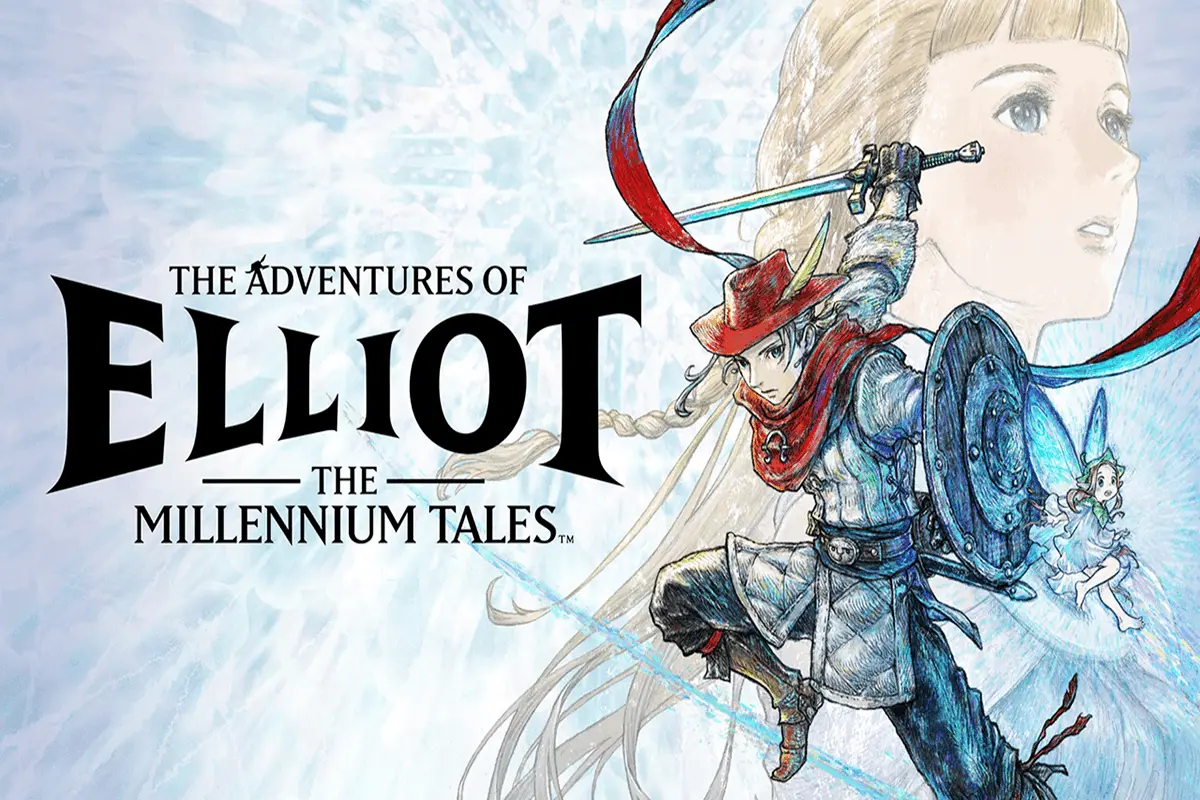
The Adventures of Elliot: The Millennium Tales arrives as one of the most ambitious HD-2D projects from Square Enix and Claytechworks, bringing together the nostalgic charm of classic action-adventure RPGs with the production values of a modern release. Created by the team behind Octopath Traveler and Bravely Default, the game represents a bold departure from turn-based combat, embracing real-time action while retaining the rich worldbuilding and pixel-art beauty that fans have come to expect from Team Asano.
Set across multiple eras of the continent of Philabieldia, the game follows the young adventurer Elliot and his fairy companion Faie as they uncover ancient ruins, battle monstrous foes, and unravel a conspiracy that spans a thousand years. Early impressions from major gaming outlets praised its Zelda-inspired exploration, accessible structure, and refined HD-2D presentation, making it one of the most talked-about RPGs of 2026.
The Adventures of Elliot: The Millennium Tales Gameplay
The gameplay of The Adventures of Elliot: The Millennium Tales is built around real-time combat, exploration, puzzle-solving, and time-travel mechanics. Unlike previous HD-2D titles from Team Asano, the game abandons traditional turn-based battles in favor of a more immediate action-adventure approach. Players control Elliot directly, attacking enemies with a variety of weapons, dodging incoming attacks, blocking with a shield, and executing well-timed parries.
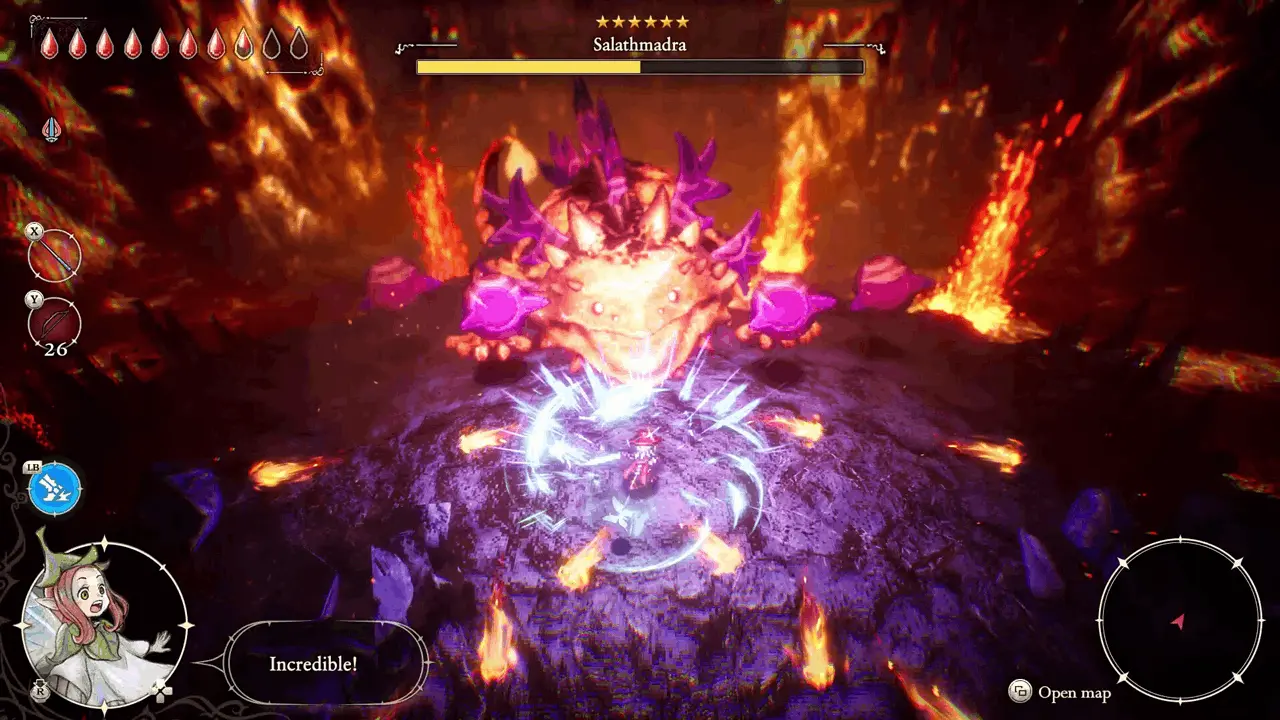
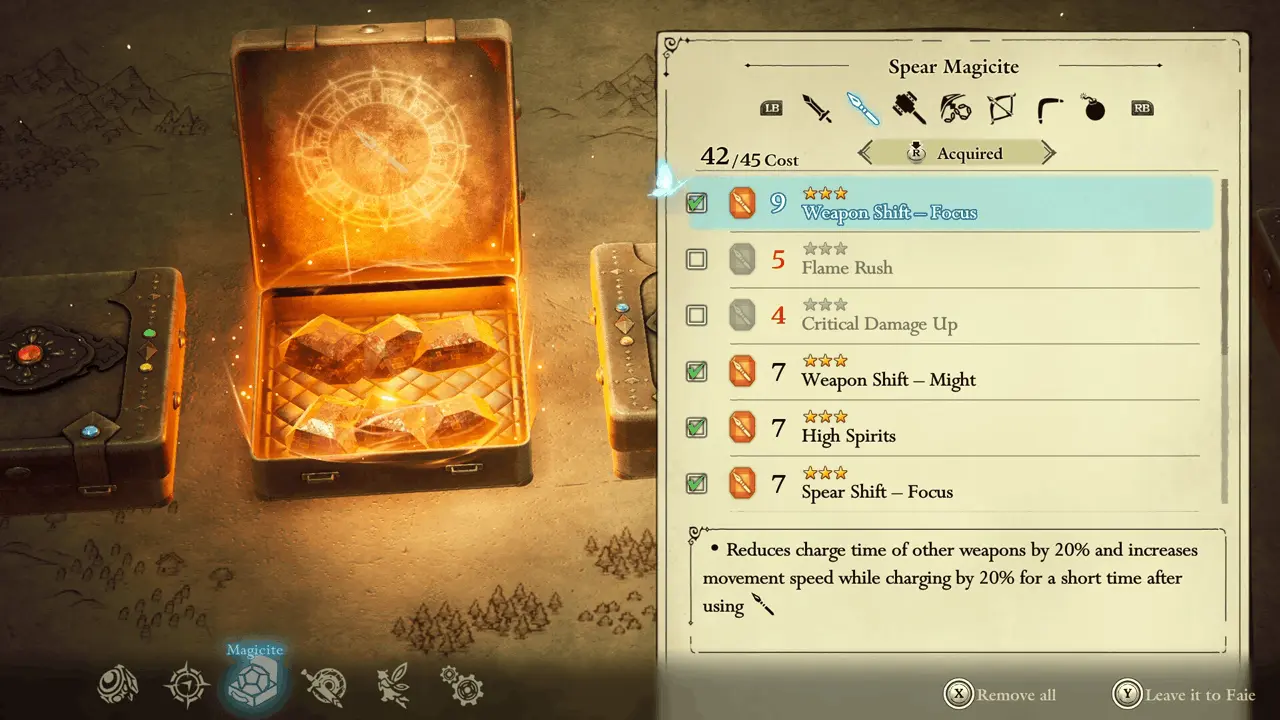
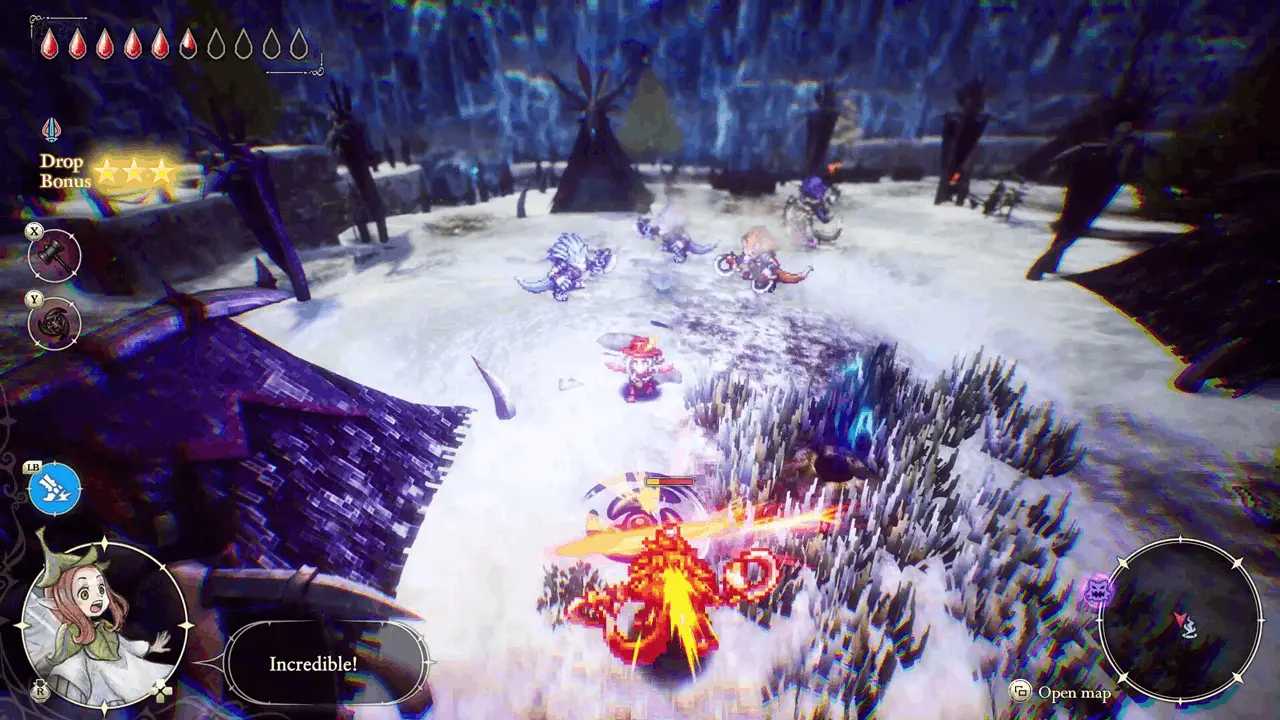
Elliot can equip two weapons at once and switch between them seamlessly during combat. The arsenal includes swords, bows, chains, sickles, hammers, and other specialized tools, each offering distinct attack patterns and strategic advantages. Weapons can be enhanced using Magicite fragments discovered in dungeons and hidden shrines, allowing players to customize their playstyle with elemental effects and additional abilities.
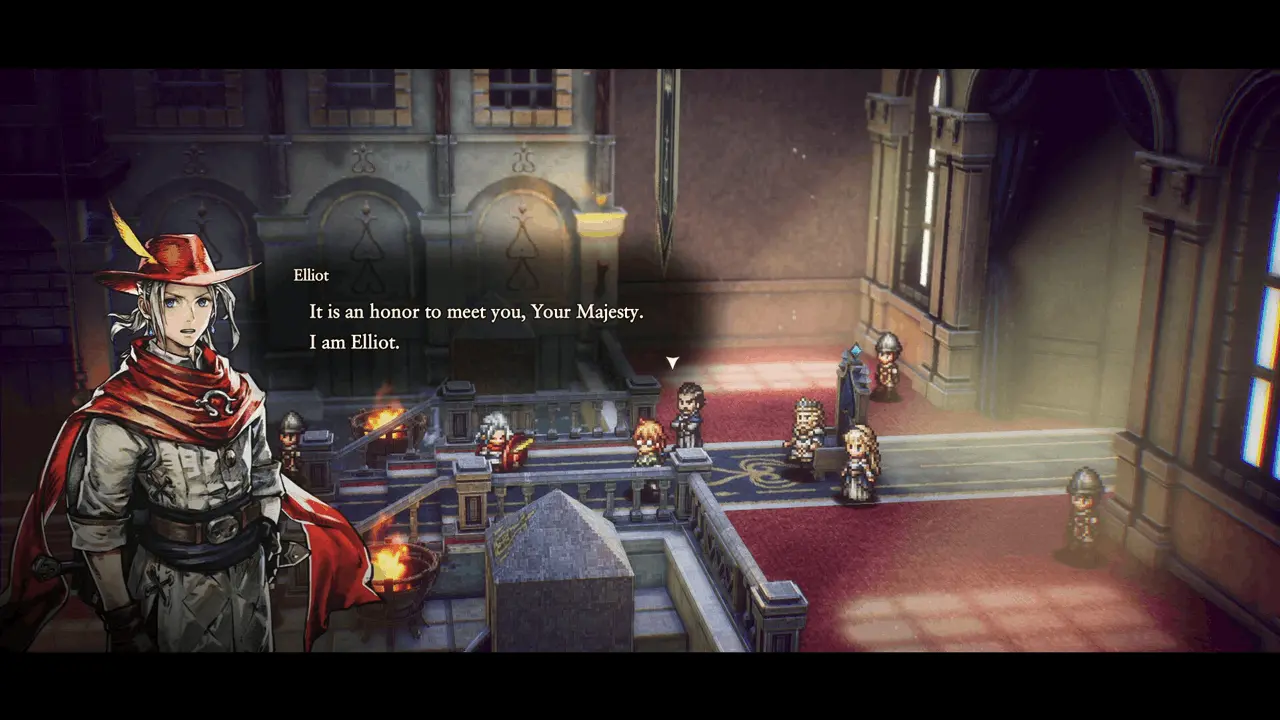
The game’s central characters are Elliot, the optimistic adventurer who serves as the protagonist; Faie, his fairy companion who assists in combat and puzzle-solving; and Princess Heuria, whose magic maintains the protective barrier around the Kingdom of Huther. Along the journey, Elliot encounters villagers, scholars, guardians of ancient ruins, beast tribes, and mysterious antagonists tied to the kingdom’s hidden history.
Faie is more than a simple companion. She can be controlled by a second player in optional co-op mode, making her an active participant in battles and environmental puzzles. Her abilities include retrieving distant items, manipulating magical objects, and helping Elliot navigate complex dungeon layouts. Elliot also possesses a warp ability that allows him to teleport instantly to Faie’s location, creating clever traversal opportunities.
The mission structure is varied and consistently engaging. Early objectives focus on exploring newly discovered ruins outside Huther’s protective walls. As the story progresses, missions expand into rescuing captives, investigating ancient temples, defeating powerful guardians, uncovering lost artifacts, and altering events across different time periods. Side quests add additional depth, ranging from helping villagers and recovering lost treasures to collecting hidden creatures and completing optional boss encounters.
Dungeons are a major highlight. Each area introduces unique puzzles involving switches, mirrors, bombs, moving platforms, and environmental hazards. The game encourages experimentation rather than relying on repetitive combat encounters. Exploration is rewarded with hidden chests, secret pathways, Magicite upgrades, and lore that expands the world’s history.
Combat remains accessible without sacrificing strategy. Boss battles often require players to read attack patterns, switch weapons, and make effective use of Faie’s support abilities. The absence of excessive complexity makes the game approachable for newcomers, while the customization systems provide enough depth for experienced RPG fans.
Story Narrative
The story begins in the Kingdom of Huther, humanity’s last major stronghold on the continent of Philabieldia. The kingdom survives behind a magical barrier maintained by Princess Heuria, protecting its people from the beast tribes that dominate the surrounding lands. When ancient ruins are discovered beyond the barrier, Elliot is chosen to investigate.
Accompanied by Faie, Elliot soon discovers a mysterious artifact known as the Doorway of Time. This relic allows him to travel across four different ages, revealing how past events continue to shape the present. What begins as a simple expedition gradually becomes a quest that spans centuries.
As Elliot journeys through the various eras, he uncovers forgotten civilizations, ruined kingdoms, ancient wars, and the origins of the continent’s current suffering. The narrative explores themes of legacy, sacrifice, and the consequences of choices made across generations.
The relationship between Elliot and Faie provides much of the game’s emotional warmth. Their interactions balance the larger stakes of the story with moments of humor and companionship. Princess Heuria also plays a significant role, guiding Elliot while carrying the burden of protecting Huther.
Rather than relying solely on exposition, the story unfolds through environmental details, character encounters, and discoveries made in each time period. This gradual revelation keeps the mystery compelling throughout the adventure.
Graphics and Sound Effects
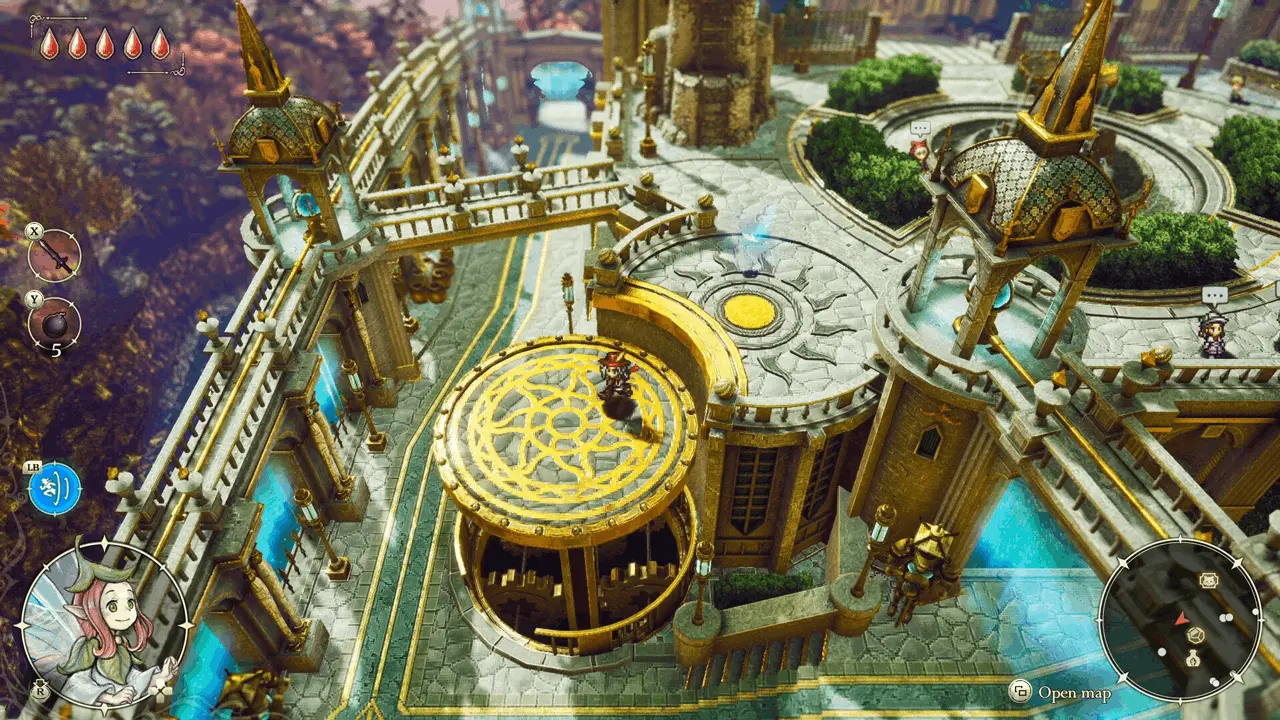
Visually, The Adventures of Elliot: The Millennium Tales is one of the most impressive examples of the HD-2D style to date. The game combines detailed pixel-art character sprites with dynamic lighting, volumetric effects, depth-of-field rendering, and fully realized 3D environments. Forests glow with atmospheric light, ancient ruins feel layered and expansive, and dungeons are filled with subtle visual details that enhance immersion.
Compared to earlier HD-2D titles, the environments feel more alive and interconnected. Camera movement is smoother, combat animations are more fluid, and environmental effects such as water, fire, and magical energy are significantly more refined.
The soundtrack complements the visuals beautifully. Orchestral compositions shift naturally between adventurous exploration, tense dungeon sequences, emotional story moments, and dramatic boss battles. Sound effects are equally polished, with satisfying weapon impacts, ambient environmental audio, and magical effects that add weight to every encounter.
Verdict
The Adventures of Elliot: The Millennium Tales is a confident and charming evolution of the HD-2D formula. By combining real-time combat, thoughtful exploration, engaging dungeons, and a time-spanning narrative, it delivers an adventure that feels both nostalgic and modern. While the story occasionally leans into familiar fantasy tropes, the game’s presentation, gameplay variety, and world design make it one of the standout RPGs of 2026.
For fans of classic action-adventure games and modern RPGs alike, Elliot’s journey is easy to recommend. It captures the spirit of older genre favorites while introducing enough new ideas to stand on its own.
The Good
- Beautiful and refined HD-2D presentation.
- Engaging real-time combat with multiple weapon types.
- Clever dungeon and puzzle design.
- Compelling time-travel exploration.
- Excellent soundtrack and atmospheric sound design.
- Strong replay value through secrets and optional content.
- Accessible gameplay that welcomes newcomers.
The Bad
- Story occasionally relies on familiar fantasy tropes.
- Some dialogue can feel overly lengthy.
- Later areas may feel less varied than the opening regions.
- Combat depth may not satisfy players seeking a more complex RPG system.
Release Date and Platforms
The Adventures of Elliot: The Millennium Tales was released on June 18, 2026. The game launched simultaneously on Nintendo Switch 2, PlayStation 5, Xbox Series X, Xbox Series S, and Windows PC via Steam and the Microsoft Store. The multi-platform release ensured that players across current-generation consoles and PC could experience the adventure with optimized performance, including higher resolutions and frame-rate options on more powerful hardware.
Genre
The game belongs primarily to the Action Role-Playing Game (Action RPG) genre, while also incorporating elements of action-adventure, puzzle-platforming, dungeon exploration, and light cooperative gameplay. Its structure draws inspiration from classic top-down adventure games, particularly older Zelda titles, while integrating RPG progression systems such as weapon customization and ability upgrades.
Developer and Publisher
The Adventures of Elliot: The Millennium Tales was developed by Square Enix in collaboration with Claytechworks, under the supervision of Team Asano. The game was published by Square Enix worldwide. This collaboration allowed the studio to evolve its signature HD-2D style into a fully realized action RPG, combining pixel-art characters with modern lighting, depth effects, and three-dimensional environments.
The Adventures of Elliot: The Millennium Tales System Requirements
Minimum
- Requires a 64-bit processor and operating system
- OS: Windows® 11
- Processor: AMD Ryzen™ 3 3100 / Intel® Core™ i3-8100
- Memory: 16 GB RAM
- Graphics: AMD Radeon™ RX 5500 XT / Intel® Arc™ A580 / NVIDIA® GeForce® GTX 1650
- DirectX: Version 12
- Storage: 20 GB available space
Recommended
- Requires a 64-bit processor and operating system
- OS: Windows® 11
- Processor: AMD Ryzen™ 3 3100 / Intel® Core™ i5-8600K
- Memory: 16 GB RAM
- Graphics: AMD Radeon™ RX 5600XT / Intel® Arc™ A580 / NVIDIA® GeForce® GTX 1660 Ti
- DirectX: Version 12
- Storage: 20 GB available space