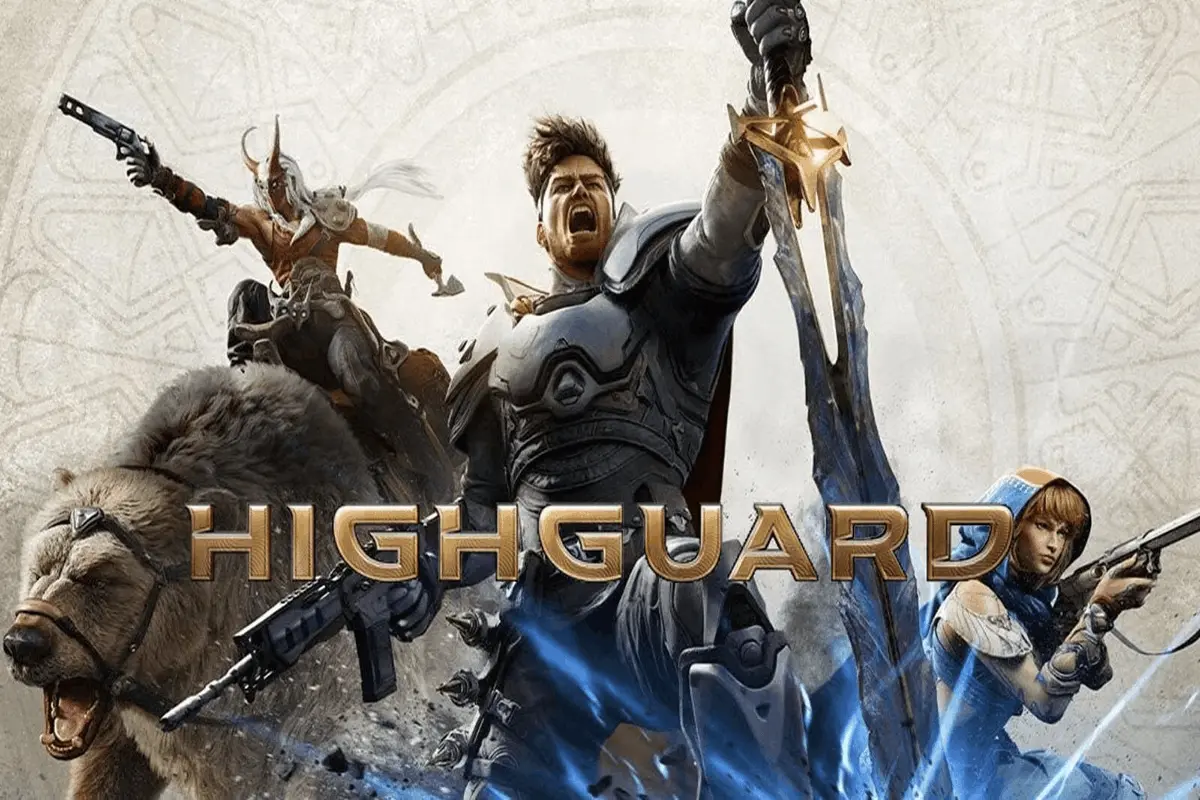
A Bold PvP Raid Shooter with Ambitious Ideas
Introduction
The multiplayer shooter market has become increasingly competitive, making it difficult for new titles to establish their own identity. Highguard, developed by Wildlight Entertainment, attempts to stand apart by combining traditional hero shooter mechanics with extraction-style objectives, mounted traversal, magical abilities, and large-scale territorial warfare. Rather than focusing solely on eliminating opponents, Highguard encourages teams to gather resources, capture strategic objectives, breach enemy strongholds, and escape with valuable rewards. This unique combination of genres gives the game an identity that differs from conventional arena shooters.
Built around fast-paced team coordination and tactical decision-making, Highguard introduces players to a fantasy world where powerful arcane warriors known as Wardens battle for control of a mythical continent. Every match blends exploration, PvP combat, resource management, and base assaults into one cohesive experience. While the game launched with several balance concerns and mixed critical reception, many reviewers praised its innovative gameplay concepts, particularly its mounted combat, magical weaponry, and objective-based progression.
Highguard Gameplay
Highguard’s gameplay revolves around three-player squads that enter enormous fantasy battlefields as elite warriors called Wardens. Unlike traditional hero shooters that simply reward kills, Highguard emphasizes teamwork, map control, and strategic planning. Every match begins with players securing their home base before venturing into dangerous territories filled with enemies, resources, monsters, and rival squads.
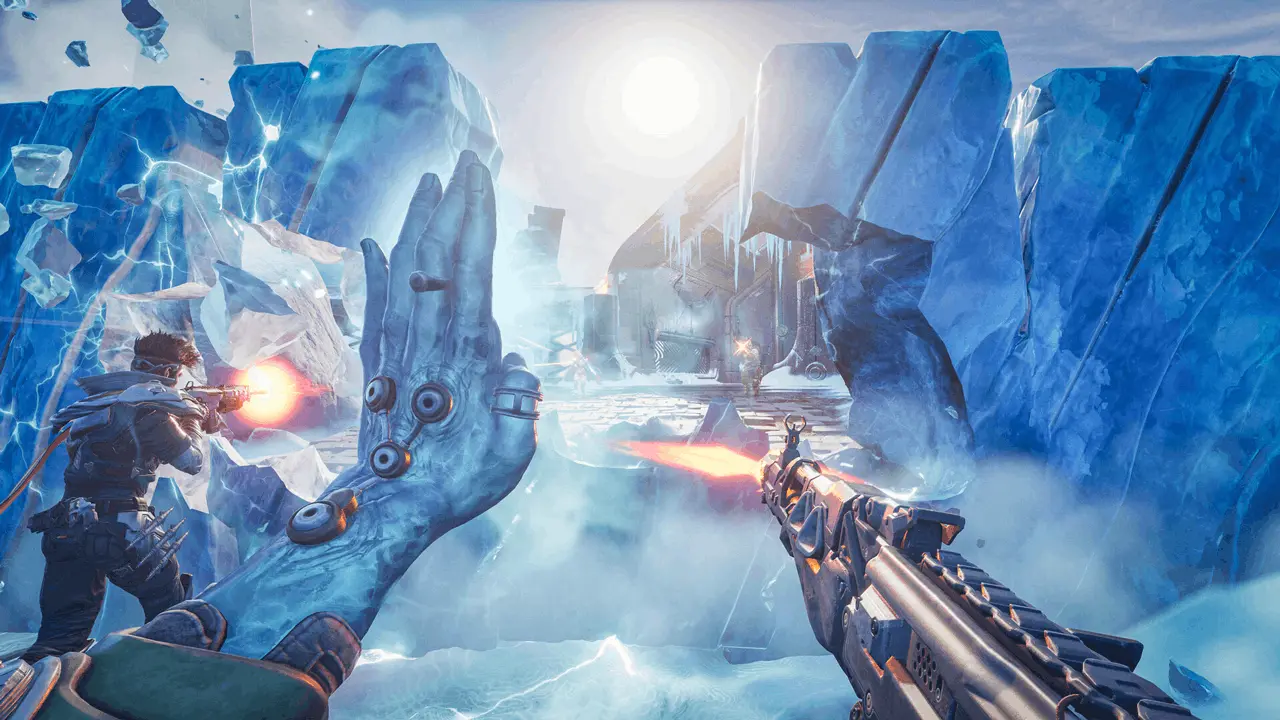
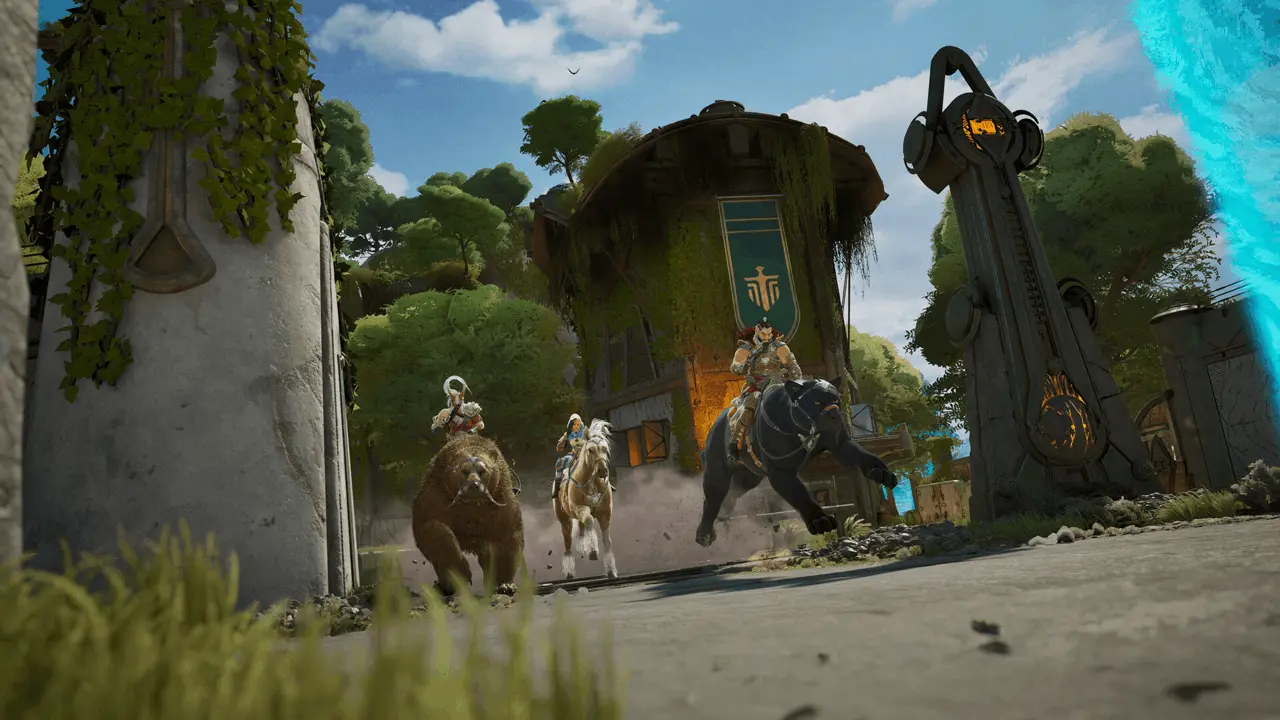
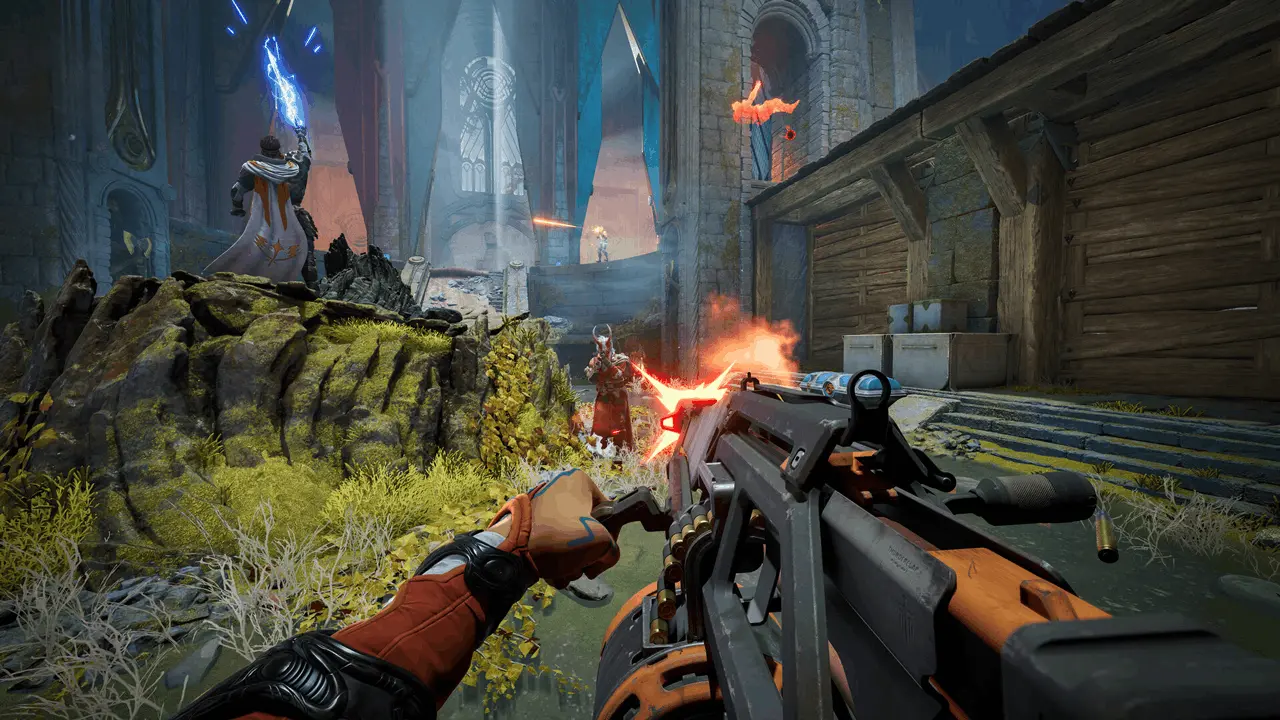
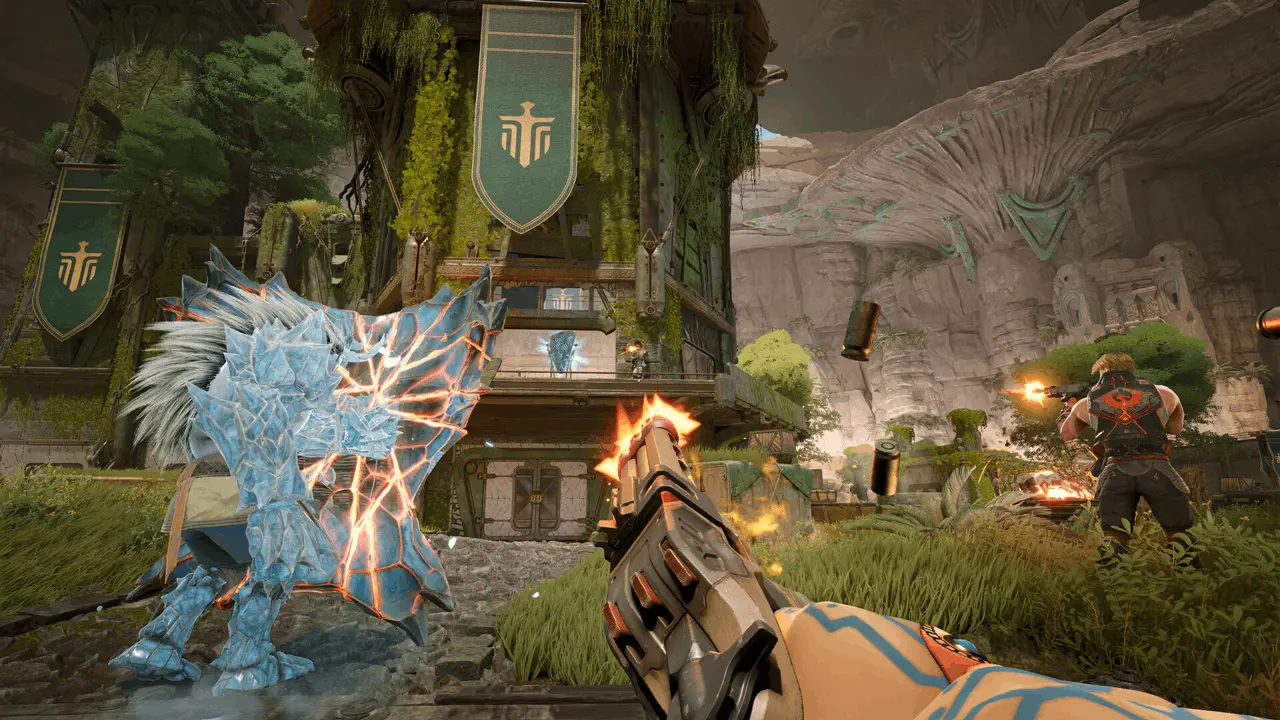
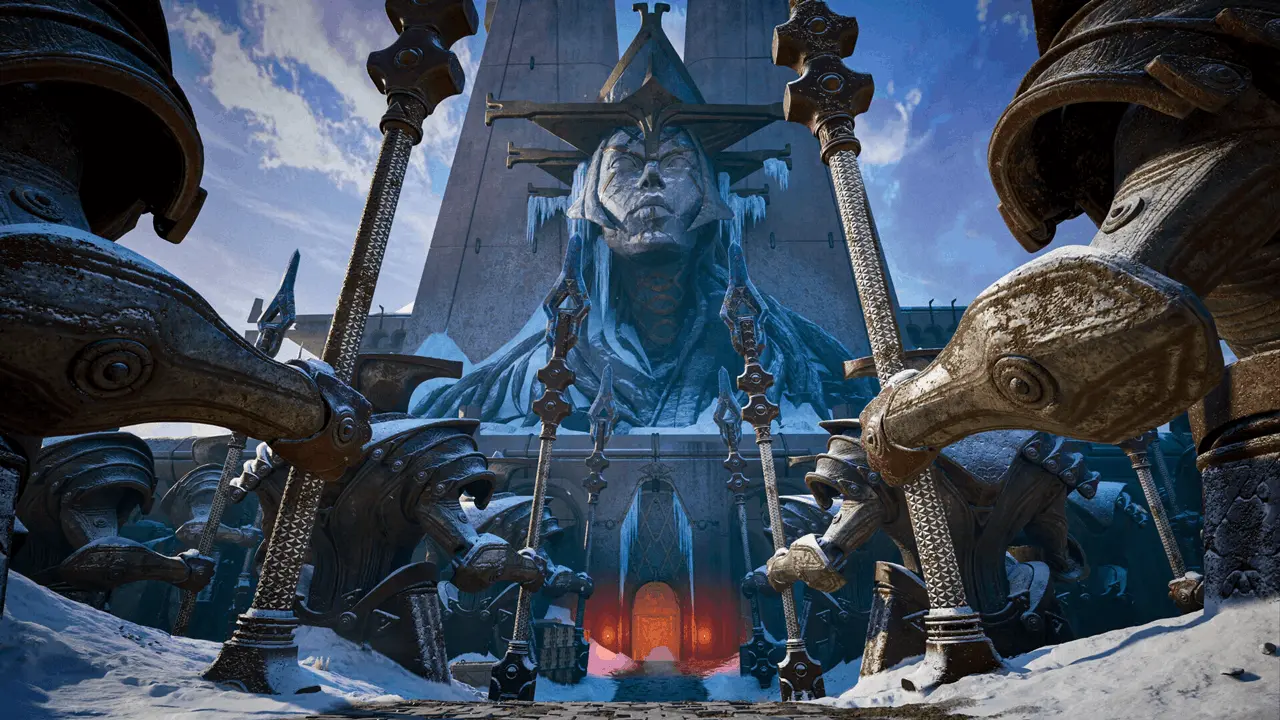
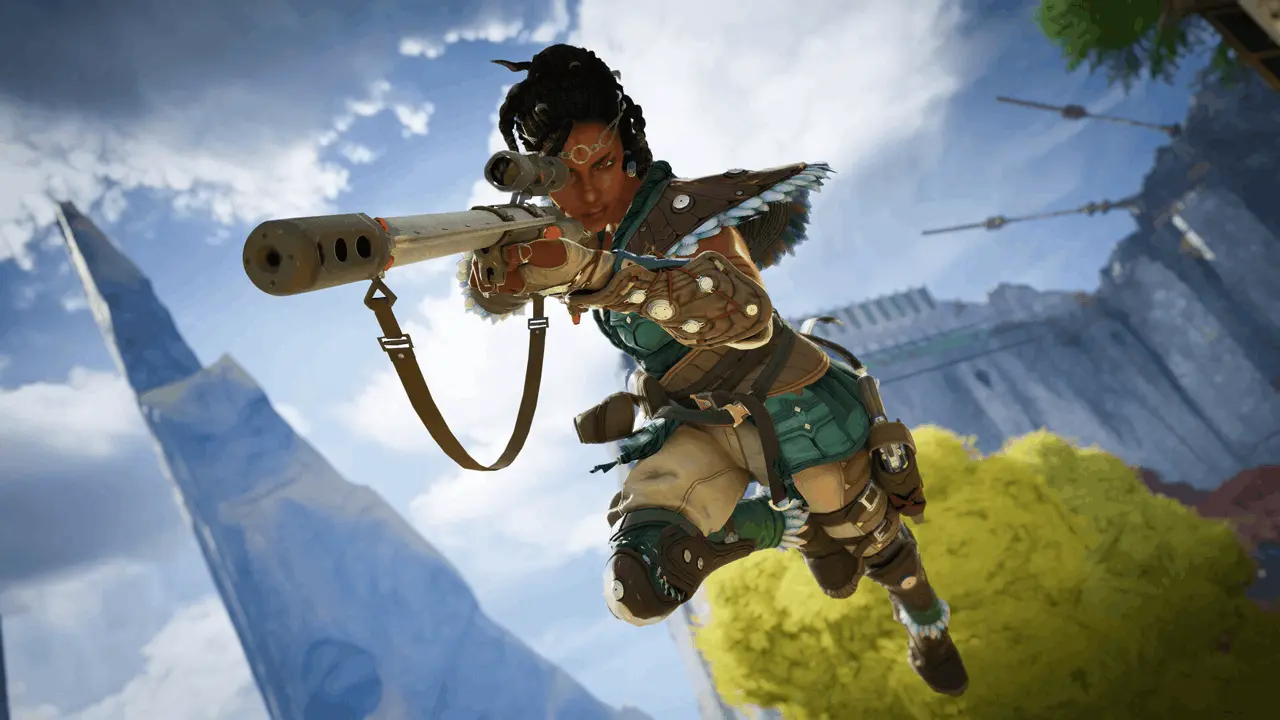
Players explore massive landscapes while collecting crafting materials, rare equipment, magical artifacts, and currency used to upgrade their weapons and defenses. The game’s progression system rewards efficient exploration as much as successful combat. Instead of rushing directly toward opponents, teams must decide whether to strengthen their own defenses, gather better gear, or immediately challenge rival Wardens.
One of Highguard’s defining mechanics is mounted traversal. Players can summon magical mounts to rapidly travel across the large maps, creating fluid movement that significantly changes the pace of combat. Mounted battles add another tactical layer, allowing players to attack while moving quickly across open environments.
The central objective in most matches revolves around obtaining the legendary Shieldbreaker sword. This artifact allows the attacking team to disable enemy base defenses and initiate the final siege. Once the Shieldbreaker is acquired, the gameplay shifts dramatically from exploration into large-scale assaults where defenders must coordinate to repel invading forces.
The Warden roster serves as Highguard’s playable cast. Every Warden possesses unique magical abilities, weapons, passive traits, and ultimate powers that support different playstyles. Some specialize in long-range combat using enchanted firearms, while others excel at defensive barriers, healing support, mobility, or crowd control. Team composition therefore plays a major role in determining success.
Although Highguard focuses primarily on multiplayer competition rather than scripted campaign missions, each match unfolds like an evolving objective-based mission. Players capture resource points, defend objectives, defeat neutral enemies, escort teammates, breach fortifications, eliminate rival Wardens, and ultimately seize control of enemy territory. These layered objectives create far more strategic depth than simple deathmatch gameplay.
Progression extends beyond individual matches through unlockable cosmetics, achievements, equipment upgrades, account progression, and skill customization, encouraging long-term investment for competitive players. Later updates also expanded progression systems by introducing account leveling and skill trees in response to community feedback.
Story Narrative
Highguard is set on a mythical continent consumed by endless conflict between powerful factions seeking control over ancient magical relics. At the center of this struggle are the Wardens—elite arcane gunslingers chosen to defend their kingdoms while pursuing unimaginable power hidden throughout the land.
The legendary Shieldbreaker sword serves as the most valuable artifact in existence. Possessing the weapon allows its owner to destroy magical barriers protecting enemy strongholds, shifting the balance of power during every conflict. This creates an endless cycle of territorial warfare where rival Warden crews constantly battle for dominance.
Rather than following a traditional linear campaign, Highguard tells its story through environmental storytelling, character lore, seasonal events, and evolving multiplayer encounters. Each battlefield represents another chapter in the ongoing struggle for control of the continent. Every victory strengthens one faction while weakening another, making every match feel connected to the world’s broader conflict.
Although the narrative remains relatively light compared to single-player RPGs, its fantasy setting provides sufficient context for the competitive gameplay while giving each Warden distinct motivations and personalities.
Graphics and Sound Effects
Highguard delivers visually impressive environments powered by modern rendering technology. Expansive landscapes feature towering castles, enchanted forests, ancient ruins, mountain passes, and mystical battlefields that effectively blend medieval fantasy with magical technology. Dynamic lighting, weather effects, and high-quality environmental detail help create an immersive atmosphere.
Character models display impressive armor designs, magical weapon effects, and distinctive silhouettes that make each Warden instantly recognizable during combat. Spell animations produce vibrant particle effects without overwhelming gameplay readability, while mounted traversal feels smooth thanks to excellent environmental streaming and stable performance.
The audio design further enhances immersion. Every magical weapon produces unique firing sounds, while explosive spells generate impactful bass-heavy effects during large-scale battles. Environmental ambience constantly changes depending on location, with forests, fortresses, and open plains featuring distinct atmospheric soundscapes.
The orchestral soundtrack complements the fantasy setting with dramatic battle themes, quieter exploration music, and tense siege compositions. Voice acting also helps differentiate the Wardens, giving each hero unique personality during combat interactions.
Verdict
Highguard deserves recognition for attempting something genuinely different within the crowded multiplayer shooter market. Instead of relying solely on traditional hero shooter mechanics, it successfully combines exploration, mounted traversal, magical combat, extraction gameplay, and fortress sieges into an ambitious package. While the execution suffered from balancing issues, pacing concerns, and a difficult launch, the game’s core ideas demonstrated significant creativity.
Players looking for highly tactical team-based multiplayer experiences may appreciate Highguard’s innovative mechanics, whereas those expecting a fast-paced arena shooter might find its objective-heavy structure slower than anticipated. Although its live-service journey was unfortunately brief, Highguard remains an interesting example of creative multiplayer design that dared to experiment beyond genre conventions.
The Good
- Unique combination of hero shooter and raid mechanics.
- Excellent mounted traversal system.
- Strategic objective-based gameplay.
- Beautiful fantasy environments.
- Strong team coordination mechanics.
- High-quality visual effects and immersive sound design.
The Bad
- Match pacing can feel slow during certain objectives.
- Balance issues affected the competitive experience.
- Limited long-term player retention after launch.
- Live-service support ended shortly after release.
Release Date and Platforms
Highguard officially launched on January 26, 2026, as a free-to-play multiplayer title. The game released for PC (Steam) alongside PlayStation 5 and Xbox Series X|S, with full online multiplayer support and cross-platform functionality. As a live-service title, Wildlight planned regular seasonal updates, new Wardens, maps, weapons, and gameplay improvements following launch. However, despite attracting millions of players initially, the game’s player population declined rapidly, ultimately leading to its shutdown only a few months after release.
Genre
Highguard belongs primarily to the Action, Hero Shooter, PvP Raid Shooter, and Free-to-Play Multiplayer genres. However, its gameplay borrows ideas from several different styles. Hero-based abilities encourage coordinated team compositions, while extraction mechanics reward strategic exploration and resource collection. Large open environments, mounted traversal, and fortress sieges add elements typically associated with tactical shooters and objective-based multiplayer games.
Rather than copying existing formulas directly, Highguard attempts to merge fantasy action, magical combat, territorial conquest, and competitive shooter mechanics into one experience. This hybrid design remains one of its strongest distinguishing features.
Developer and Publisher
Highguard was both developed and published by Wildlight Entertainment, Inc., an independent studio founded by several experienced developers who previously contributed to successful multiplayer shooters. Their goal with Highguard was to create a next-generation live-service PvP experience centered around teamwork, dynamic objectives, and long-term seasonal content.
The developers maintained an active dialogue with players after launch, quickly introducing balance adjustments, additional modes, progression improvements, and quality-of-life updates. Despite these efforts and ambitious post-launch plans, the studio later faced significant layoffs following the game’s disappointing commercial performance.
Highguard System Requirements
Minimum
- Requires a 64-bit processor and operating system
- OS: Windows 10
- Processor: Intel Core i5-6600K / AMD Ryzen R5 1600
- Memory: 8 GB RAM
- Graphics: Nvidia GTX 1060 6GB / AMD RX 580 8 GB
- DirectX: Version 12
- Network: Broadband Internet connection
- Storage: 25 GB available space
Recommended
- Requires a 64-bit processor and operating system
- OS: Windows 11
- Processor: Intel Core i5-9600K / AMD Ryzen 5 3600
- Memory: 12 GB RAM
- Graphics: Nvidia RTX 2080 8 GB / AMD RX 6650 XT 8 GB
- DirectX: Version 12
- Network: Broadband Internet connection
- Storage: 25 GB available space