A Dark Fantasy RPG Where Time, Blood, and Choice Define Your Fate
Game Introduction
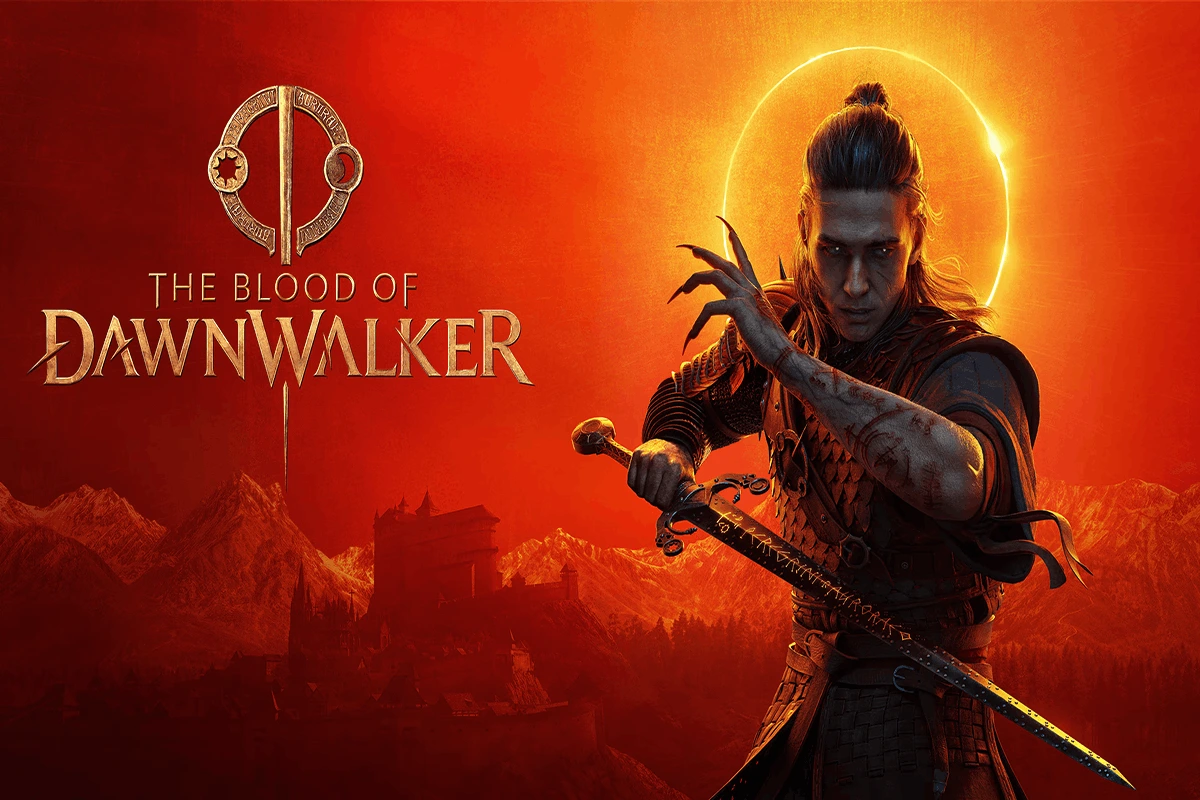
The Blood of Dawnwalker is an ambitious open-world dark-fantasy action RPG from Rebel Wolves, a Polish studio founded by veterans of CD Projekt Red, including developers associated with The Witcher 3: Wild Hunt. Set in an alternate 14th-century Europe during the devastation of the Black Death, the game imagines a world in which vampires emerge from hiding and seize control while human civilization is weakened by plague and political instability. Players take the role of Coen, a young man who becomes a half-vampire known as a Dawnwalker and must use his new abilities to rescue his family from the vampire lord Brencis.
What immediately distinguishes The Blood of Dawnwalker from conventional fantasy RPGs is its treatment of time. Coen has only 30 days and nights to save his family, and important actions consume portions of that limited period. The game does not simply give players a huge checklist of quests to complete at their leisure. Instead, quests can be missed, characters can die, relationships can change, and events can unfold without Coen’s involvement. This “narrative sandbox” philosophy is one of the game’s most ambitious features and is intended to make every playthrough different.
Because The Blood of Dawnwalker has not yet launched at the time of writing, this review is based on the extensive gameplay previews, developer information and hands-on coverage currently available rather than post-release review scores. Nevertheless, previews from outlets such as Game Informer, Xbox Wire, PC Gamer and PlayStation Blog suggest that Rebel Wolves is attempting to combine the narrative depth of a traditional RPG with a much more reactive world.
The Blood of Dawnwalker Gameplay
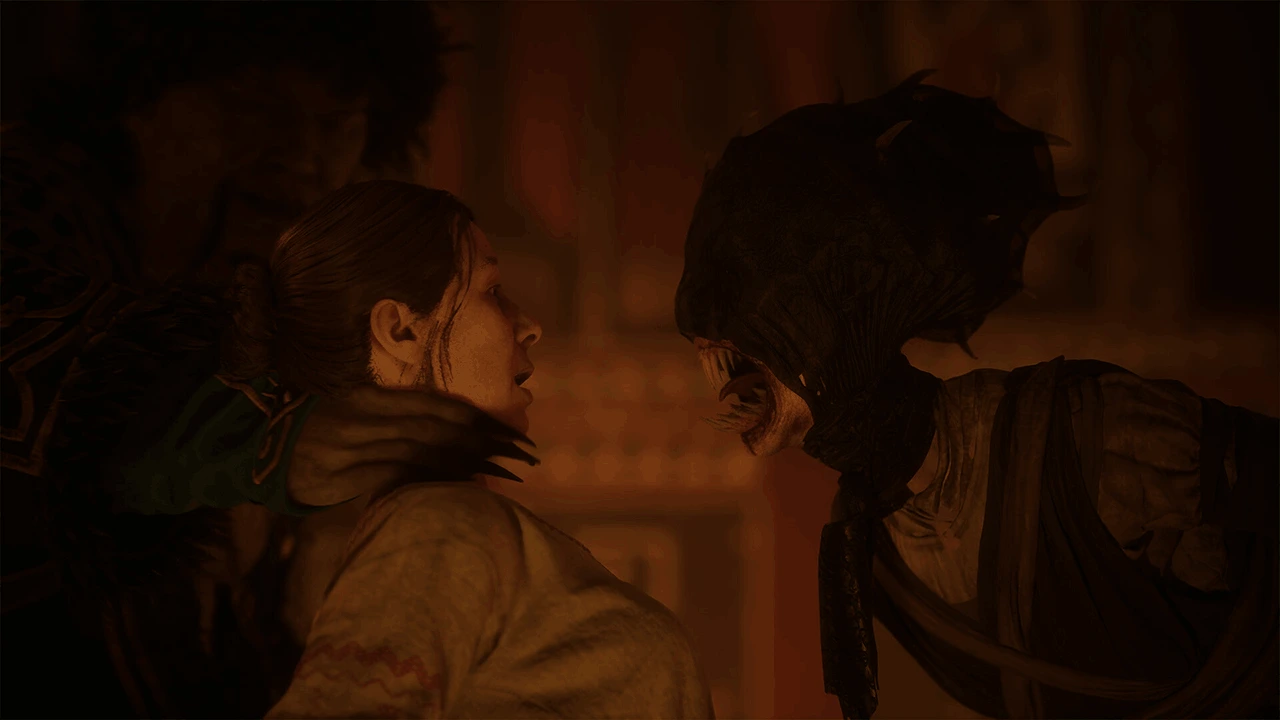
The gameplay revolves around Coen’s dual existence. During daylight, he remains closer to human, relying primarily on swordsmanship, physical combat and witchcraft. At night, his vampire nature becomes dominant, giving him supernatural abilities that dramatically change traversal, stealth and combat. This is not merely a visual transformation. The two halves of Coen effectively create different gameplay loops, with certain characters, quests, abilities and opportunities available only at particular times.
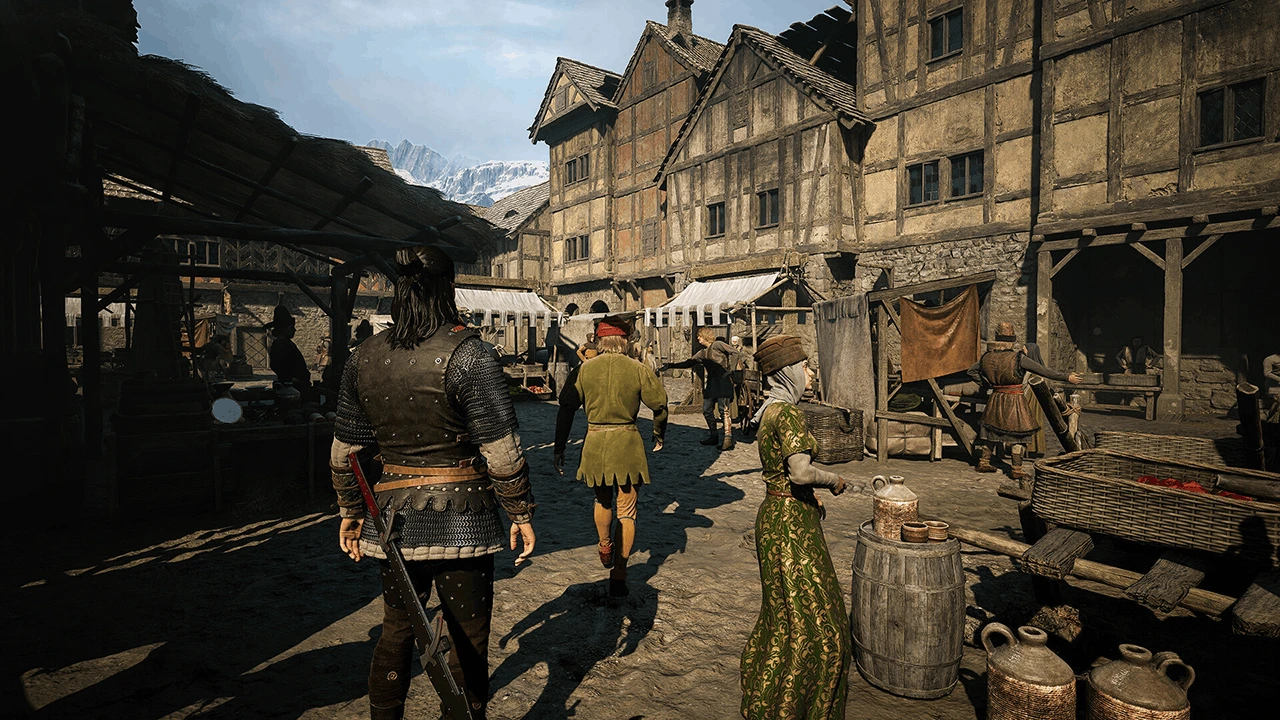
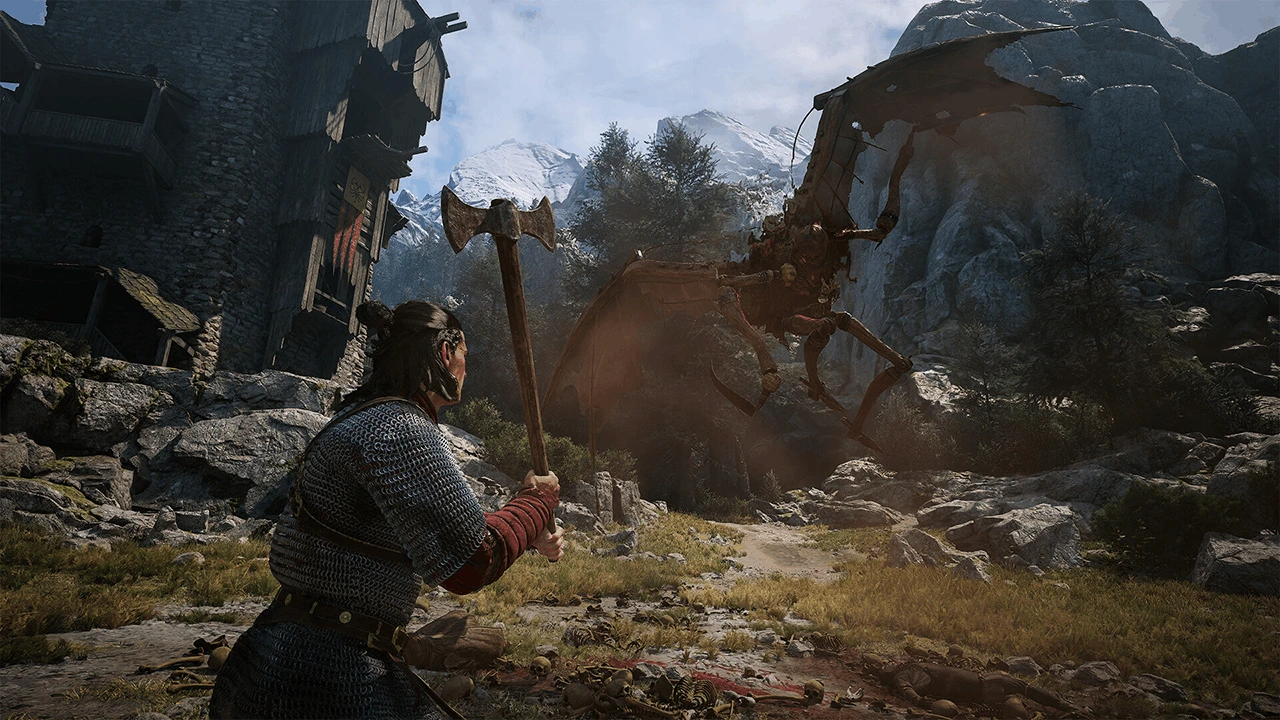
Human combat emphasizes swordplay, blocking, parrying and magical abilities. Directional attacks and defensive mechanics allow players to approach battles with greater precision, while customizable combat options are intended to accommodate both experienced action-game players and those more interested in the story. Game Informer’s hands-on coverage particularly highlighted the combat’s responsive blocking and parrying system.
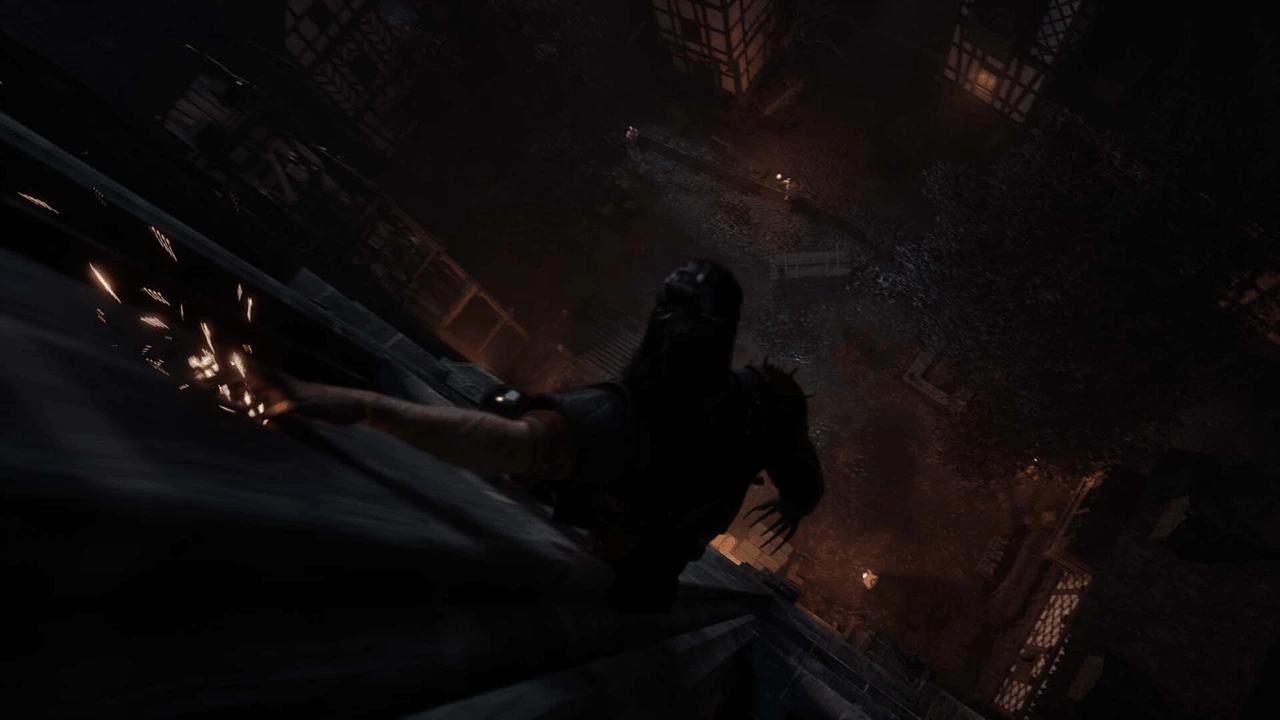
After sunset, Coen becomes far more dangerous. His vampire abilities allow him to perform supernatural movement, climb walls and use powers such as Shadowstep, which can function as a short-range teleport for both combat and exploration. He can also transform into a wolf to travel rapidly across the countryside. These abilities make nighttime exploration fundamentally different from daytime exploration rather than simply giving Coen a damage boost.
The vampire skill system is closely connected to the game’s lore. Coen can acquire different vampiric mutations by draining other vampires, potentially allowing him to steal their powers. His overall progression is divided into three major branches: swordsmanship, witchcraft and vampirism. This encourages players to decide whether Coen should remain close to his human identity, embrace his supernatural side or develop a hybrid approach.
The game’s most unusual mechanic is its 30-day deadline. Once the prologue concludes, Coen receives a limited amount of time to rescue his family from Brencis and his vampire circle. Importantly, simply walking around the world does not consume time. Instead, significant actions such as accepting and completing quests, performing certain investigations or investing in abilities advance the clock. Players are shown the time cost before committing to many activities, making time function more like a resource than a conventional countdown.
This creates difficult decisions. Helping one character may mean another quest becomes unavailable. Spending time investigating a mystery might leave less time to rescue a family member. Players can even choose to ignore entire storylines, allowing events to progress without them. Rebel Wolves has deliberately designed the system so that there is no expectation that players will see everything during one playthrough.
The main characters are closely connected to this structure. Coen is the protagonist, while his family provides the central emotional motivation. His father, mother, younger sister and younger brother are all caught in the vampire takeover, giving the rescue mission a personal dimension rather than making it another generic “save the world” fantasy adventure.
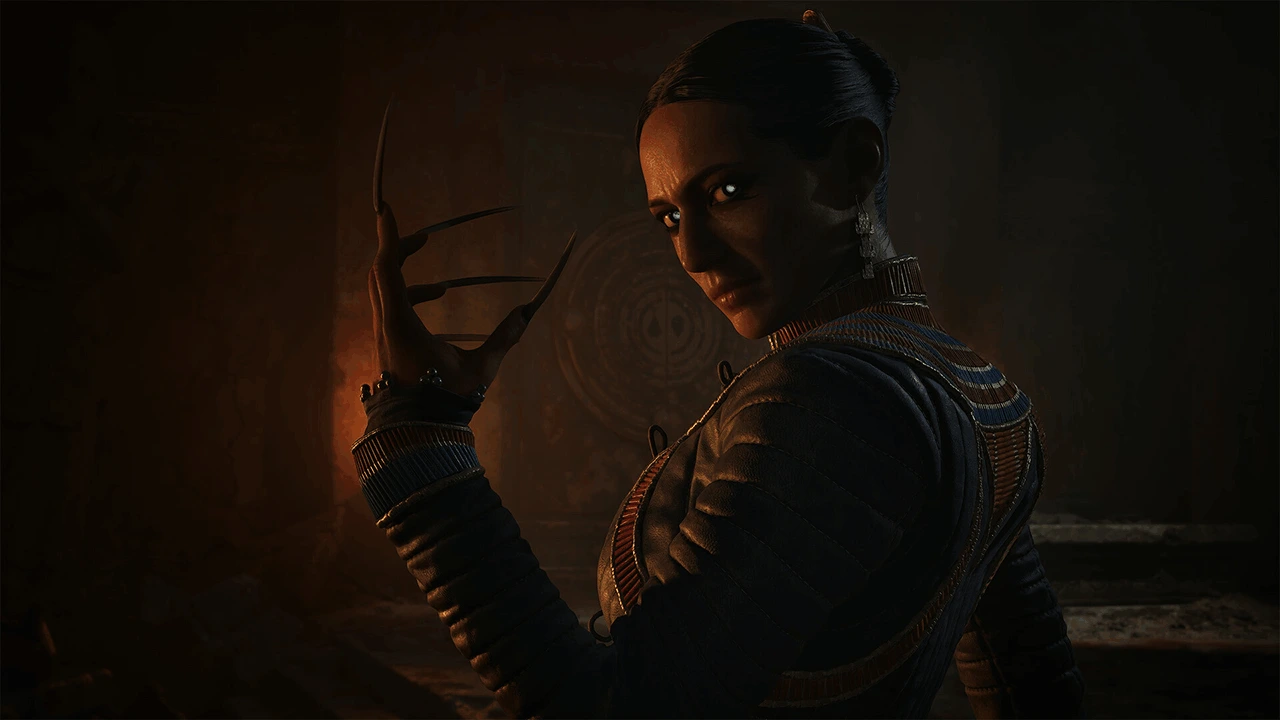
Brencis is the principal antagonist, a centuries-old vampire and former Roman senator who has established control over Vale Sangora. His rule is supported by a group of powerful vampire allies, including Xanthe, an ancient Greek vampire described as one of his most powerful followers. The vampire hierarchy and its relationship with the human population form the backbone of the game’s political conflict.
Other characters encountered during the adventure include Anca, a village herbalist who teaches Coen blood magic, and various villagers, rebels, vampires and supernatural beings whose stories can change depending on the player’s decisions. Some characters can become allies, while others may become enemies or die depending on what Coen does. This means NPCs are not simply quest dispensers; their survival and relationships can affect the wider narrative.
Missions are similarly flexible. One demonstrated quest revolves around locating the legendary sword of Saint Mihai. Players can investigate the objective during the day or approach it at night, producing dramatically different encounters. During the daytime version, Coen investigates a cathedral and uses human abilities, while the nighttime approach allows him to exploit vampiric powers and supernatural traversal. The mission can also involve investigating the dead through the Compel Soul ability, eventually leading to a confrontation with Saint Mihai himself.
The open world, known as Vale Sangora, is inspired by the Carpathian region and contains forests, mountains, settlements, swamps, ruins and medieval communities. Rebel Wolves has emphasized that the environment is intended to feel like a believable historical landscape before supernatural elements disturb it. Wildlife, weather, environmental sounds and creatures drawn from regional folklore are all used to make the world feel alive.
Stealth and investigation are also important. Coen can approach objectives directly, sneak through guarded areas, exploit supernatural abilities or spend time gathering information. The game therefore avoids forcing players into one solution. A difficult enemy encounter might be bypassed through stealth, approached at night or resolved by building an alliance elsewhere.
Story Narrative
The story takes place in Vale Sangora during a devastating period in European history. The Black Death has weakened the population, while local communities struggle under increasingly oppressive rule. The vampires recognize this vulnerability and emerge from the shadows, taking control of the valley and demanding blood from the human population. Brencis becomes the dominant vampire ruler, transforming the region into a society where humans live under supernatural authority.
Coen begins as an ordinary young man trying to protect his family. However, an attempt to turn him into a vampire does not proceed normally. Instead of becoming a conventional vampire, Coen becomes a Dawnwalker, existing between humanity and vampirism. During the day he retains his human identity and abilities, while darkness awakens his supernatural side. His condition becomes both his greatest weapon and the source of the game’s central moral conflict.
The central objective is to rescue Coen’s family within 30 days, but how that happens is entirely dependent on the player. Coen can cooperate with human rebels, form unlikely alliances, embrace his vampire nature or pursue revenge against the vampire responsible for his transformation. He can also choose to ignore certain factions entirely. The game therefore makes the player’s personal interpretation of Coen part of the story.
This structure gives the narrative considerably more freedom than a traditional linear RPG. The world does not wait indefinitely for the player. If Coen spends too much time elsewhere, certain characters may disappear from the story or die, and entire questlines can develop without his participation. The result should make the player’s first playthrough feel less like following a predetermined script and more like creating an individual version of the story.
Graphics and Sound Effects
Visually, The Blood of Dawnwalker is built around a deliberately grounded interpretation of medieval Europe. Rather than presenting an overly fantastical world from the beginning, Rebel Wolves uses realistic Carpathian landscapes as the foundation and gradually introduces vampires, monsters and supernatural phenomena. Forests, settlements, mountains and weather systems contribute to a world that feels historically inspired while remaining firmly within dark fantasy.
Unreal Engine 5 is being used to create detailed environments and next-generation visuals. The contrast between day and night should be particularly striking because the two gameplay states represent different sides of Coen’s identity. Daytime emphasizes populated settlements, human activity and natural landscapes, while nighttime introduces shadows, supernatural powers and a much more threatening atmosphere.
Sound design is equally important. The developers have emphasized environmental soundscapes, changing weather, wildlife and creatures inspired by local folklore. Villages feel populated through conversations and everyday activity, while nighttime environments become more threatening as supernatural creatures emerge. This audio contrast supports the game’s broader theme of a familiar world slowly being consumed by the unknown.
Verdict
The Blood of Dawnwalker has the potential to become one of the most interesting dark-fantasy RPGs of 2026 because it places meaningful consequences at the center of its design instead of treating player choice as simple dialogue decoration. Its strongest ideas are the human-and-vampire duality, 30-day narrative clock, reactive characters, flexible quests, branching choices and beautifully atmospheric Carpathian setting. Its biggest potential weaknesses are equally clear: the time system could frustrate players who want to complete everything, the large number of possible outcomes may create uneven pacing, and the success of the entire experience will ultimately depend on how well the final game delivers on its ambitious promises. Since the game has not yet been released, these remain expectations rather than final criticisms.
The Good
- Innovative 30-day narrative time system.
- Meaningful choices that can permanently alter the world.
- Human and vampire gameplay offer genuinely different abilities.
- Strong narrative focus inspired by experienced RPG developers.
- Large open-world Carpathian setting.
- Flexible quests with multiple approaches.
- Deep swordsmanship, witchcraft and vampirism progression.
- Potentially excellent replayability.
- Strong dark-fantasy atmosphere.
- Unreal Engine 5 presentation and detailed environments.
- Characters and relationships can change according to player actions.
The Bad
- The time-management system may feel stressful for completionist players.
- Players cannot experience every storyline in one playthrough.
- The final quality of the combat and open-world systems remains untested at launch.
- The ambitious branching narrative could create pacing inconsistencies.
- Technical performance on launch hardware remains something that cannot be fully judged before release.
Release Date and Platforms
The Blood of Dawnwalker is scheduled to release on September 3, 2026 for PlayStation 5, Xbox Series X|S and PC. The PC version is available through Steam and is also supported through Xbox on PC, while Xbox Cloud Gaming is part of the Xbox ecosystem. The game is being built specifically for the current generation, with Unreal Engine 5 powering its large-scale environments and visual presentation.
Genre
The Blood of Dawnwalker is an open-world dark-fantasy action RPG with strong narrative-adventure, stealth and exploration elements. Its role-playing mechanics include character progression, branching abilities, choices and consequences, while its action component revolves around sword combat, parrying, magic and vampiric powers. What separates it from many open-world RPGs is the time-management structure. Instead of completing every activity before progressing the story, players must decide which opportunities are worth their limited time.
Developer and Publisher
The game is being developed by Rebel Wolves, a Warsaw-based studio established by veteran developers from CD Projekt Red. The studio’s leadership includes Konrad Tomaszkiewicz, director of The Witcher 3: Wild Hunt, which naturally creates expectations for strong character writing and meaningful player choice. The Blood of Dawnwalker is published by Bandai Namco Entertainment. Rebel Wolves has described the project as the beginning of a new saga rather than an extension of an existing franchise.
The Blood of Dawnwalker System Requirements
Minimum
- Requires a 64-bit processor and operating system
- OS: Windows 10, DirectX12
- Processor: Intel Core i5-11400F / AMD Ryzen 7 2700X
- Memory: 16 GB RAM
- Graphics: NVIDIA GTX 1060 / Radeon RX 580
- DirectX: Version 12
- Storage: 60 GB available space
- Additional Notes: VRAM: 6GB // Storage on SSD
Recommended
- Requires a 64-bit processor and operating system
- OS: Windows 10, DirectX12
- Processor: Intel Core i7-11700K / AMD Ryzen 7 5700X
- Memory: 16 GB RAM
- Graphics: NVIDIA RTX 4060 / Radeon RX 7600 XT / Intel Arc B580
- DirectX: Version 12
- Storage: 60 GB of available space
- Additional Notes: VRAM: 8GB // Storage on SSD