A Stylish Noir Shooter Where Cartoon Chaos Meets Detective Mystery
Introduction
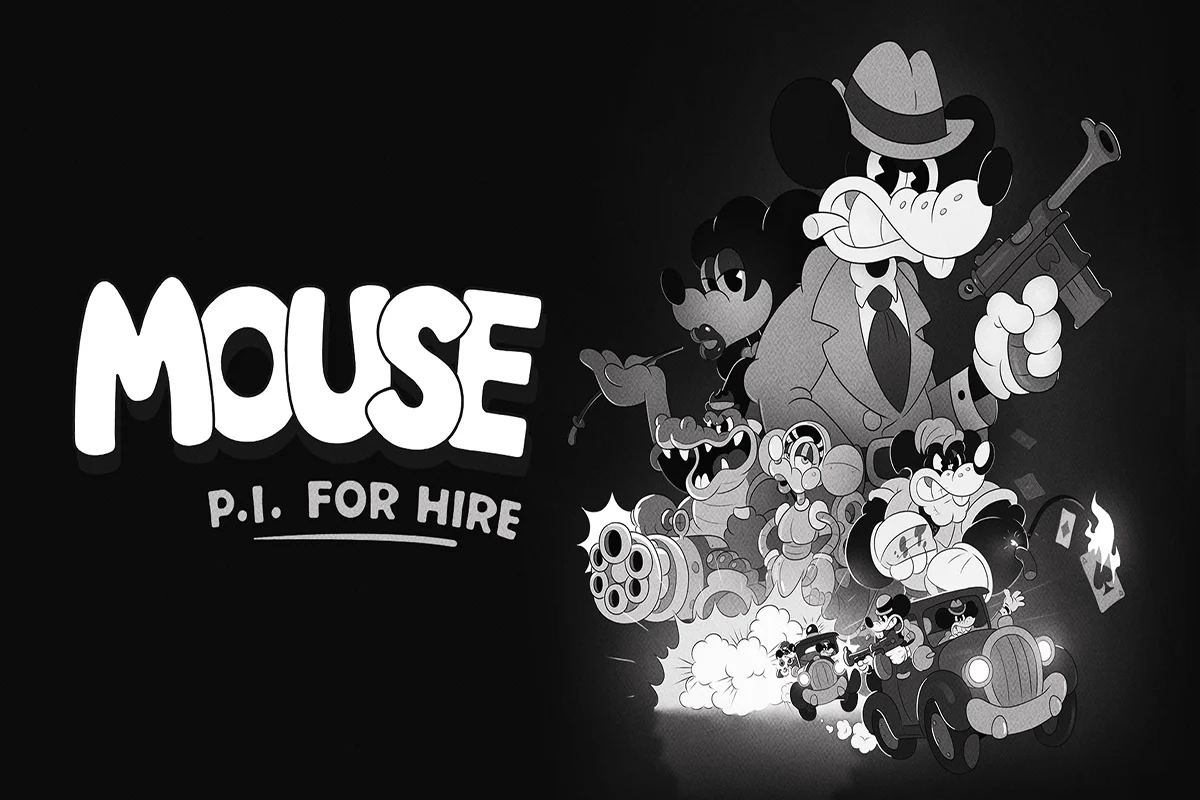
Mouse: P.I. For Hire is one of those games that immediately demands attention because of its visual identity. Developed by Fumi Games, this first-person shooter transports players to Mouseburg, a grimy 1930s-inspired city inhabited by anthropomorphic mice, rats, and shrews. Its hand-drawn rubber-hose animation style deliberately recalls the golden age of theatrical cartoons, while its story embraces the darker traditions of hardboiled detective fiction. The result is an unusual combination of cheerful cartoon imagery, brutal gunfights, jazz music, political corruption, murder, organized crime, and classic noir storytelling.
At the center of this strange world is Jack Pepper, a former soldier and police officer who now works as a private investigator. Voiced by Troy Baker, Jack is a weary, cynical detective with a gambling habit and little patience for corruption. What begins as a seemingly straightforward investigation soon develops into a much larger conspiracy involving missing people, political ambitions, criminal organizations, murder, and the troubled relationship between Mouseburg’s larger mice and its marginalized shrew population. Critics have generally praised the game’s extraordinary presentation and atmosphere, while opinions have been more divided over the originality of its shooting mechanics and detective systems.
Mouse PI for Hire Gameplay
At its core, Mouse: P.I. For Hire is a fast-paced first-person shooter with strong boomer-shooter influences. Jack moves quickly through tightly designed environments, blasts his way through gangs and corrupt law enforcement, searches for clues, solves occasional environmental puzzles, and confronts increasingly dangerous bosses. The combat does not attempt to reinvent the traditional retro FPS formula, but it is responsive, energetic, and supported by an entertaining arsenal.
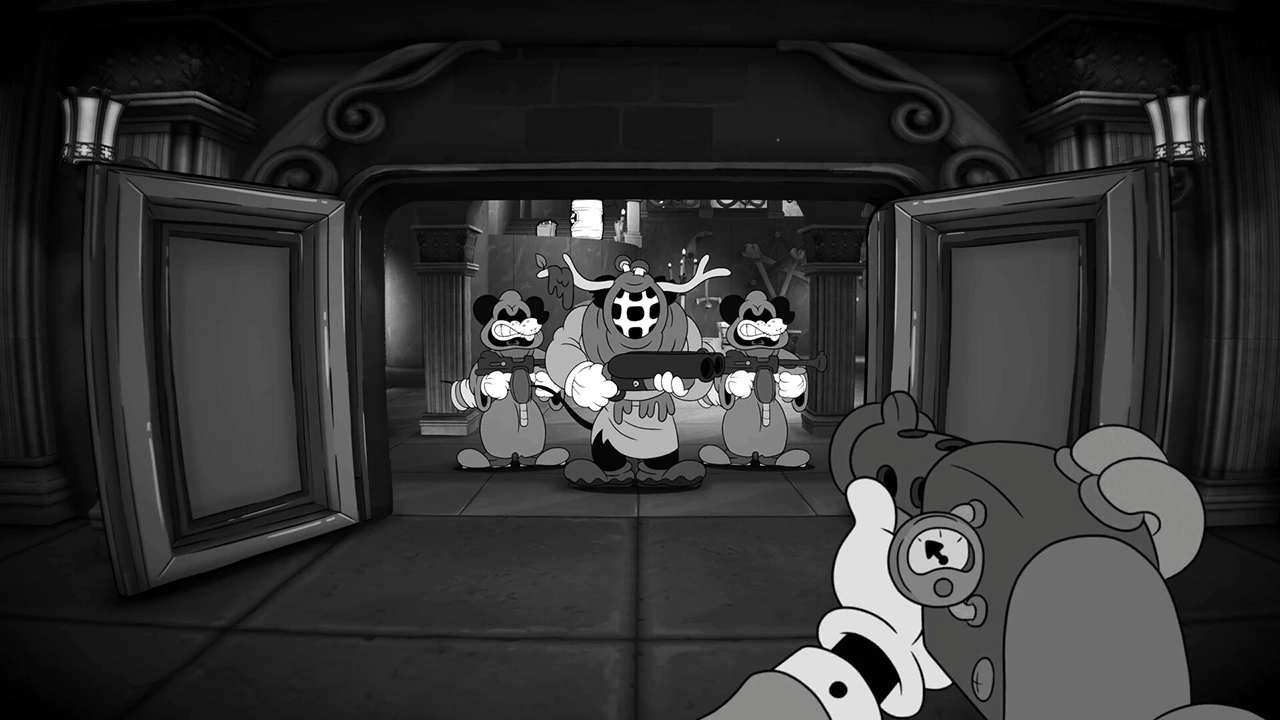
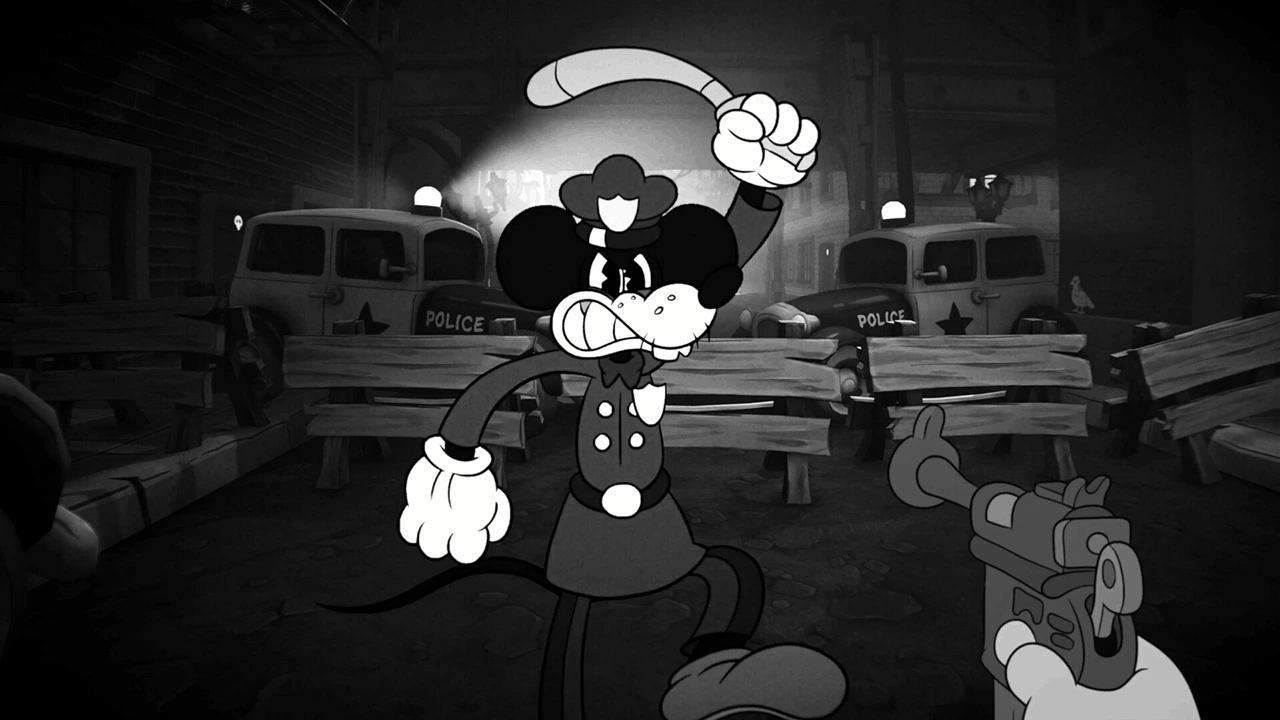

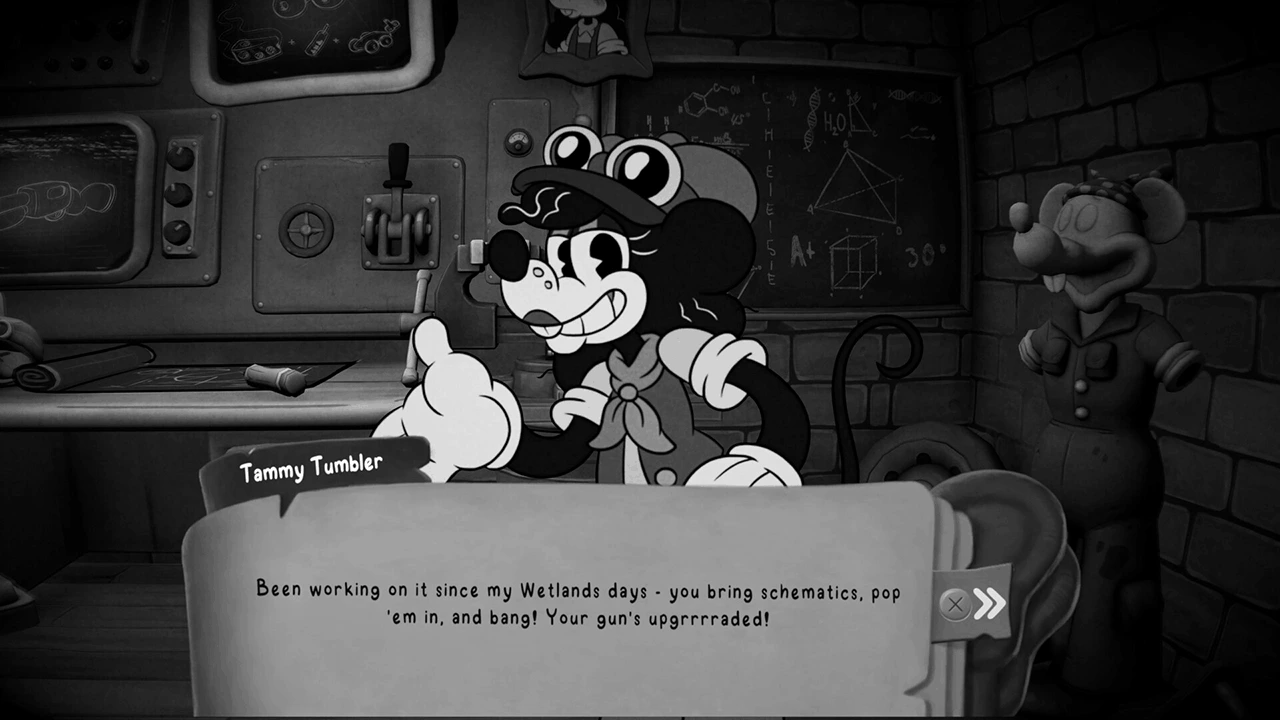
Jack’s weapons include classic firearms such as a revolver, shotgun, Tommy gun, and rifle, alongside more eccentric equipment such as dynamite and the experimental Devarnisher. Weapons can receive upgrades through Tammy Tumbler, Jack’s mechanic and trusted associate. Some upgrades introduce alternate firing modes, creating additional ways to handle groups of enemies or tougher opponents. The Devarnisher is particularly memorable because its unusual ammunition fits perfectly with the game’s cartoon violence, while the weapons themselves have exaggerated animations that make even reloading entertaining.
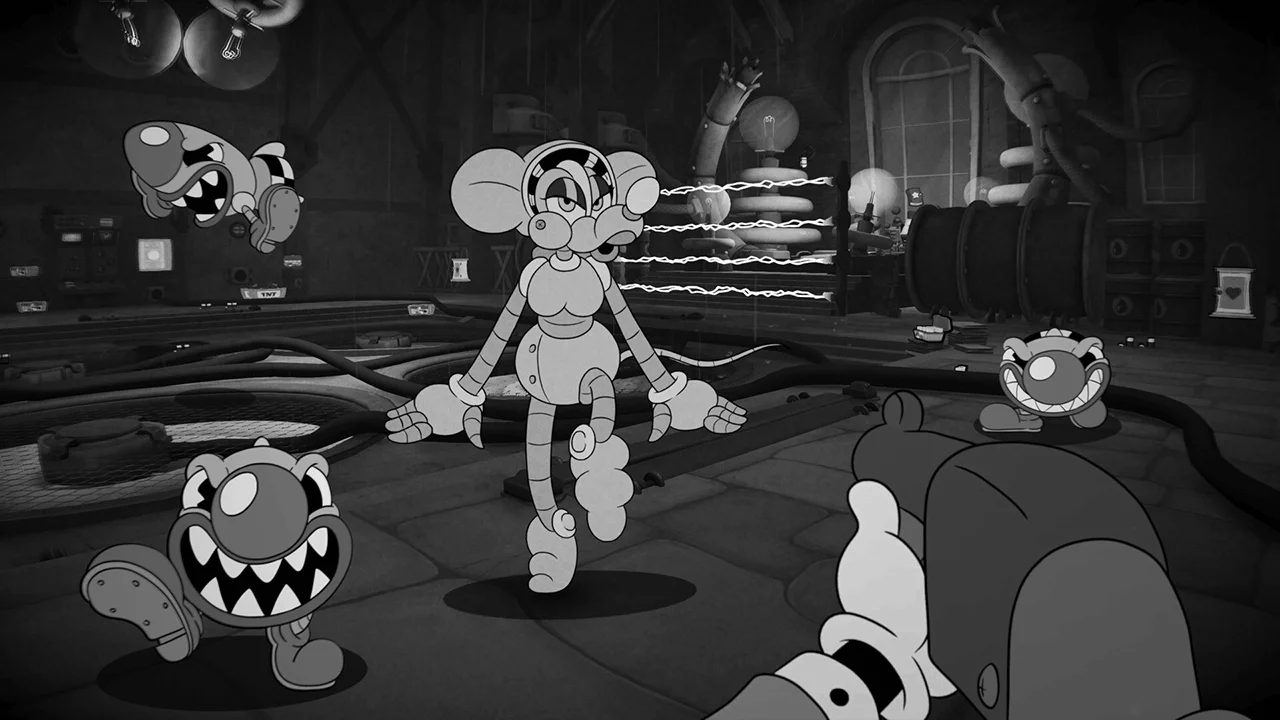
Movement is another important component of combat. Jack can dash to escape attacks, reposition himself during firefights, and navigate dangerous boss arenas. This becomes especially important during encounters with enemies that can overwhelm him from several directions. Boss battles occasionally introduce additional mechanics rather than simply asking the player to empty ammunition into a large target. The Robo-Betty encounters, for example, require Jack to avoid lasers, blades, bombs, and other attacks while exploiting openings in the arena.
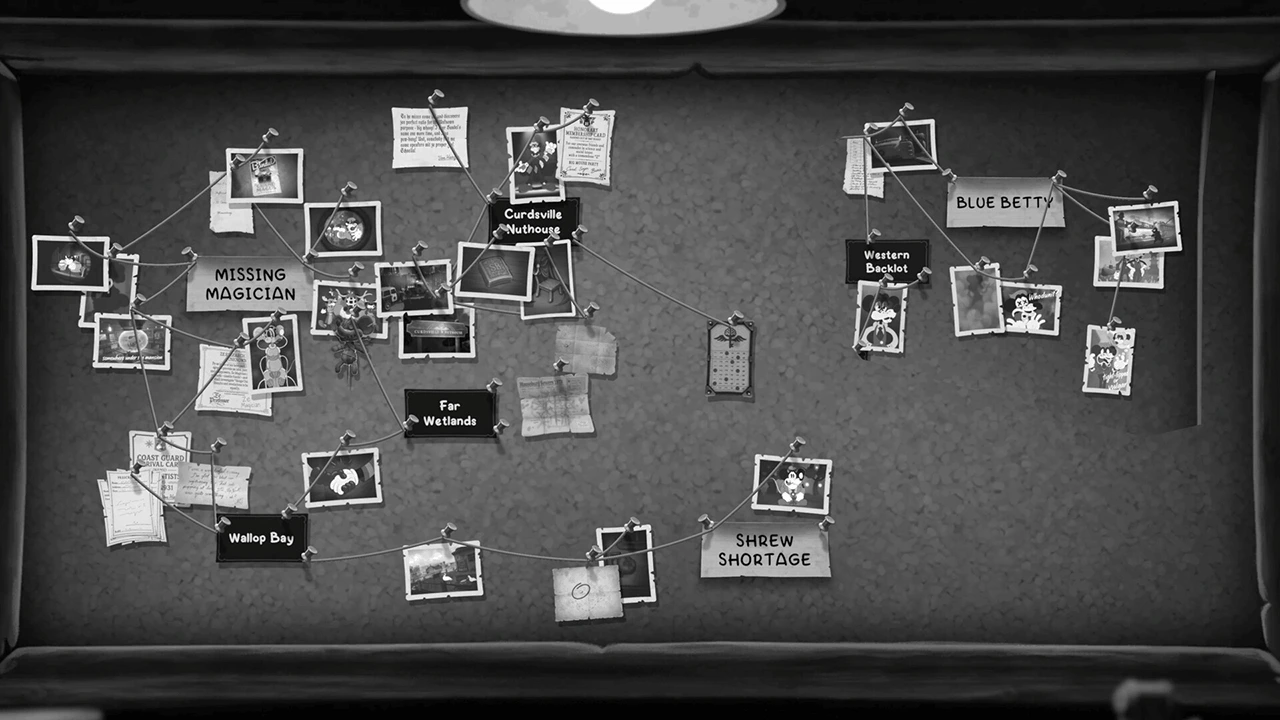
The campaign also incorporates detective elements. Jack investigates locations, speaks with characters, collects evidence, and places clues onto his investigation board. However, this side of the gameplay is considerably lighter than the shooting. Clues are generally easy to locate, and the game often guides players toward the correct conclusions. This means the detective mechanics are primarily designed to support the narrative rather than provide a demanding deduction system. Several reviews identified this as one of the game’s weaker areas, arguing that the investigation framework could have offered more freedom and complexity.
Mouseburg itself acts as an important part of the gameplay loop. Between major missions, Jack can return to his neighborhood, interact with familiar characters, visit shops, upgrade weapons, and uncover additional information about the city. Tammy Tumbler operates as Jack’s weapons specialist, while John Brown, the shrew who runs the Little & Big bar, provides information and local color. Wanda Fuller, a journalist with connections throughout Mouseburg, is another important source of leads and intelligence. Cornelius Stilton, Jack’s former wartime commander and now a politician, connects Jack’s personal history with the city’s political struggle.
The supporting cast gives the game considerably more personality. Steve Bandel, Jack’s old wartime friend, is a magician whose disappearance becomes central to the investigation. Betty Lynch, Bandel’s former assistant, is connected to another disturbing mystery surrounding her death. Vivian McCarthy, an actress and friend of Betty, also becomes involved in the investigation. These characters help transform what could have been a straightforward shooter into a story-driven adventure with a surprisingly broad cast.
The campaign consists of a substantial sequence of main missions covering locations such as opera houses, sewers, studios, streets, swamps, and other unusual parts of Mouseburg. Missions generally combine exploration with firefights, clue gathering, environmental interactions, and boss encounters. There are also optional activities and side jobs that encourage players to spend additional time with the supporting cast. This structure gives the otherwise linear shooter some welcome variety.
Story and Narrative
The story takes place in Mouseburg in 1934, several years after a devastating conflict known as the Quiet Big Affair. Jack Pepper is a former soldier who later joined the police before leaving because of widespread corruption. His life as a private investigator is already difficult, particularly because of his gambling habit, but his latest case pulls him into something much larger than an ordinary missing-person investigation.
The mystery begins with Steve Bandel, Jack’s old wartime companion and a magician who has disappeared under suspicious circumstances. Jack begins searching for Bandel and soon discovers evidence that the magician was involved in strange experiments. The investigation introduces the Devarnisher, bizarre technology, and the disturbing Robo-Betty encounters. At the same time, Jack becomes increasingly entangled in Mouseburg’s political tensions.
Cornelius Stilton is running for mayor while facing opposition from the powerful Big Mouse Party and its leader, Milford Soyer. Meanwhile, the city’s shrew population is suffering from discrimination, violence, and disappearances. What initially appears to be a collection of unrelated crimes gradually develops into a larger conspiracy involving political power, criminal activity, murder, and exploitation.
The game’s noir influences are deliberately obvious. Jack is the classic hardboiled detective: tired, sarcastic, morally complicated, and constantly surrounded by people who have something to hide. The story itself does not always break new ground, and several reviewers felt that some of its themes could become messy or tonally inconsistent. Nevertheless, the contrast between serious noir storytelling and absurd cartoon characters gives the narrative a personality that few other shooters possess.
Graphics and Sound
The presentation is unquestionably the strongest part of Mouse: P.I. for Hire. Fumi Games has recreated the appearance of 1930s rubber-hose animation with remarkable attention to detail. Characters are presented as expressive 2D-style figures within 3D environments, creating a distinctive 2.5D visual appearance. Black-and-white imagery, film-grain effects, exaggerated animation, hand-drawn sprites, expressive facial movements, and period-inspired environments combine to make Mouseburg feel like a forgotten animated feature.
The animation is particularly impressive during combat. Weapons bounce and flex as Jack moves, enemies react dramatically to damage, and even simple interactions such as reloading have been given exaggerated cartoon treatment. Explosions, enemy deaths, environmental details, and small visual jokes reinforce the illusion that the entire game has been pulled from an old animated production.
The audio design receives similar attention. A jazz-heavy soundtrack establishes the noir atmosphere, while gunshots, footsteps, explosions, character voices, and cartoon sound effects are designed to fit the period. Troy Baker’s performance as Jack Pepper is especially important because his voice gives the protagonist the weary personality expected from a classic private detective. The combination of jazz music, vintage-inspired sound processing, and energetic cartoon effects gives Mouseburg a remarkably coherent auditory identity.
Verdict
Mouse: P.I. For Hire succeeds because it has an identity that is almost impossible to confuse with anything else. Its shooting mechanics are competent rather than revolutionary, and its detective systems could have been deeper, but the combination of rubber-hose animation, hardboiled noir, jazz music, eccentric characters, imaginative weapons, and cartoon violence gives it an enormous amount of personality. The result is a shooter that may not completely redefine the genre but consistently feels different from the games surrounding it. Critics largely agreed that its visual direction and atmosphere are exceptional, while some questioned its pacing, repetitive combat, straightforward investigations, and occasionally awkward tonal shifts.
The Good
- Exceptional hand-drawn rubber-hose animation and distinctive black-and-white presentation.
- Strong noir atmosphere supported by excellent jazz music and sound design.
- Memorable cast led by Troy Baker’s Jack Pepper.
- Fast, enjoyable shooting with an entertaining selection of weapons and upgrades.
- Interesting mixture of detective storytelling and retro FPS action.
- Plenty of secrets, optional activities, clues, and side content.
- Creative boss encounters and imaginative cartoon-inspired violence.
The Bad
- Detective mechanics are relatively simple and heavily guided.
- Core shooting and level design can feel familiar compared with other retro FPS games.
- Enemy variety and combat encounters occasionally become repetitive.
- Some story themes and tonal shifts do not always blend smoothly.
- Certain difficulty spikes can feel abrupt.
Release Date and Platforms
Mouse: P.I. For Hire officially launched on April 16, 2026. The game is available on PC, PlayStation 5, Xbox Series X|S, and Nintendo Switch 2. The release brought Fumi Games’ distinctive cartoon-noir shooter to current-generation consoles as well as PC. The game was initially announced for an earlier release window, but its final launch date was moved to April 16.
Genre
Mouse: P.I. For Hire is primarily a first-person shooter, but its design borrows from several different genres. Its fast movement, weapon-focused combat, secret hunting, and enemy encounters clearly draw from classic boomer shooters. At the same time, its investigation mechanics, crime cases, character conversations, and noir-inspired narrative give it a detective-adventure component. The game also incorporates light immersive-sim elements through exploration, environmental interactions, weapon upgrades, and optional discoveries. This combination makes it difficult to classify as a pure retro shooter.
Developer and Publisher
Mouse: P.I. For Hire was developed by Fumi Games, an independent studio based in Warsaw, Poland. The studio built the game around its fascination with classic animation and retro game design, eventually expanding the original concept into a full-scale first-person adventure. PlaySide Studios serves as the game’s publisher. The partnership helped bring Fumi Games’ highly stylized project to multiple platforms while maintaining its distinctive visual and audio identity.
Mouse PI for Hire System Requirements
Minimum
- Requires a 64-bit processor and operating system
- OS: Windows 10 64-bit
- Processor: Intel Core i3 8300 / Ryzen 3 2200
- Memory: 12 GB RAM
- Graphics: GeForce GTX 960 / Intel Xe 2 Graphics / Radeon RX 580
- DirectX: Version 11
- Storage: 11 GB of available space
- Additional Notes: VRAM: 6 GB
Recommended
- Requires a 64-bit processor and operating system
- OS: Windows 11
- Processor: Intel Core i5 9600 / Ryzen 3600
- Memory: 16 GB RAM
- Graphics: GeForce RTX 3060 / Intel Arc B570 / Radeon RX 7600
- DirectX: Version 11
- Storage: 11 GB of available space
- Additional Notes: VRAM: 8 GB