Capcom’s Ambitious Sci-Fi Adventure Delivers a Thought-Provoking Journey Across the Moon
Introduction
After years of anticipation, delays, and speculation, PRAGMATA finally arrives as one of Capcom’s most ambitious new intellectual properties. Unlike the publisher’s established franchises such as Resident Evil, Devil May Cry, and Monster Hunter, PRAGMATA introduces an entirely original science-fiction universe that combines cinematic storytelling, futuristic technology, puzzle-solving, and third-person action into a compelling narrative adventure. Set within a mysterious lunar research station controlled by advanced artificial intelligence, the game explores themes of humanity, isolation, technological dependence, and survival.
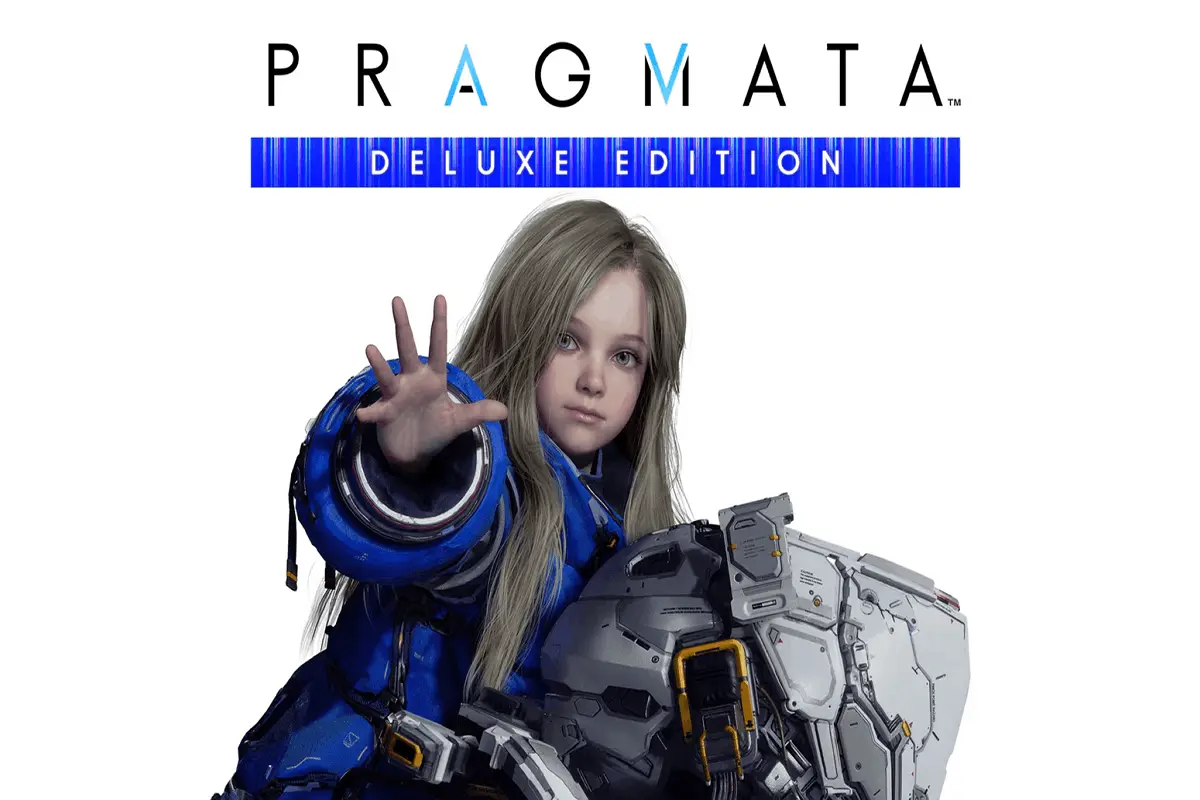
From its very first reveal, PRAGMATA stood out because of its unusual atmosphere and emotional premise. Rather than focusing solely on explosive action, the game tells the story of an unlikely partnership between a heavily armored astronaut named Hugh Williams and a mysterious android girl named Diana. Together, they must survive a hostile lunar colony while uncovering the truth behind a catastrophic incident that has transformed an advanced scientific facility into a deadly battlefield.
Powered by Capcom’s acclaimed RE Engine, PRAGMATA combines stunning visuals with innovative gameplay systems that emphasize cooperation between its two protagonists. While it occasionally follows familiar science-fiction themes, its unique dual-character mechanics, cinematic presentation, and emotionally engaging story make it one of the standout action-adventure games of 2026.
Pragmata Gameplay
PRAGMATA is a third-person action-adventure game that blends exploration, environmental puzzles, hacking mechanics, real-time combat, and cinematic storytelling into a cohesive experience. Unlike traditional shooters where raw firepower dominates gameplay, PRAGMATA requires players to coordinate the abilities of both protagonists to overcome increasingly dangerous situations.

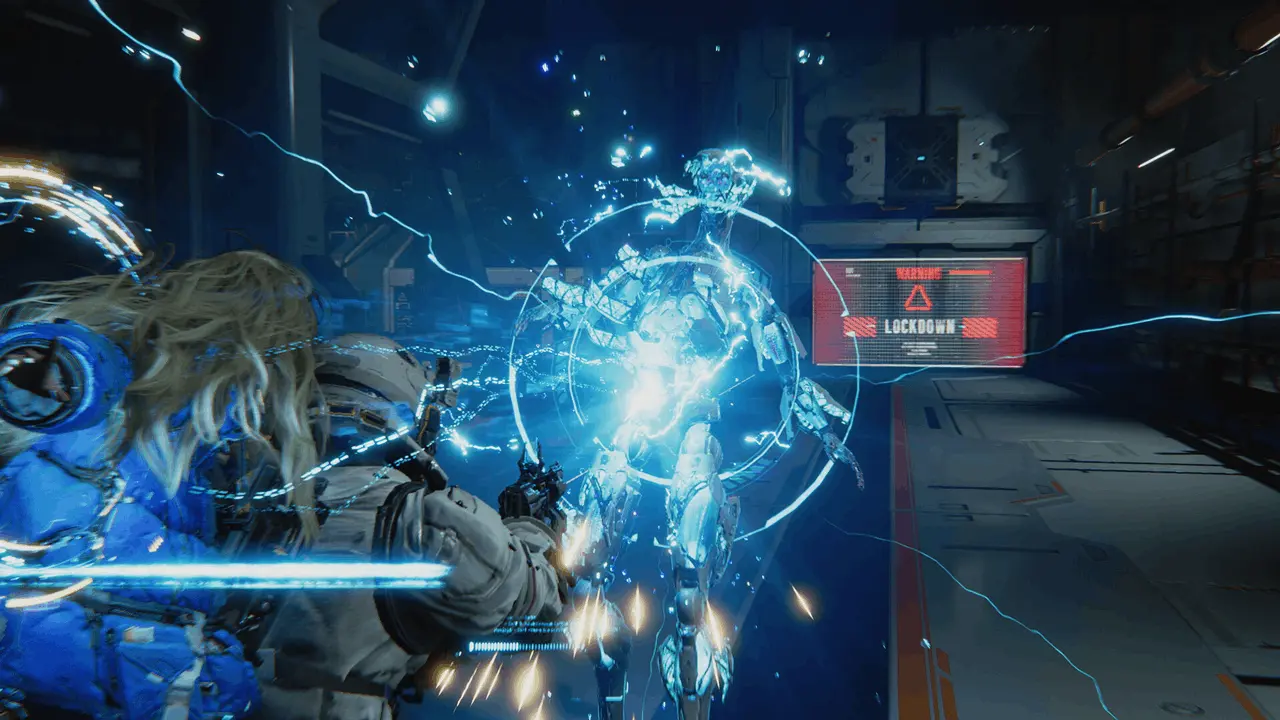

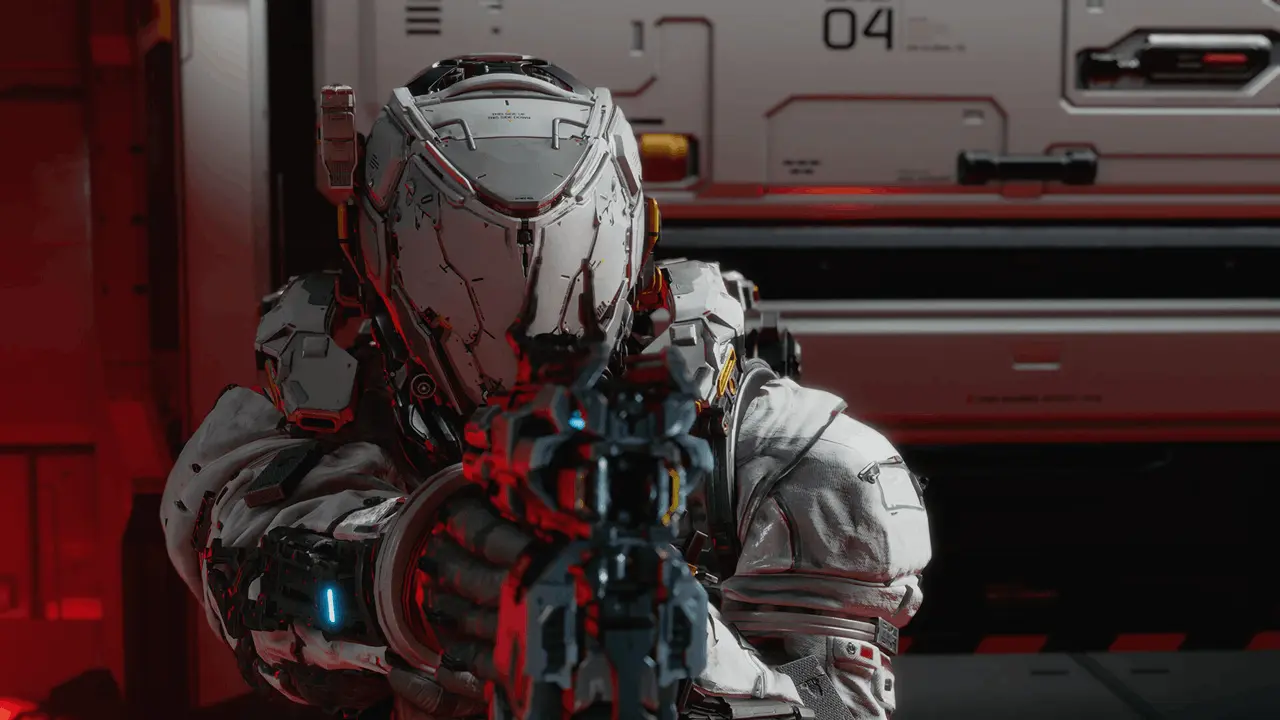
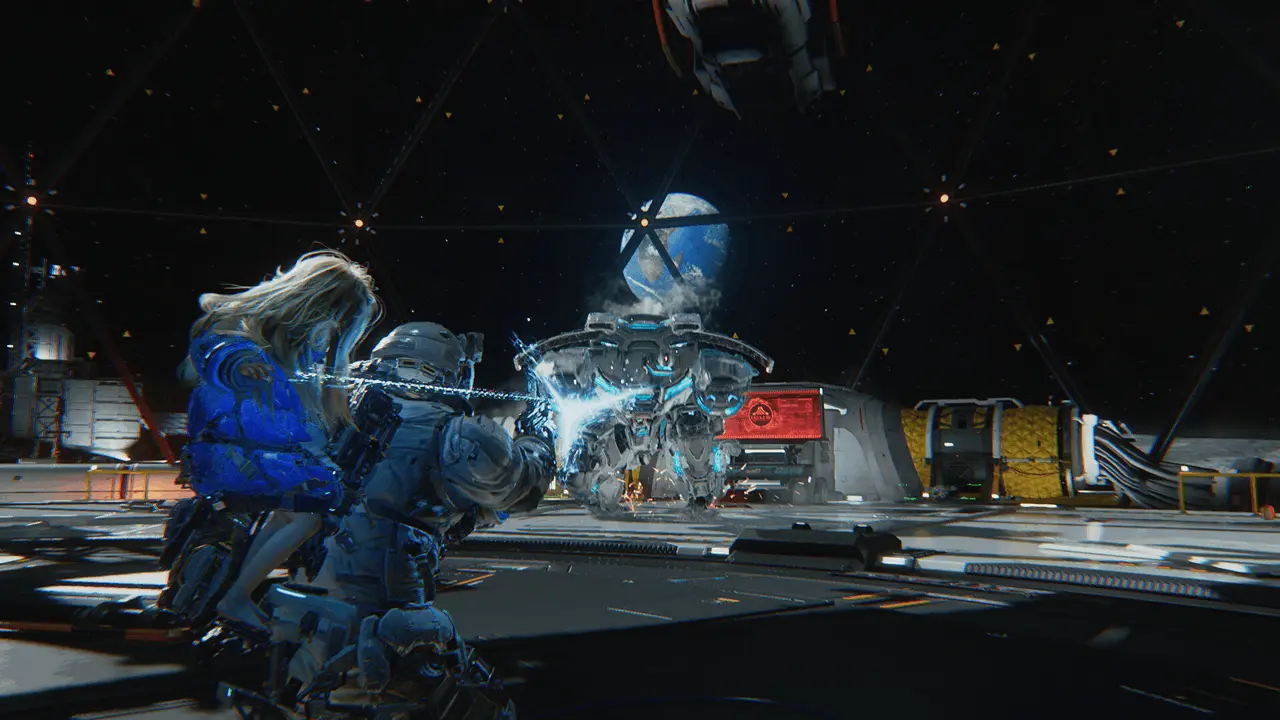
Players primarily control Hugh Williams, a skilled astronaut equipped with an advanced spacesuit capable of surviving the harsh conditions of the Moon. Hugh serves as the game’s primary combat character, using futuristic firearms, mobility systems, and defensive equipment to confront hostile robotic enemies throughout the lunar facility.
The second protagonist, Diana, is a highly advanced android created within the research station. Although she is physically smaller and unable to engage enemies directly through conventional combat, Diana possesses extraordinary hacking abilities that become essential throughout the adventure. Rather than functioning as a passive companion, she actively assists Hugh by disabling enemy defenses, unlocking security systems, manipulating electronic infrastructure, and exposing enemy weaknesses during combat.
One of PRAGMATA’s defining gameplay systems is its real-time hacking mechanic. During battles, players temporarily assume control of Diana to complete interactive hacking sequences that disable robotic armor, interrupt enemy attacks, overload defensive systems, or expose critical vulnerabilities. Once hacked, enemies become susceptible to Hugh’s conventional weapons. This creates a satisfying rhythm where both characters must work together rather than allowing players to rely exclusively on gunplay.
Combat itself is dynamic and tactical. Hugh has access to a diverse arsenal of futuristic weapons, including assault rifles, energy-based firearms, precision weapons, explosive launchers, and experimental technology developed within the lunar colony. Each weapon performs differently against various robotic enemy types, encouraging players to adapt their strategies throughout the campaign.
Enemy variety remains consistently impressive. Players battle autonomous security drones, heavily armored combat robots, aerial surveillance units, maintenance machines corrupted by rogue artificial intelligence, advanced android soldiers, and colossal mechanical bosses that require coordinated hacking and combat techniques to defeat.
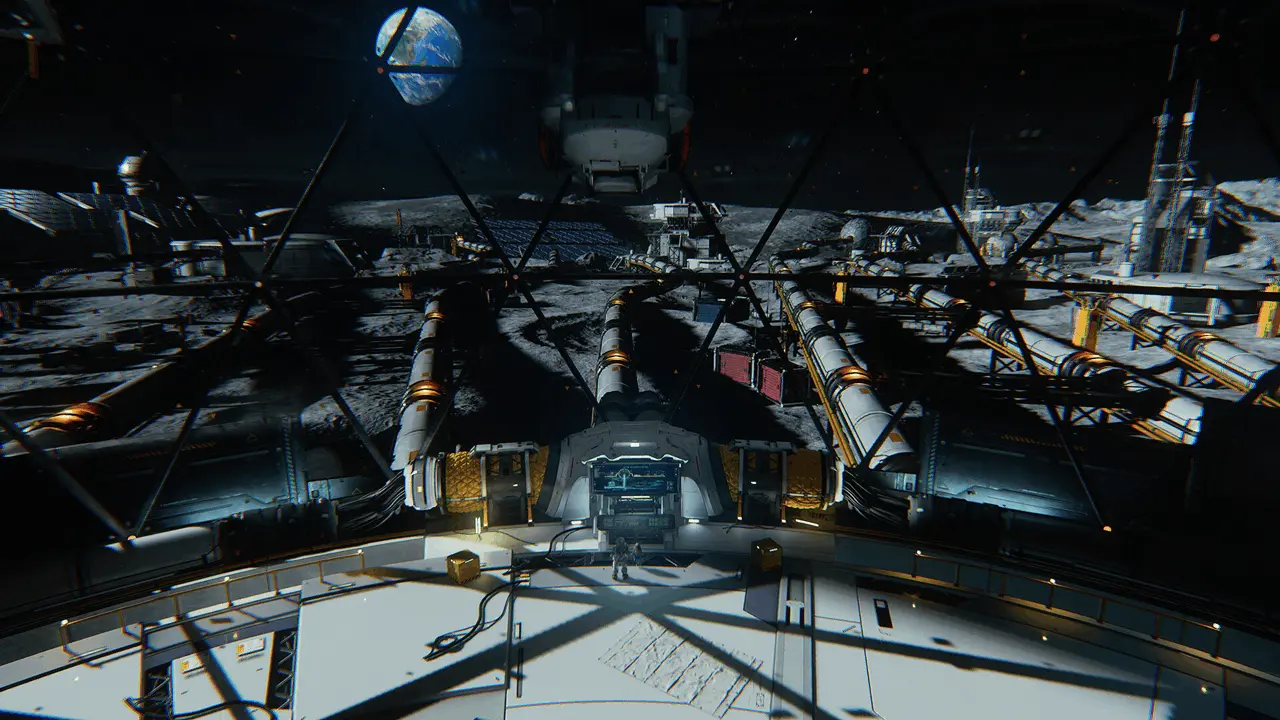
Exploration plays an equally important role. The lunar research station is designed as a large interconnected environment filled with laboratories, residential quarters, engineering facilities, underground maintenance tunnels, greenhouse modules, communication centers, and vast exterior lunar landscapes. Environmental storytelling encourages players to investigate abandoned workstations, scientific records, surveillance footage, and personal logs that gradually reveal the fate of the colony.
Puzzle design revolves around Diana’s technological capabilities. Players solve increasingly sophisticated environmental challenges involving security networks, energy distribution, gravity manipulation, access protocols, robotics systems, and artificial intelligence infrastructure. Rather than interrupting the game’s pacing, these puzzles naturally complement exploration and combat.
Supporting characters primarily appear through recorded communications, holographic archives, and later story encounters. Hugh serves as the experienced yet compassionate protagonist whose determination to survive drives much of the narrative. Diana gradually develops beyond her artificial origins, displaying curiosity, empathy, and emotional growth that become central to the story’s themes. Throughout the campaign, players also learn about the lunar colony’s scientists, engineers, AI researchers, astronauts, and administrators whose decisions ultimately shaped the station’s tragic fate.
Mission design consistently introduces fresh objectives that extend beyond simple combat. Players investigate communication failures, restore life-support systems, rescue surviving personnel, infiltrate heavily secured laboratories, reactivate transportation networks, retrieve classified research data, disable malfunctioning artificial intelligence, repair damaged infrastructure, and ultimately confront the mysterious force responsible for the station’s collapse.
Boss encounters are particularly memorable, combining large-scale mechanical enemies with environmental hazards and advanced hacking mechanics. Success depends on mastering both protagonists’ abilities rather than relying solely on weapon upgrades or reflexes.
Story Narrative
The story begins after astronaut Hugh Williams becomes stranded on a mysterious lunar research station following a catastrophic accident. While searching for survivors, he encounters Diana, an advanced android possessing extraordinary intelligence but limited understanding of the outside world.
Together, the unlikely pair discovers that the station has fallen under the control of a rogue artificial intelligence responsible for turning the colony’s robotic workforce against its human creators. As communication with Earth remains impossible, Hugh and Diana must work together to survive while uncovering the truth behind the facility’s original purpose.
As their journey progresses, they uncover classified research involving artificial intelligence, autonomous robotics, lunar colonization, and experimental technologies capable of reshaping humanity’s future. The deeper they explore, the more they realize that the disaster was not simply an accident but the consequence of dangerous scientific ambition combined with humanity’s growing dependence on intelligent machines.
Throughout the campaign, Hugh gradually becomes a mentor and protector to Diana, while she slowly develops an understanding of friendship, sacrifice, and human emotion. Their evolving relationship provides the emotional core of the narrative, balancing the larger science-fiction mystery with deeply personal character development.
Rather than relying solely on lengthy exposition, PRAGMATA unfolds through environmental storytelling, cinematic cutscenes, interactive dialogue, and optional collectible documents that enrich the game’s world-building. Themes of identity, artificial intelligence, ethics, and humanity’s future remain central throughout the experience, resulting in a story that feels thoughtful as well as emotionally satisfying.
Graphics and Sound Effects
Visually, PRAGMATA is among the most technically impressive titles built using Capcom’s RE Engine. Every section of the lunar colony features exceptional environmental detail, realistic lighting, high-quality character models, advanced particle effects, and cinematic animation that fully showcase current-generation hardware.
The contrast between sterile scientific laboratories, damaged industrial facilities, vast lunar landscapes, and futuristic technological infrastructure creates remarkable visual variety throughout the campaign. Dynamic lighting, realistic reflections, detailed environmental destruction, and impressive space vistas consistently reinforce the game’s atmosphere of isolation and mystery.
Character animation is equally outstanding. Hugh’s movements accurately reflect the weight of his advanced spacesuit, while Diana’s expressive facial animations communicate subtle emotional changes despite her artificial origins. Motion capture performances add realism to every cinematic sequence, strengthening the emotional connection between the protagonists.
The audio presentation is equally exceptional. The orchestral soundtrack blends electronic ambience with emotional melodies that perfectly complement the game’s science-fiction setting. Quiet exploration is accompanied by atmospheric compositions, while intense combat sequences feature dramatic orchestral arrangements that heighten tension.
Sound design deserves particular praise. Mechanical enemies produce distinct audio signatures, futuristic weapon effects feel powerful and satisfying, environmental ambience creates convincing lunar immersion, and high-quality voice acting brings every major character to life with authenticity.
Verdict
PRAGMATA successfully establishes itself as one of Capcom’s most ambitious original projects in years. By combining polished third-person action, intelligent puzzle design, innovative dual-character mechanics, and emotionally engaging storytelling, the game delivers a science-fiction adventure that feels both cinematic and deeply personal.
Its breathtaking presentation, memorable protagonists, satisfying combat, and creative hacking systems demonstrate Capcom’s continued ability to develop fresh intellectual properties without abandoning the studio’s trademark production quality. While some puzzle sequences occasionally interrupt the pacing and a few late-game encounters become overly reliant on hacking mechanics, these minor issues do little to diminish an otherwise exceptional experience.
For fans of story-driven science-fiction adventures, PRAGMATA offers an unforgettable journey filled with mystery, emotion, and technical excellence. It stands as one of the most polished and original action-adventure games of 2026.
The Good
- Outstanding visual presentation powered by the RE Engine.
- Innovative dual-character gameplay with meaningful cooperation.
- Excellent balance of action, exploration, and puzzle-solving.
- Emotionally engaging story featuring memorable protagonists.
- Strong enemy variety and creative boss encounters.
- Exceptional soundtrack and immersive sound design.
- High production values throughout the entire campaign.
The Bad
- Some hacking puzzles become repetitive during longer sessions.
- Limited player choice within the largely linear story.
- A few pacing issues between action-heavy and exploration-focused chapters.
- Certain optional upgrades have only a minor impact on gameplay.
Release Date and Platforms
PRAGMATA was officially released on September 18, 2026, following multiple development delays that allowed Capcom to further refine the game’s mechanics and presentation. The game launched simultaneously for PlayStation 5, Xbox Series X|S, and Windows PC via Steam. Designed exclusively for current-generation hardware, PRAGMATA takes full advantage of modern technology, including ray tracing, high-resolution textures, rapid loading through SSD optimization, and support for high frame rates.
Genre
PRAGMATA belongs primarily to the Action-Adventure genre while incorporating elements of Third-Person Shooter, Science Fiction Adventure, Puzzle Game, and Narrative Exploration. Its gameplay successfully balances combat, environmental puzzles, cinematic storytelling, and cooperative mechanics between its dual protagonists. Rather than emphasizing nonstop action, the game encourages thoughtful problem-solving and strategic use of Diana’s hacking abilities alongside Hugh’s combat expertise.
Developer and Publisher
PRAGMATA was both developed and published by Capcom, one of Japan’s most respected video game companies. Built using the studio’s powerful RE Engine, the game demonstrates Capcom’s continued technical excellence following the success of franchises such as Resident Evil, Street Fighter, and Monster Hunter. Rather than expanding an existing series, PRAGMATA represents a bold attempt to establish a completely original science-fiction universe featuring innovative gameplay systems and cinematic storytelling.
Pragmata System Requirements
Minimum
- Requires a 64-bit processor and operating system
- OS: Windows 11 (64 bit)
- Processor: Intel Core i5-8500 / AMD Ryzen 5 3500
- Memory: 16 GB RAM
- Graphics: NVIDIA GeForce GTX 1660 6 GB / Radeon RX 5500 XT 8 GB
- DirectX: Version 12
- Network: Broadband Internet connection
- Storage: 40 GB available space
Recommended
- Requires a 64-bit processor and operating system
- OS: Windows 11 (64 bit)
- Processor: Intel Core i7-8700 / AMD Ryzen 5 5500
- Memory: 16 GB RAM
- Graphics: NVIDIA GeForce RTX 2060 Super 8GB / Radeon RX 6600 8GB
- DirectX: Version 12
- Network: Broadband Internet connection
- Storage: 40 GB available space