A Stunning Return to the Golden Age of Piracy
Game Introduction
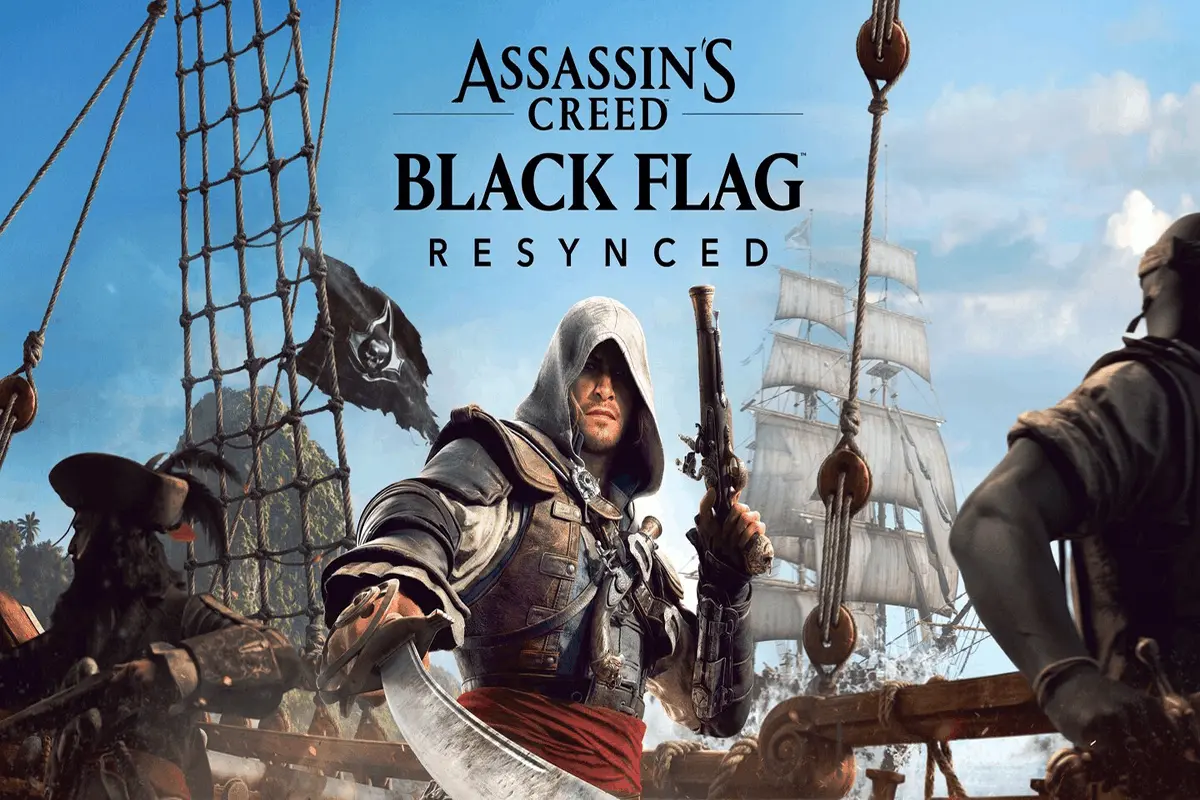
Assassin’s Creed Black Flag: Resynced is a full-scale remake of Ubisoft’s beloved 2013 pirate adventure, Assassin’s Creed IV: Black Flag. Rather than simply increasing the resolution and improving textures, Resynced rebuilds the experience around the latest evolution of Ubisoft’s Anvil engine, combining a completely refreshed presentation with redesigned combat, improved stealth and parkour, expanded naval gameplay, new missions, additional character stories, and quality-of-life improvements. The result is an ambitious attempt to modernize one of the most popular entries in the Assassin’s Creed franchise without losing the sense of freedom that made the original so memorable.
At the center of the adventure is Edward Kenway, a Welsh privateer who becomes a pirate while pursuing wealth, reputation, and a life beyond the control of governments and society. His journey takes place across the Caribbean during the Golden Age of Piracy, bringing him into contact with legendary pirates, Assassins, Templars, merchants, naval officers, and other historical figures. Resynced preserves the original adventure while expanding several character arcs and adding more than six hours of new content.
Assassin’s Creed Black Flag: Resynced Gameplay
The heart of Black Flag: Resynced remains the combination of open-world exploration, sword fighting, stealth, treasure hunting, assassination, and naval warfare. Edward can freely travel between islands, cities, plantations, ruins, forts, underwater locations, and small settlements while commanding his ship, the Jackdaw. Sailing remains one of the game’s greatest attractions. The Caribbean is not simply a backdrop between missions; it is a massive playground where players can hunt ships, discover locations, search for treasure, dive beneath the water, collect resources, upgrade the Jackdaw, and encounter unexpected events while travelling between destinations.
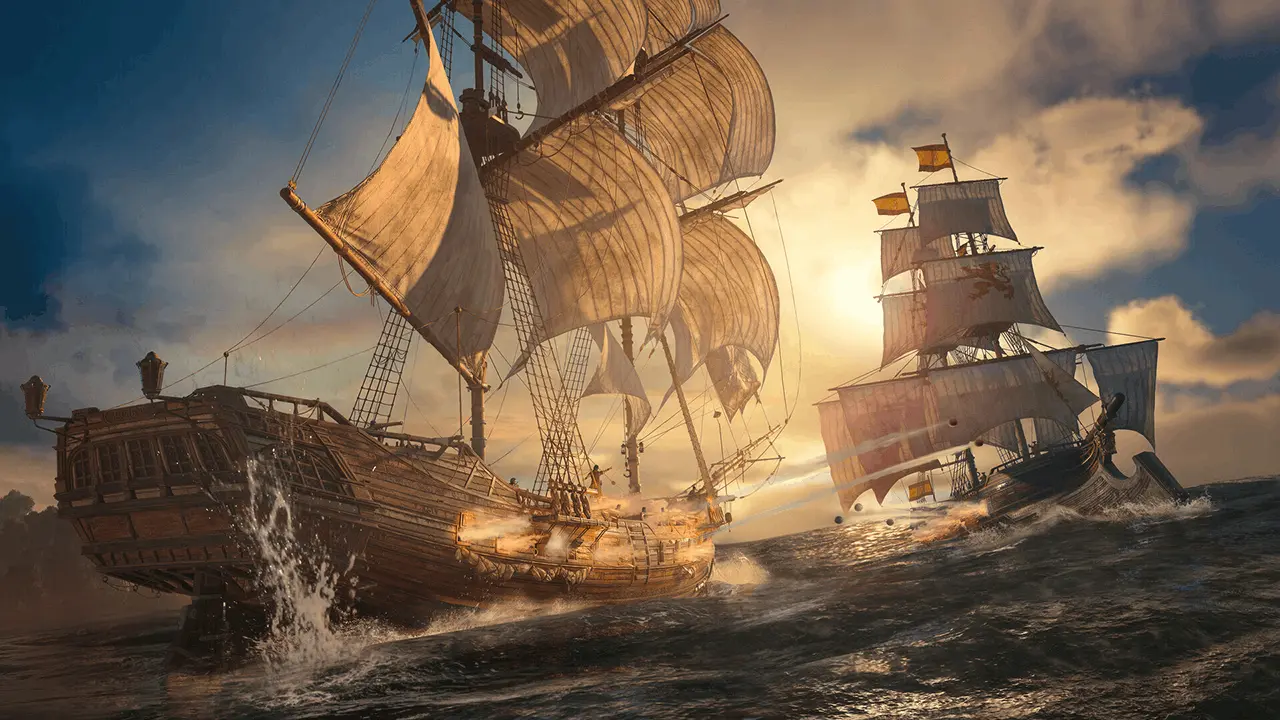
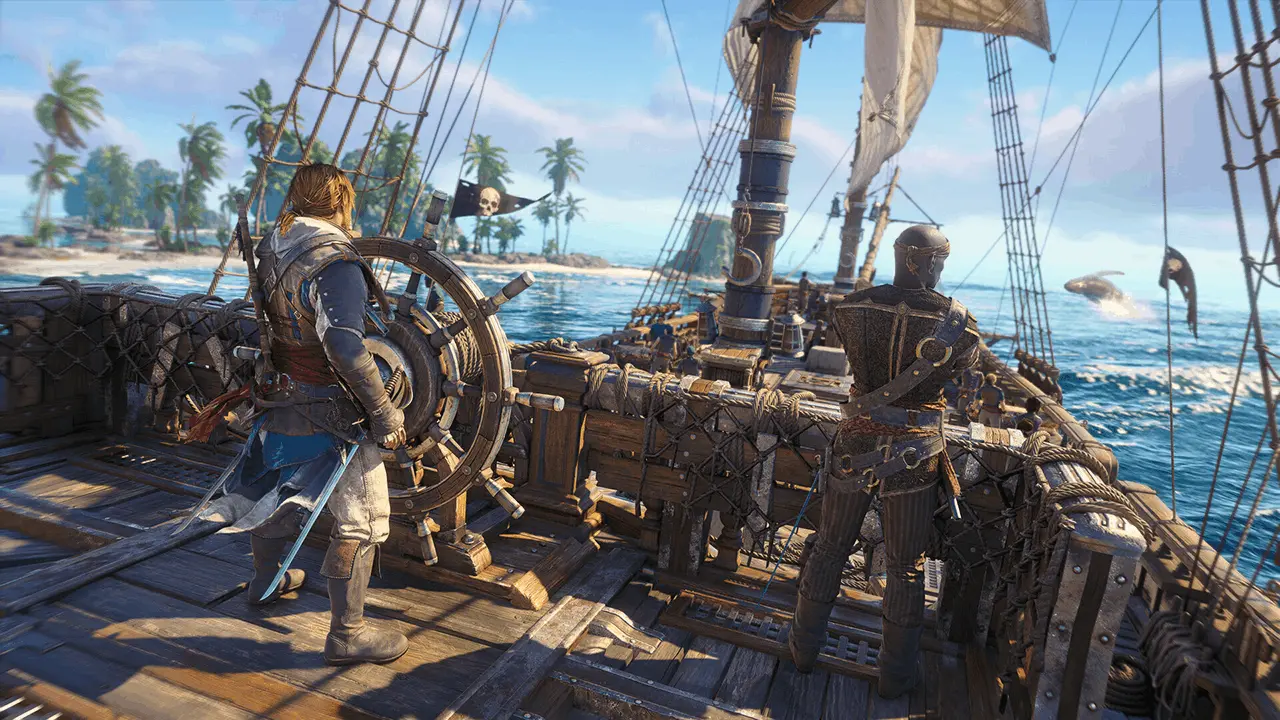
Naval combat has received particular attention. The Jackdaw can engage merchant vessels, military ships, legendary enemies, and other targets while players manage positioning, cannon fire, mortars, ramming attacks, boarding opportunities, and defensive manoeuvres. New recruitable officers expand these systems further. Lucy Baldwin, The Padre, and Tobias “Deadman” Smith each have dedicated questlines and provide unique benefits to Edward’s crew. Their stories are integrated into the wider adventure rather than feeling like completely disconnected side content.
Lucy Baldwin is a shipwright whose recruitment adds a new dimension to the Jackdaw’s defensive capabilities. The Padre serves as a master-at-arms and contributes to boarding and aggressive naval encounters, while Tobias “Deadman” Smith is a specialist gunner who improves the ship’s offensive firepower. Recruiting them requires completing their individual story missions, giving players another reason to explore the Caribbean beyond the main campaign.
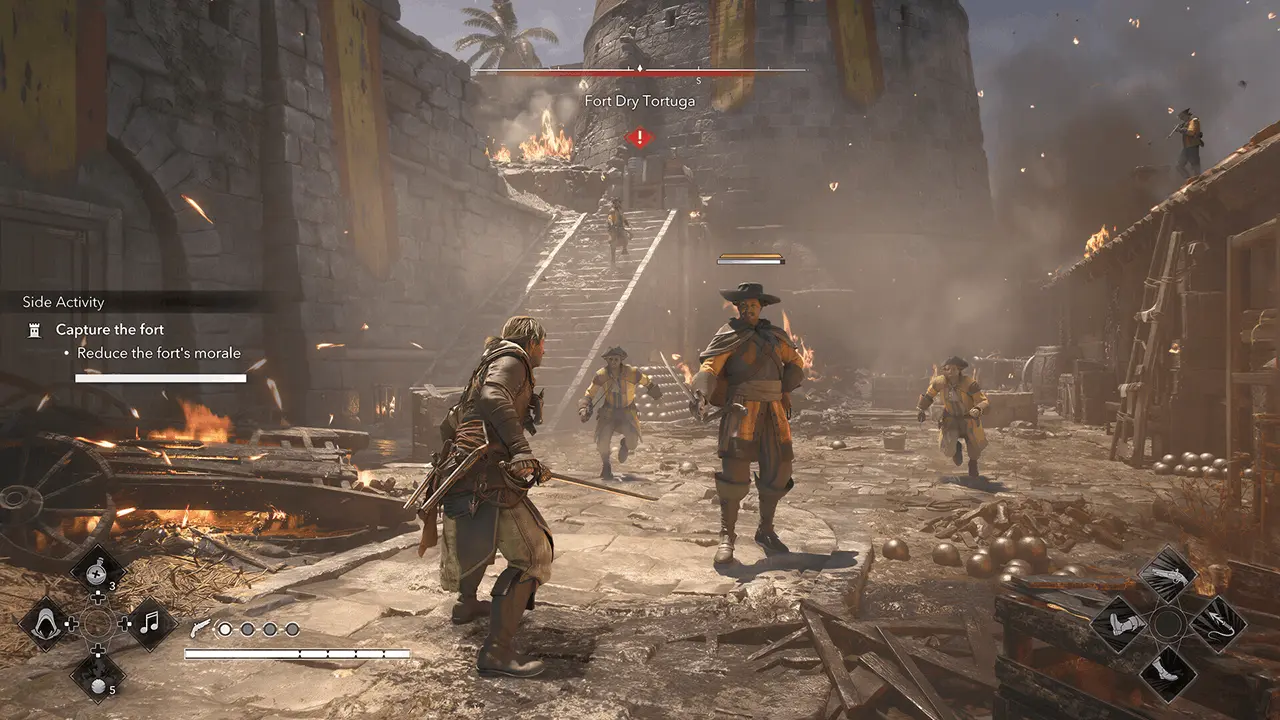
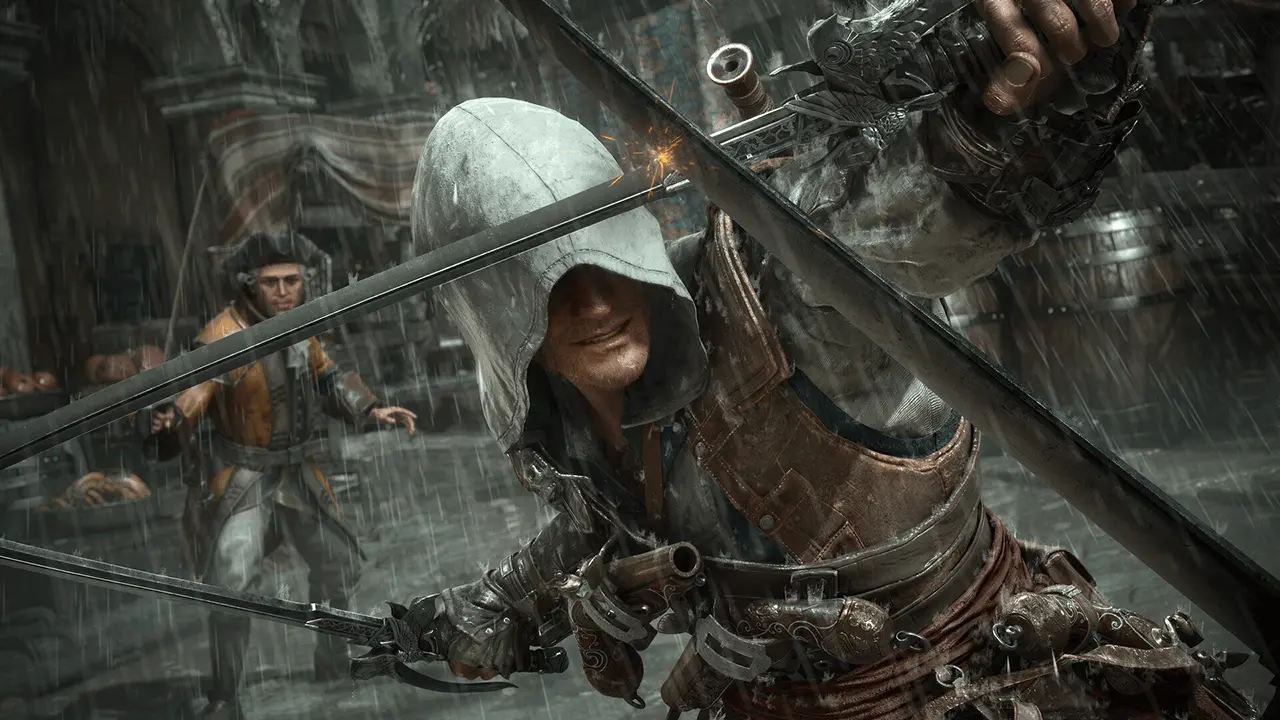
On land, combat has been substantially modernized. Sword fights are more deliberate, with improved parries, dodges, chained attacks, and additional combat options. Edward also has access to tools such as the rope dart and new kicking and sweeping techniques. However, this modernization is somewhat controversial because Resynced reduces some of the weapon variety and tactical freedom found in the original game. The result is a more contemporary combat system that looks smoother but does not always provide the same variety veterans may remember.
Stealth has also been redesigned. Edward can crouch freely, move quietly through environments, use cover, and take advantage of darkness, weather, and environmental conditions. Eagle Vision has been enhanced with modern observation features, while social stealth remains available. The remake also removes the mandatory failure conditions associated with most of the original tailing missions. Players can approach certain situations more aggressively if they want, which makes mission progression less restrictive.
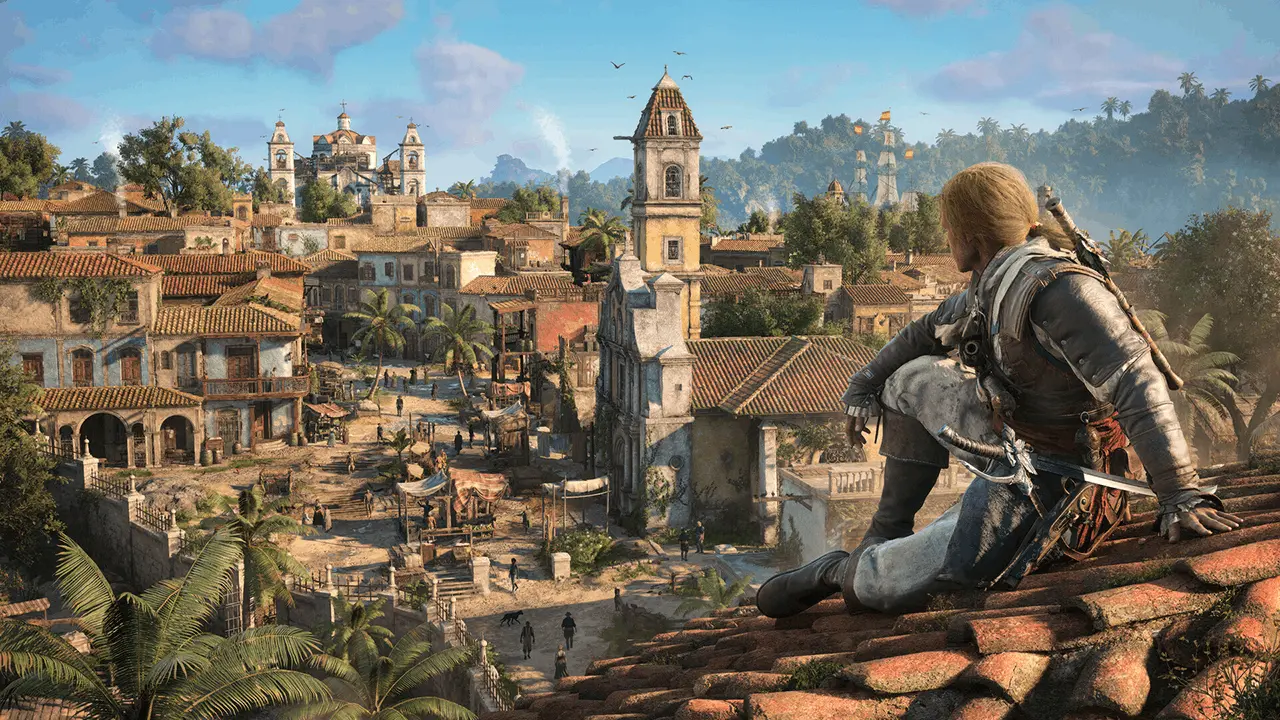
Parkour has been updated as well. Edward’s movement is quicker and more responsive, while features such as manual jumping, improved traversal animations, back and side ejects, and new ziplines make movement through cities and settlements more flexible. Underwater exploration has also been expanded, allowing players to dive in more locations rather than treating underwater areas as isolated activities.
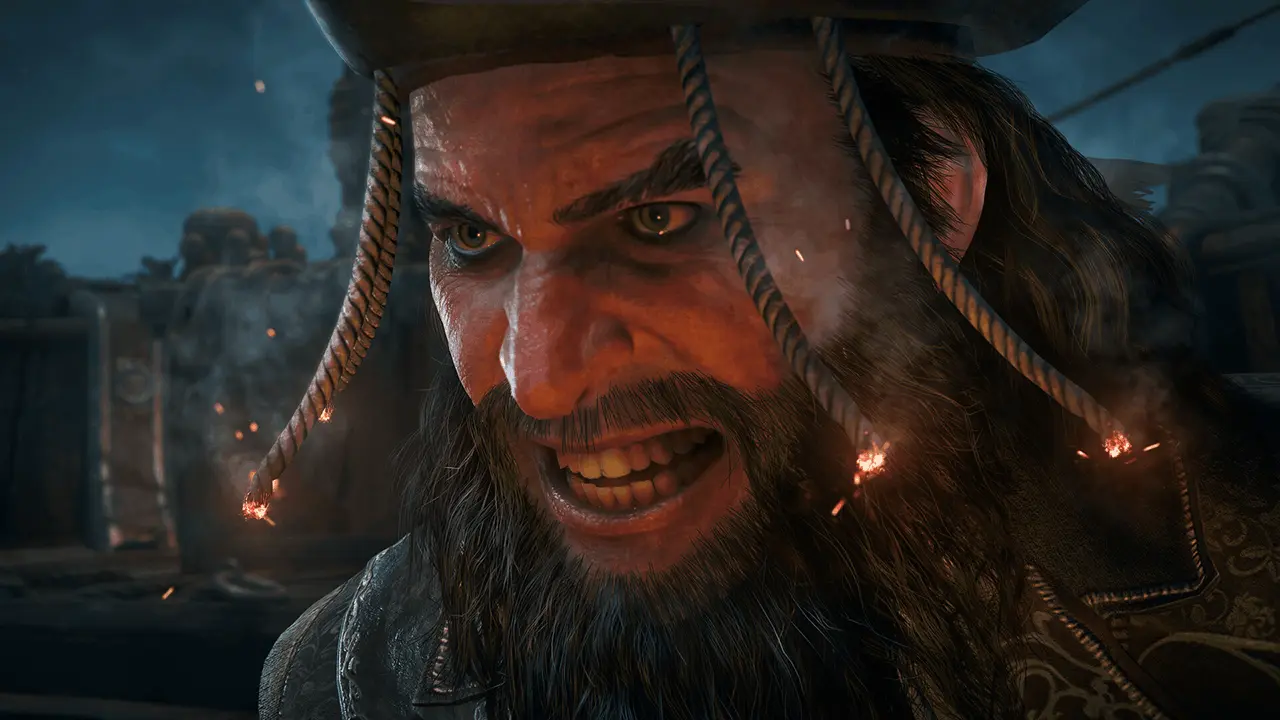
The main campaign still revolves around the original missions, including Edward’s encounters with Assassins and Templars, his relationships with pirates such as Blackbeard, Charles Vane, Benjamin Hornigold, Jack Rackham, Stede Bonnet and Anne Bonny, and his pursuit of the mysterious Sage, Bartholomew Roberts. James Kidd, later revealed to be Mary Read, remains one of the most important characters in Edward’s transformation, while Ah Tabai represents the Assassin Brotherhood and becomes central to Edward’s eventual change of heart.
The remake adds several new mission arcs. Blackbeard receives additional material, while Stede Bonnet receives a new quest that provides greater closure to his story. Robert Maynard also becomes the focus of the new endgame chapter, “A World Without Gold,” an eight-mission storyline that extends Edward’s adventure after the main campaign. There are also four Animus Rift activities, new treasure-related missions, additional scenes involving Caroline, and recruitment missions for the three new officers.
Other features include Kenway’s Fleet, now integrated directly into the game instead of being dependent on the old companion-app approach. Players can manage captured ships and send them on missions while continuing their own adventure. The Jackdaw also supports additional customization, new upgrades, and even animal companions, allowing players to have either a cat or monkey aboard the ship. Sea shanties remain an important part of the experience, with the original collection joined by ten new songs, including a new version of “Leave Her Johnny” associated with Woodkid.
Story Narrative
The story follows Edward Kenway, a young privateer whose desire for wealth and independence places him in the middle of the Assassin-Templar conflict. After a shipwreck, Edward encounters Duncan Walpole, a Templar Assassin, and assumes Walpole’s identity to take advantage of a lucrative opportunity. His deception leads him to Havana, where he encounters Templar figures including Laureano Torres and Woodes Rogers. Edward’s search for personal wealth gradually becomes connected to the Sage and the mysterious Observatory, a powerful location capable of revealing information about virtually anyone.
Edward’s journey introduces him to some of the most memorable characters in the franchise. Blackbeard becomes both a friend and an influential pirate figure, while Benjamin Hornigold, Charles Vane, Jack Rackham and Stede Bonnet represent different visions of pirate freedom. Mary Read, disguised as James Kidd, introduces Edward to the Assassin Brotherhood, while Anne Bonny becomes an important presence during the later stages of his story. Ah Tabai repeatedly challenges Edward’s selfish outlook and eventually helps guide him toward becoming a genuine Assassin.
The tragedy of the pirate dream gradually becomes apparent. Nassau’s pirate republic struggles with disease, political instability, economic problems, and internal betrayal. Blackbeard’s death, Hornigold’s transformation, Rackham’s betrayal, Mary Read’s death, and the destruction of Edward’s earlier ambitions force him to reconsider what he actually wants from life. His pursuit of the Observatory ultimately becomes less about wealth and more about preventing the Templars from gaining control of its power. The story concludes with Edward embracing the Assassin cause and confronting the consequences of his past, including the death of Caroline and the discovery that he has a daughter, Jennifer Scott.
Resynced expands this emotional side of Edward’s story through additional scenes involving Caroline and new quests for characters such as Blackbeard and Stede Bonnet. These additions attempt to make Edward’s personal transformation more visible and give several supporting characters stronger conclusions. The removal of the original Abstergo-focused modern-day structure is one of the remake’s most significant narrative changes, however, and critics remain divided over whether this streamlining improves the experience or removes an important part of Assassin’s Creed’s identity.
Graphics and Sound Improvements
Visually, Resynced is a dramatic transformation. Ubisoft rebuilt the game using the latest version of the Anvil engine, adding ray-traced lighting and reflections, global illumination, physically based rendering, micropolygon technology, improved character models, and modern water simulation. The Caribbean’s turquoise seas, dense vegetation, beaches, storms, sunsets, ships, cities, and underwater environments benefit enormously from the new technology. Dynamic weather and improved environmental detail make sailing particularly atmospheric, especially when storms transform calm waters into dangerous naval battlefields.
Audio remains equally important to the pirate fantasy. Cannon fire, sword clashes, ship creaking, waves, storms, environmental ambience, and character performances all contribute to the atmosphere. The return of the original cast, alongside newly recorded dialogue, helps preserve the personality of the classic characters. Most importantly, the sea shanties remain an essential part of the experience, with ten new songs added to the original collection. Hearing Edward’s crew sing while the Jackdaw crosses a sunset-lit Caribbean remains one of the remake’s most effective atmospheric touches.
Verdict
Assassin’s Creed Black Flag: Resynced succeeds because the fundamental fantasy of being Edward Kenway has aged remarkably well. The spectacular Caribbean world, satisfying naval exploration, memorable cast, pirate atmosphere, and emotional character journey remain its greatest strengths, while the rebuilt visuals, improved stealth, modernized traversal, new missions, recruitable officers, expanded naval systems, and additional story content make this far more than a simple graphical remaster. At the same time, some of the redesign decisions are debatable, particularly the reduced combat variety, uneven implementation of stealth, removal of much of the original modern-day narrative, and occasional repetition. For newcomers, Resynced is arguably one of the most accessible ways to experience Edward Kenway’s legendary adventure; for longtime fans, it is an impressive but imperfect reinterpretation of a classic.
The Good
- Stunning modern presentation with upgraded lighting, environments, characters, and water technology.
- Excellent pirate atmosphere and a beautifully realized Caribbean open world.
- Naval combat and exploration remain the game’s biggest strengths.
- Expanded stories for Blackbeard, Stede Bonnet and other memorable characters.
- Three new recruitable officers and more than six hours of additional content.
- Improved stealth, parkour, traversal, and quality-of-life features.
- New sea shanties and strong returning voice performances.
- Kenway’s Fleet is now properly integrated into the main game.
The Bad
- Removal of the original modern-day Abstergo storyline reduces some narrative depth.
- Revised combat sacrifices some of the weapon variety and freedom of the original.
- Stealth improvements are not always supported by equally sophisticated enemy AI.
- Some activities and mission structures can still feel repetitive.
- A few newly added scenes and animations can look less convincing than the original motion-captured material.
Release Date and Platforms
Assassin’s Creed Black Flag: Resynced was released on July 9, 2026, thirteen years after the original Black Flag. The remake launched for PlayStation 5, Xbox Series X|S, and PC. Ubisoft Singapore led development, with numerous Ubisoft studios contributing to the project. The game is designed specifically for modern hardware rather than being a cross-generation release, allowing the development team to rebuild environments, lighting, water simulation, character assets, and performance technology around current-generation systems.
Genre
The game belongs primarily to the action-adventure genre, combining open-world exploration, third-person combat, stealth, parkour, historical fiction, and naval combat. Unlike many modern Assassin’s Creed titles, Resynced does not turn Edward into a traditional RPG character with extensive dialogue choices, branching role-playing systems, or level-based progression. Instead, it focuses on a structured single-player adventure in which exploration, assassination missions, piracy, ship progression, treasure hunting, and character-driven storytelling work together. This focus helps preserve the identity that separated Black Flag from many other entries in the franchise.
Developer and Publisher
Assassin’s Creed Black Flag: Resynced is published by Ubisoft and was led primarily by Ubisoft Singapore, with development contributions from Ubisoft Barcelona, Bordeaux, Belgrade, Chengdu, India, Kyiv, Montpellier, Philippines, Quebec, and Shanghai. The original Black Flag was developed by Ubisoft Montreal, while Resynced brings together modern Ubisoft technology and several members of the original creative team. Richard Knight serves as game director and Paul Fu as creative director, while original writer Darby McDevitt returned to contribute to the expanded narrative.
Assassin’s Creed Black Flag: Resynced System Requirements
Minimum
- Requires a 64-bit processor and operating system
- OS: Windows 10 (64 bit only), Windows 11
- Processor: Intel Core i7-8700K 3.7 GHz, AMD Ryzen 5 3600 3.6 GHz
- Memory: 16 GB RAM
- Graphics: NVIDIA GeForce GTX 1660 (6GB), AMD Radeon RX5500XT (8GB) or Intel ARC A580 (8GB)
- DirectX: Version 12
- Storage: 65 GB available space
- Additional Notes: The game must be installed on a SSD.
Recommended
- Requires a 64-bit processor and operating system
- OS: Windows 10 (64 bit only), Windows 11
- Processor: Intel Core i5-10600K 4.1 GHz, AMD Ryzen 5 3600 3.6 GHz
- Memory: 16 GB RAM
- Graphics: NVIDIA GeForce RTX 3060 (12GB),AMD Radeon RX6600XT (8GB), or Intel ARC B580 (12GB)
- DirectX: Version 12
- Storage: 65 GB available space
- Additional Notes: The game must be installed on a SSD.