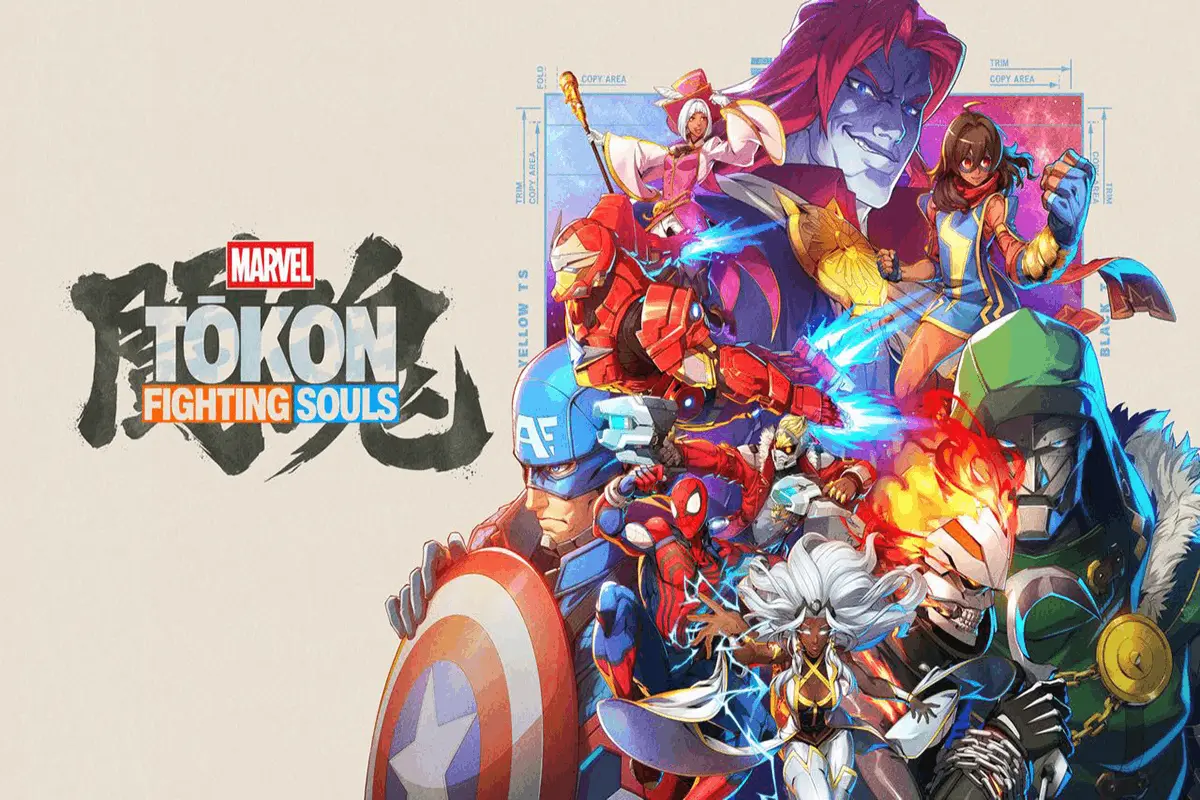
A Spectacular New Era for Marvel Fighting Games
Game Introduction
MARVEL Tokon: Fighting Souls is a stylish 4v4 tag-team fighting game developed by Arc System Works in collaboration with PlayStation Studios and Marvel Games. Rather than attempting to recreate the exact formula of Marvel vs. Capcom, the developers have built a new combat system around four-character teams, shared resources and constant assists. The result is a fighter that combines Marvel’s enormous superhero universe with Arc System Works’ trademark anime-inspired presentation and highly responsive combat. Early reviews from outlets including IGN, PC Gamer, GamesRadar and The Guardian have praised its accessibility, visual quality, training tools and innovative team mechanics, with many describing it as one of the strongest Marvel fighting games in years.
The game’s most interesting idea is that a match does not simply begin with four fighters available at once. Teams initially operate with a smaller selection, and players gradually bring additional teammates into the battle through specific gameplay actions. This makes team construction part of the match itself rather than something that exists only before the opening bell. Combined with a shared Vital Gauge, assists, character switching and cinematic super attacks, Tokon creates a very different rhythm from conventional tag fighters. It is approachable enough for newcomers to enjoy immediately, yet its systems offer considerable room for competitive players to explore.
Marvel Tokon: Fighting Souls Gameplay
At its core, MARVEL Tokon: Fighting Souls is a fast 2D fighting game built around four-character teams. Players select a squad of four Marvel heroes or villains, but the battle system does not treat those characters as four completely independent health pools. Instead, the entire team shares a Vital Gauge. This fundamental decision changes how players think about damage, switching, assists and defensive decisions because every mistake affects the team’s overall survival.
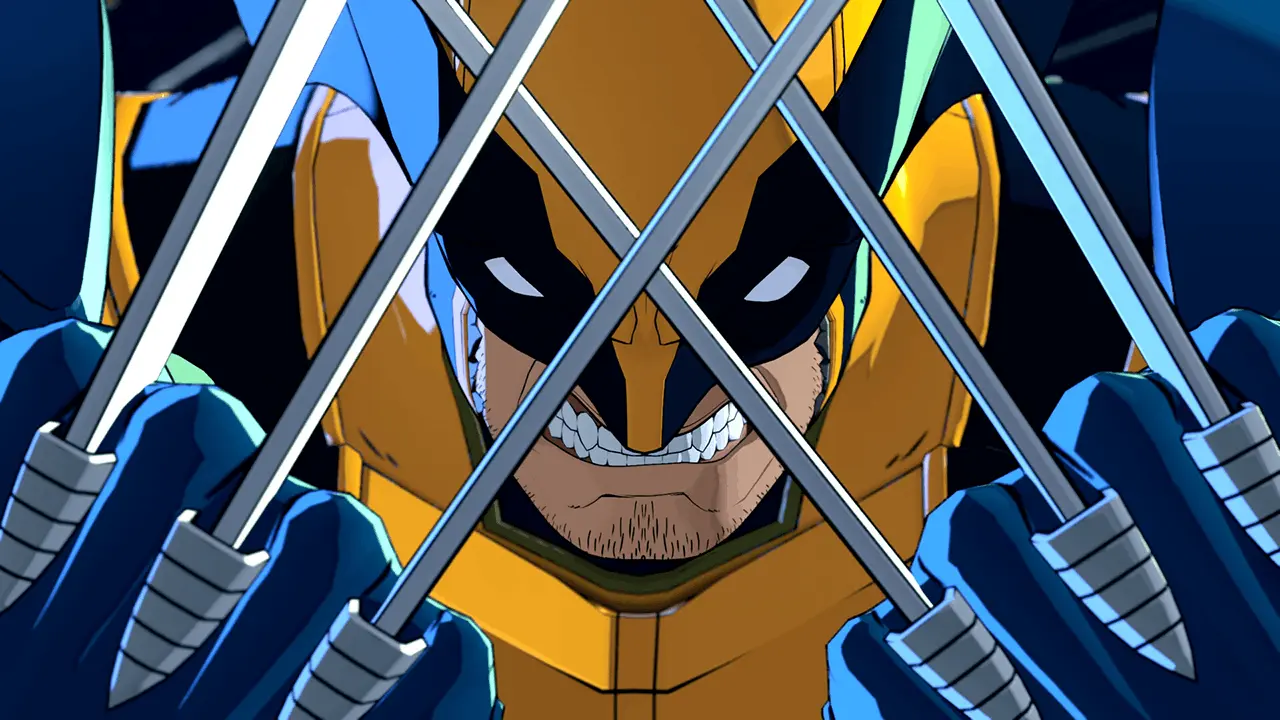
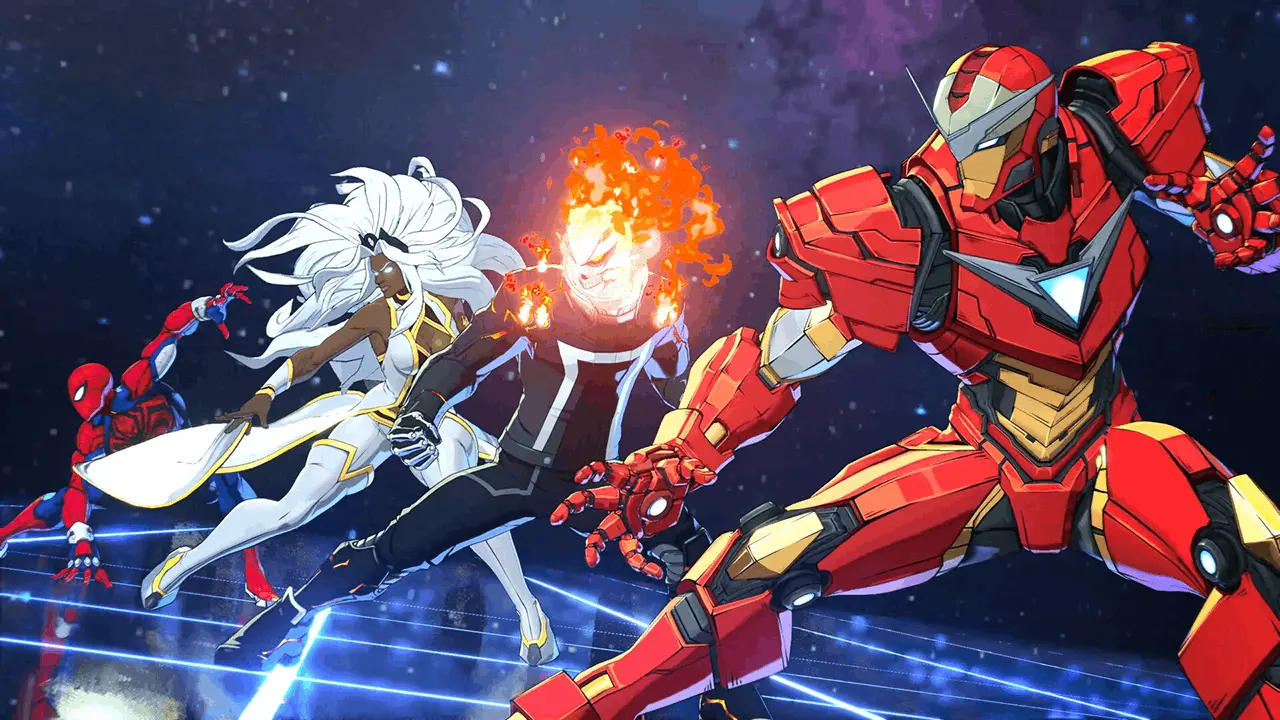
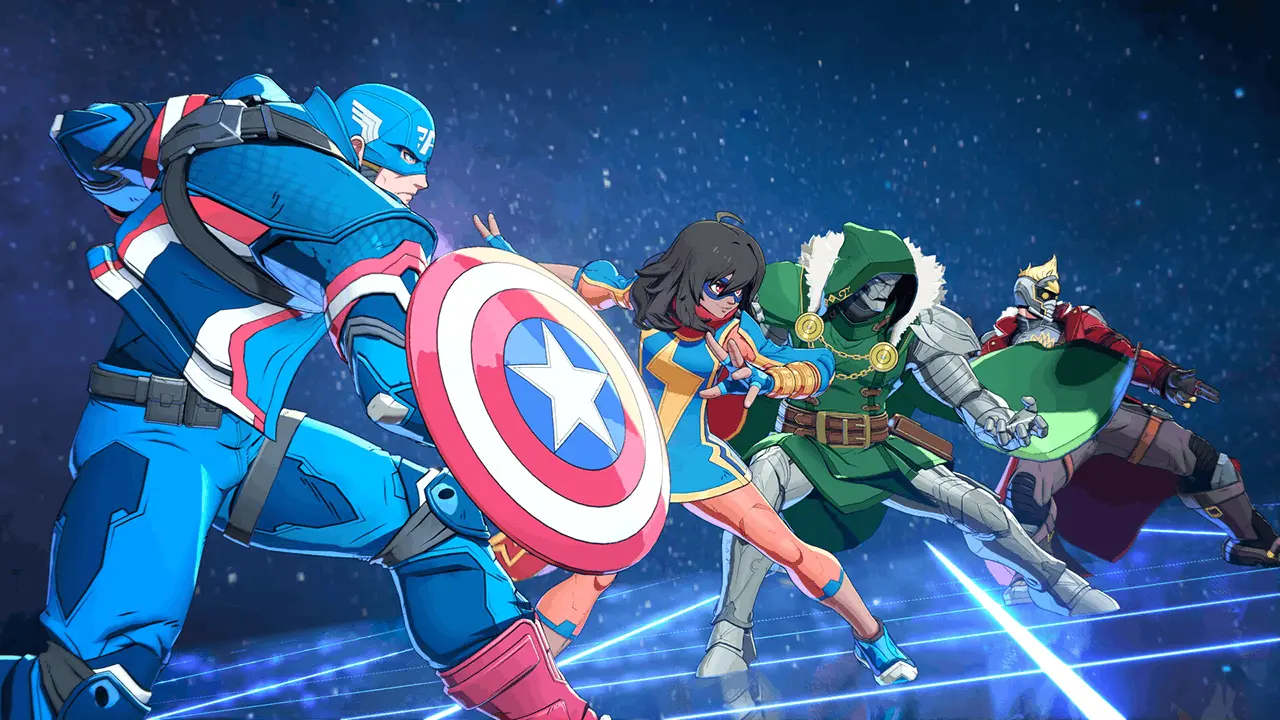
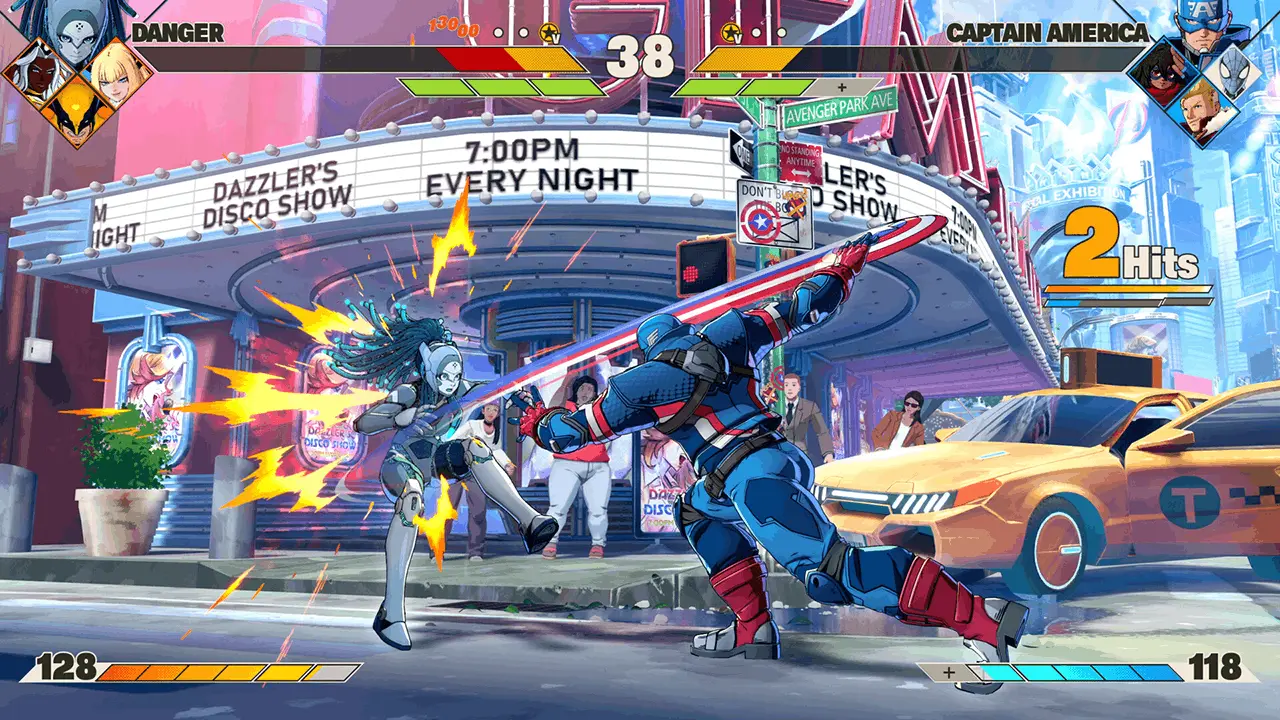
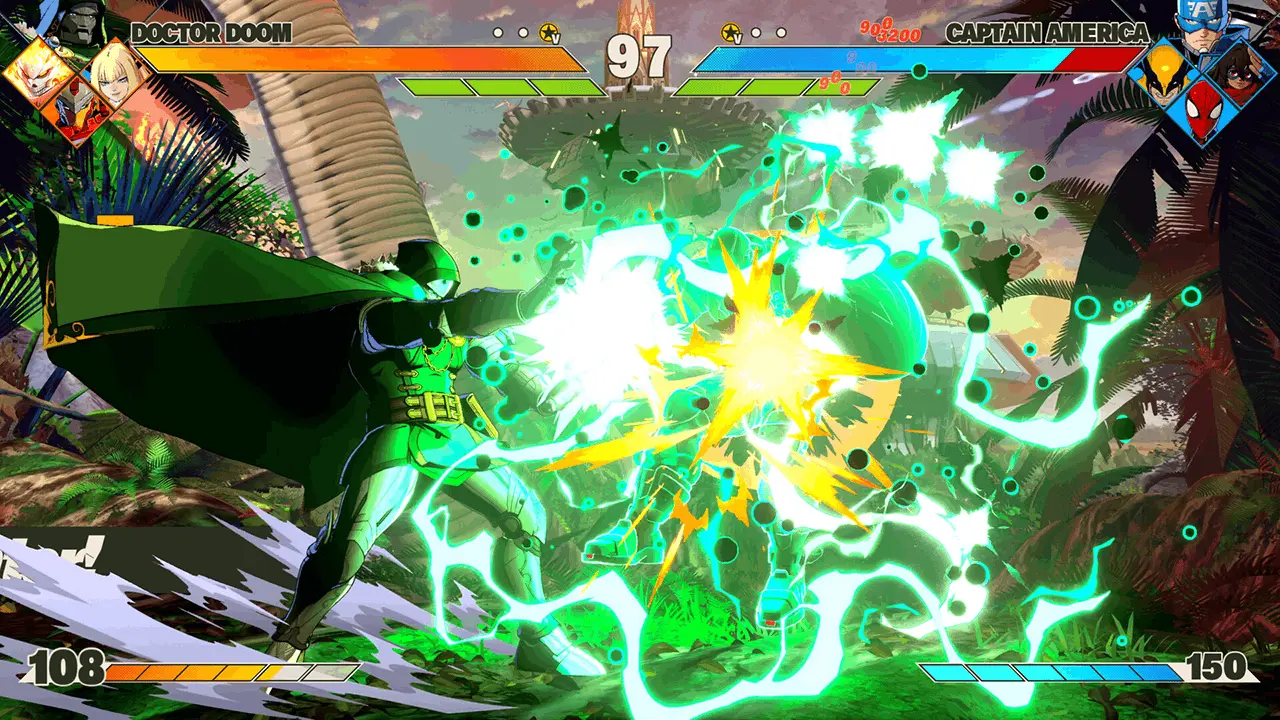
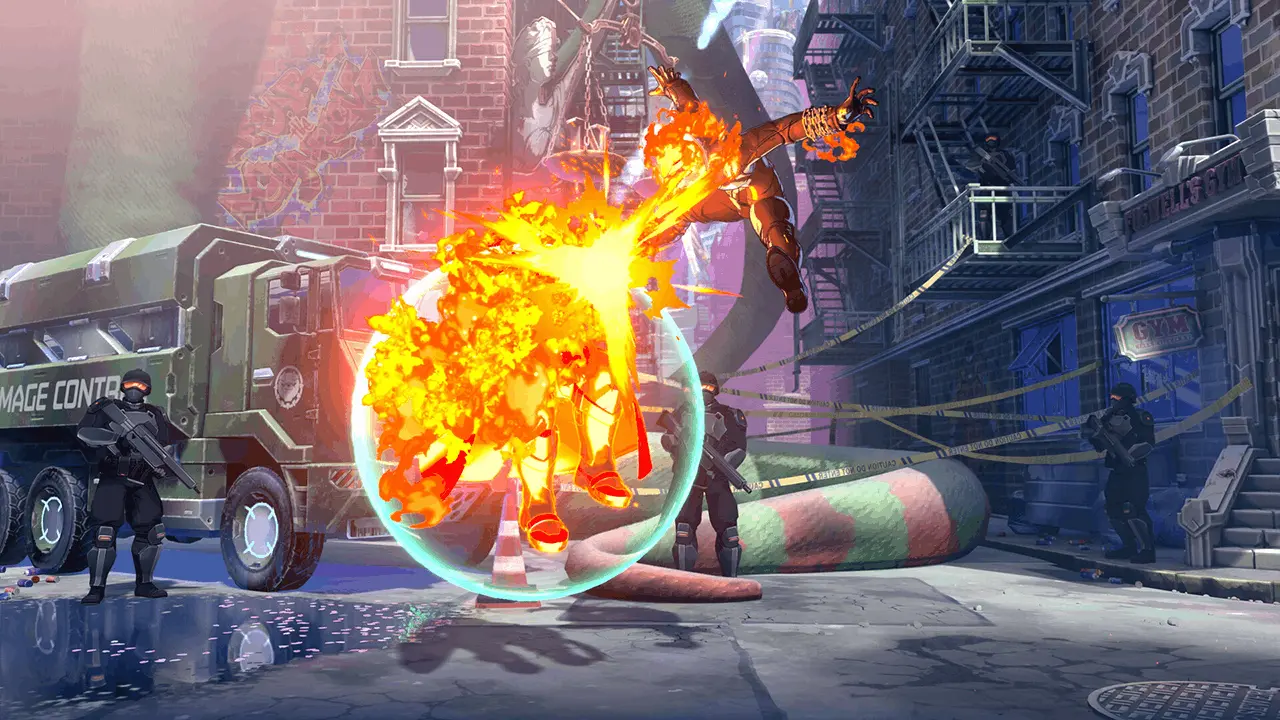
The launch roster contains 20 playable characters divided into five official teams. The Fighting Avengers consist of Captain America, Iron Man, Hulk and Black Panther. The Unbreakable X-Men feature Storm, Magik, Wolverine and Danger, the artificial intelligence associated with the X-Men’s Danger Room. The Amazing Guardians bring together Spider-Man, Ms. Marvel, Star-Lord and Peni Parker. The Knights of Doom consist of Doctor Doom, Magneto, Green Goblin and Carnage, while the Samurai outriders include Ghost Rider, Blade, Deadpool and Loki. Every fighter has an individual combat identity, meaning players can build teams around preferred characters rather than simply choosing the preset groups.
Captain America is an approachable all-rounder built around his shield, while Iron Man emphasizes ranged attacks and aerial control. Hulk brings enormous physical strength and a more aggressive approach, and Black Panther relies on speed and precise close-range attacks. Storm controls space with wind and lightning, Magik combines swordplay with supernatural abilities, Wolverine focuses on relentless close combat, and Danger introduces the unusual concept of a sentient training AI becoming a combatant.
Spider-Man brings his trademark mobility and web-based attacks, Ms. Marvel uses her elastic powers creatively, Star-Lord relies on his blasters and gadgets, and Peni Parker fights alongside her SP//dr mech. Doctor Doom uses technology and mysticism, Magneto manipulates metal and battlefield objects, Green Goblin uses his glider and weapons, while Carnage brings the chaotic aggression expected from the symbiote villain. Ghost Rider, Blade, Deadpool and Loki complete the Samurai outriders, giving the roster supernatural attacks, weapons, trickery and Deadpool’s trademark unpredictability.
The characters are not simply visual variations of one another. Arc System Works has designed individual Normal, Special, Unique and Ultimate attacks around each character’s Marvel abilities. The developer also deliberately created the roster with different combat styles in mind, ensuring that players can find fighters suited to different approaches.
The Assemble system is the heart of combat. Players can call teammates as assists, and their actions can change according to positioning and input. Assists can help launch opponents, cover approaches, provide projectiles, attack from above or create opportunities for combos. The Assemble Gauge therefore becomes a resource that must be managed rather than something players can activate without consequence. Defensive applications also give players ways to interrupt pressure and bring teammates into dangerous situations.
The Skill Gauge provides another layer of strategy. Players can spend it on enhanced special moves, Super Skills and more powerful Ultimate Skills. When combined with the Assemble system, these resources can create spectacular team-based sequences in which multiple Marvel characters participate in a single attack. The system rewards players who understand not only how to win an exchange but also when to conserve resources for a more important moment.
The unusual match structure is just as important. Players work toward assembling the remaining members of their team during battle, and actions such as throws and stage transitions can contribute to bringing additional characters into play. Losing a round can also open access to another member, creating a comeback mechanism that prevents an early mistake from completely destroying a player’s options.
The game’s stages are also more than decorative backgrounds. Locations include Marvel’s New York, Savage Land, X-Mansion, Knowhere, Wakanda and other iconic settings, with several arenas containing multiple sections. Stage transitions can become part of the combat itself, turning a successful attack into a dramatic movement from one area to another.
For newcomers, Arc System Works has put substantial effort into accessibility. Traditional inputs are available for experienced fighting-game players, while simplified controls, quick inputs and easy chain combos allow beginners to perform effective attacks without immediately learning complicated command inputs. IGN praised this approach, noting that players can enjoy the characters immediately while still having substantial depth available for those willing to study advanced mechanics.
The game’s single-player content also extends beyond traditional matches. Episode Mode presents five interconnected team-focused stories involving the Fighting Avengers, Unbreakable X-Men, Amazing Guardians, Knights of Doom and Samurai outriders. The mode uses motion-comic presentation, manga-influenced artwork and full voice acting to tell an original Marvel story built specifically for the game.
The wider offline package includes character tutorials, combo challenges, Arcade-style content and All-Star Arena. All-Star Arena provides a more replayable single-player experience, including a Survival-style mode with changing challenges and modifiers. Arcadia Rumble adds a lighter experience built around the game’s social lobby and battle activities. Reviews have highlighted the unusually strong collection of training and single-player options for a fighting game.
online competition is equally important. Ranked and Casual matches are supported by rollback netcode and crossplay between PS5 and PC. Players can also enter 64-player online lobbies, use customizable avatars, interact with other players and challenge opponents through arcade cabinets scattered around the virtual Marvel locations. Local multiplayer and private rooms are available for players who prefer traditional couch competition or controlled matches with friends.
Story Narrative
The story of MARVEL Tokon: Fighting Souls revolves around an approaching cosmic threat known as the Champion. This ancient Elder of the Universe travels between worlds searching for opponents capable of satisfying his obsession with combat. Worlds that fail to meet his expectations face destruction, and Earth becomes his next target. To give humanity a chance, the Champion’s representative, Promoter, announces a tournament called the Challenge of the Champion. Teams of four must fight through the competition to earn the right to confront the cosmic warrior himself.
The narrative is divided into character-driven Episode Mode stories. The Unbreakable X-Men are led by Storm, who takes command after many of the traditional X-Men are unable to remain on the front lines. She fights alongside Magik, Wolverine, and Danger while mutants continue to face fear and discrimination from humanity. Their story explores the responsibility of protecting people who may not accept mutants in return.
The Fighting Avengers bring together Captain America, Iron Man, Hulk, and Black Panther. Their story examines the Avengers’ response to the cosmic crisis, while Hulk’s unstable power creates tension even among his allies. The Amazing Guardians combine Spider-Man, Ms. Marvel, Star-Lord and Peni Parker, producing a younger and more unconventional group whose personalities do not always naturally fit together.
The Knights of Doom place Doctor Doom alongside Magneto, Green Goblin and Carnage, creating one of the game’s most unusual combinations of villains. The Samurai outriders similarly bring together Ghost Rider, Blade, Deadpool and Loki. Rather than presenting the roster as a random collection of characters, the Episode Mode gives each team a reason to exist and allows players to see how their personalities interact. The result is closer to a collection of Marvel comic-book chapters than a conventional fighting-game arcade story.
Graphics and Sound Effects
Visually, MARVEL Tokon: Fighting Souls is one of Arc System Works’ most impressive productions. The studio initially experimented with a Western comic-book visual direction but eventually chose to emphasize its own Japanimation-inspired style. That decision gives Marvel’s characters exaggerated expressions, fluid animation, striking attack effects, and a colorful appearance that feels distinctly different from their cinematic versions.
The presentation becomes particularly spectacular when multiple fighters occupy the screen simultaneously. Characters move between foreground and background positions, assists interrupt attacks and cinematic Ultimate Skills transform ordinary exchanges into miniature Marvel action sequences. GamesRadar praised the game’s visual presentation, while IGN described its visuals as among Arc System Works’ best.
The environments are equally detailed, with locations such as Wakanda, X-Mansion, Knowhere and Marvel’s New York filled with recognizable references and environmental details. Stage transitions add another visual layer, turning the background itself into part of the spectacle. on PS5, haptic feedback helps reinforce major attacks and impacts, while Tempest 3D AudioTech contributes additional spatial immersion.
The soundtrack and voice presentation complement the visual style. The game features full voice acting across ten languages, including English, Japanese, Korean and Mandarin. Its adaptive music system changes with the intensity of battle, helping fights feel more dramatic without making the audio repetitive. Character-specific dialogue, attack sounds and stage ambience further reinforce each hero and villain’s identity.
Verdict
MARVEL Tokon: Fighting Souls is an impressive reinvention of the Marvel fighting-game formula. Its shared Vital Gauge, 4v4 team structure, Assemble mechanics, and dramatic stage transitions give the game a personality of its own rather than making it feel like a simple successor to Marvel vs. Capcom. The spectacular anime-inspired visuals, excellent tutorials, extensive training tools, strong Episode Mode, and deep competitive systems have earned substantial praise from major reviewers. IGN called it remarkably complete, while GamesRadar praised its accessibility and cinematic presentation.
The Good
- Innovative 4v4 tag-team combat system.
- Excellent shared-health and Assemble mechanics.
- Twenty-character launch roster with strong variety.
- Beautiful anime-inspired Arc System Works presentation.
- Accessible controls without sacrificing competitive depth.
- Excellent training tools and Replay Takeover.
- Strong Episode Mode with motion-comic storytelling.
- 64-player online lobbies and crossplay.
- Rollback netcode and extensive multiplayer options.
- Excellent stage design and dramatic transitions.
- Strong potential for long-term competitive play.
- Additional Year 1 characters and stages already planned.
The Bad
- PC performance problems hurt an otherwise excellent fighter.
- Crossplay can expose players to technical issues when PC performance is unstable.
- The sheer amount of on-screen action can occasionally become difficult to follow.
- Some newcomers may still find advanced team mechanics overwhelming.
- The long-term value of the online experience depends heavily on maintaining a healthy player base.
Release Date and Platforms
MARVEL Tokon: Fighting Souls officially launched on August 6, 2026, for PlayStation 5 and PC. The PC version is available on Steam and the Epic Games Store, while the PS5 version offers the full console experience with DualSense haptic feedback and Tempest 3D Audio support. The game launched on August 7 in several Asia-Pacific regions because of time-zone differences.
Genre
MARVEL Tokon: Fighting Souls is a 2D tag-team fighting game with a distinctive 4v4 structure. It combines traditional competitive fighting-game fundamentals with assists, character switching, shared health, stage transitions, and team-building mechanics. Although its presentation can look intimidatingly spectacular, its adjustable controls and chain-combo system make it considerably more welcoming to newcomers than many traditional fighters. At the same time, meter management, assists, team composition, and advanced combos provide the depth expected by experienced competitive players. PC Gamer particularly praised the game’s ability to maintain a low skill floor while offering a high skill ceiling.
Developer and Publisher
The game was developed by Arc System Works, the acclaimed Japanese studio behind Guilty Gear, BlazBlue and Dragon Ball FighterZ. It was produced in collaboration with PlayStation Studios and Marvel Games, with PlayStation Publishing LLC serving as publisher. The collaboration is significant because Arc System Works brought its distinctive anime fighting-game expertise to Marvel’s characters, resulting in a visual and mechanical identity that is very different from previous Marvel fighters.
Marvel Tokon: Fighting Souls System Requirements
Minimum
- Requires a 64-bit processor and operating system
- oS: Windows 11
- Processor: Intel Core i5-8400 or AMD Ryzen 5 1600X
- Memory: 16 GB RAM
- Graphics: NVIDIA GeForce RTX 2060 6GB or AMD Radeon RX 6600 XT 8GB
- Storage: 27 GB of available space
Recommended
- Requires a 64-bit processor and operating system
- oS: Windows 11
- Processor: Intel Core i7-8700 or AMD Ryzen 5 3600X
- Memory: 16 GB RAM
- Graphics: NVIDIA GeForce RTX 3070 8 GB or AMD Radeon RX 7600 XT 16 GB
- Storage: 27 GB of available space