A Deep Espionage RPG That Blends Psychological Drama with Political Intrigue
Introduction
Few modern RPG studios have generated as much anticipation as ZA/UM, and after redefining narrative role-playing with Disco Elysium, the developer returns with Zero Parades: For Dead Spies. Rather than revisiting the world of Revachol, the studio introduces an entirely new universe centered on espionage, psychological conflict, and political conspiracies. The result is a mature, dialogue-driven RPG that places storytelling and player choice above traditional combat, creating an experience that feels both familiar and refreshingly original.
Instead of casting players as a fearless superspy, Zero Parades follows a broken intelligence operative haunted by failure, trauma, and impossible decisions. Every conversation, investigation, and relationship shapes the unfolding narrative, making each playthrough feel deeply personal. The game successfully combines detective mechanics, espionage themes, and character-driven storytelling into an RPG that rewards observation and thoughtful decision-making more than quick reflexes.
Although comparisons to Disco Elysium are inevitable, Zero Parades ultimately establishes its own identity through its darker spy narrative, innovative psychological systems, and tense atmosphere. It is an ambitious title that asks players to think like an intelligence operative while constantly questioning whom they can trust.
Zero Parades: For Dead Spies Gameplay
Zero Parades: For Dead Spies is an isometric narrative RPG where investigation, dialogue, exploration, and psychological management replace conventional action combat. Players assume the role of Hershel Wilk, known by the codename CASCADE, an elite intelligence operative who has spent years living with the consequences of a disastrous mission. Called back for one final assignment, Cascade must infiltrate the politically unstable city of Portofiro, rebuild an abandoned spy network, and uncover a conspiracy capable of changing the balance of power.
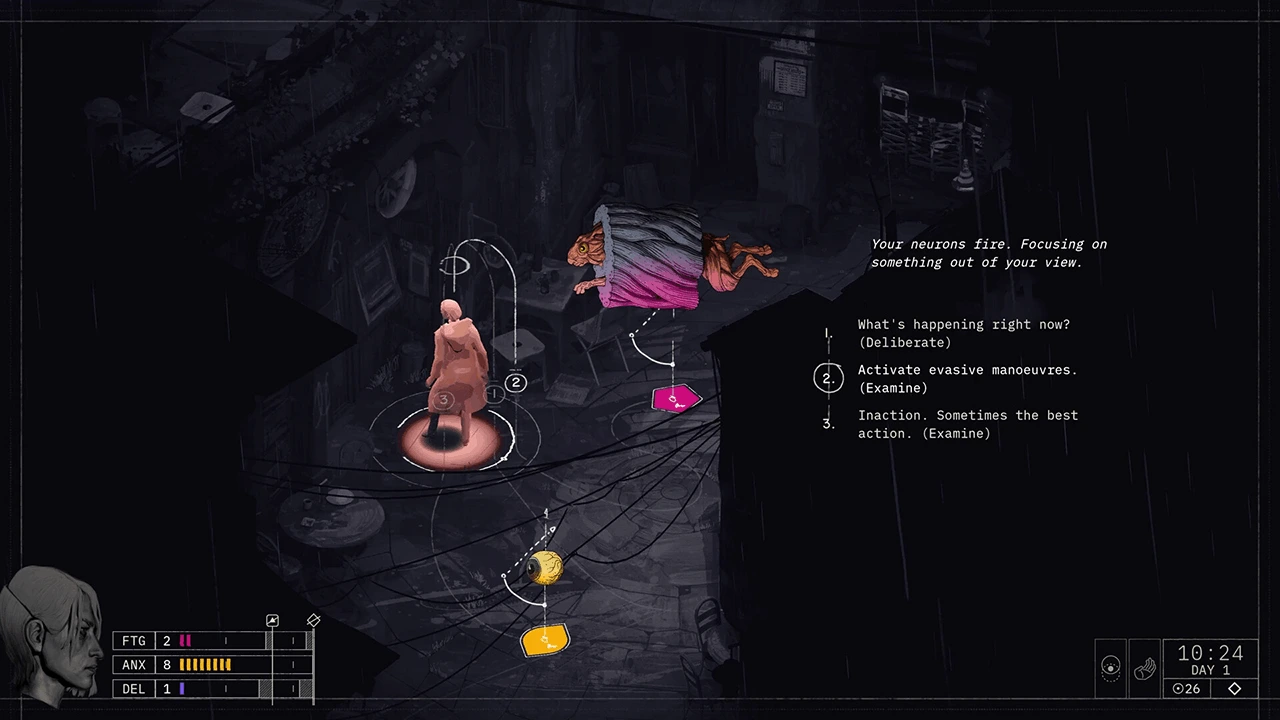
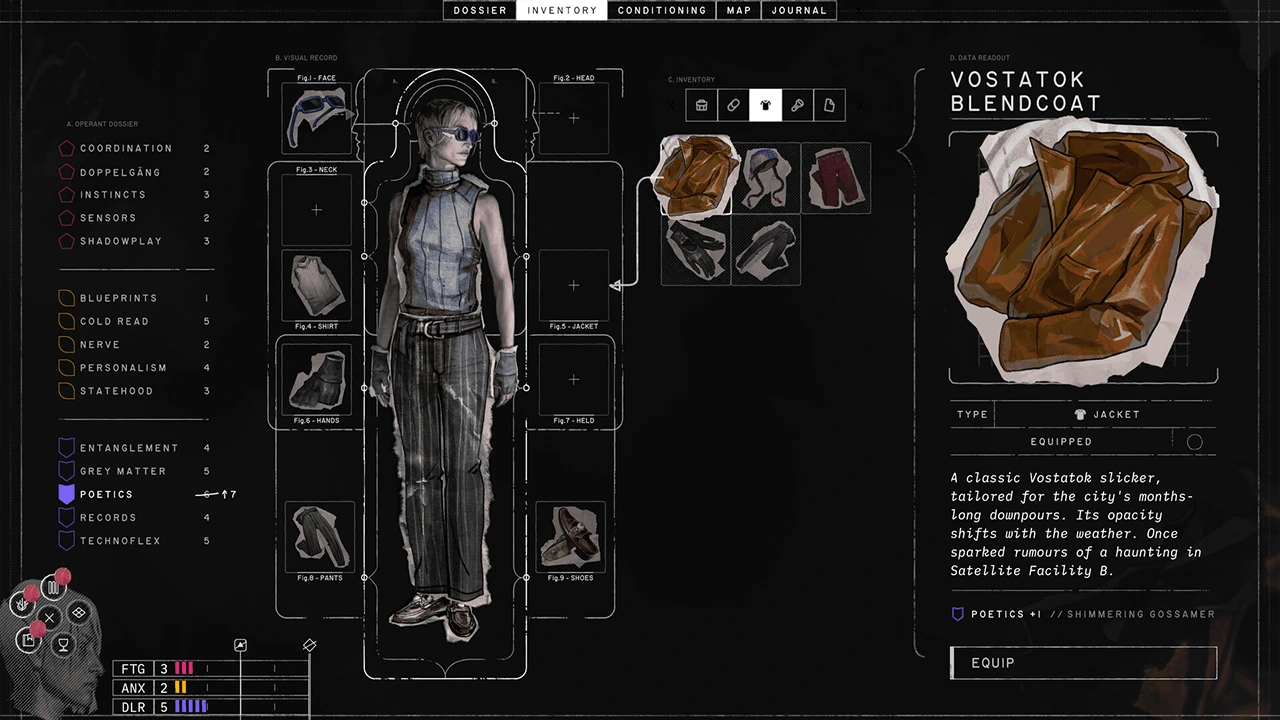
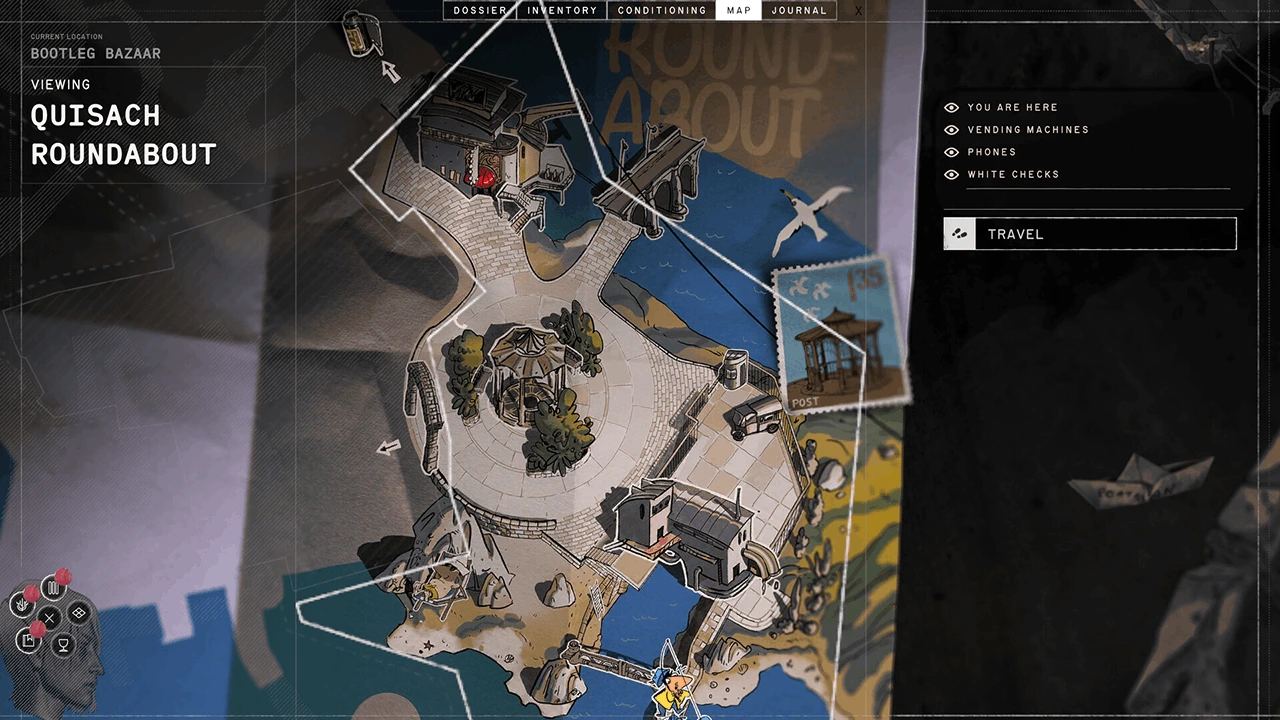
Unlike traditional espionage games that rely heavily on stealth action or gunfights, Zero Parades emphasizes conversation, deduction, and role-playing. Almost every encounter offers multiple solutions depending on the player’s chosen skills, personality traits, and previous decisions. Players investigate crime scenes, examine documents, recruit allies, negotiate with informants, interrogate suspects, and manipulate political factions while carefully managing Cascade’s deteriorating mental state.
One of the game’s defining mechanics is its Conditioning System, which replaces traditional RPG classes. Rather than assigning permanent roles, players develop Cascade through various forms of intelligence training and psychological conditioning. Skills influence dialogue choices, investigative capabilities, emotional resilience, and problem-solving approaches, allowing every player to build a unique version of the protagonist.
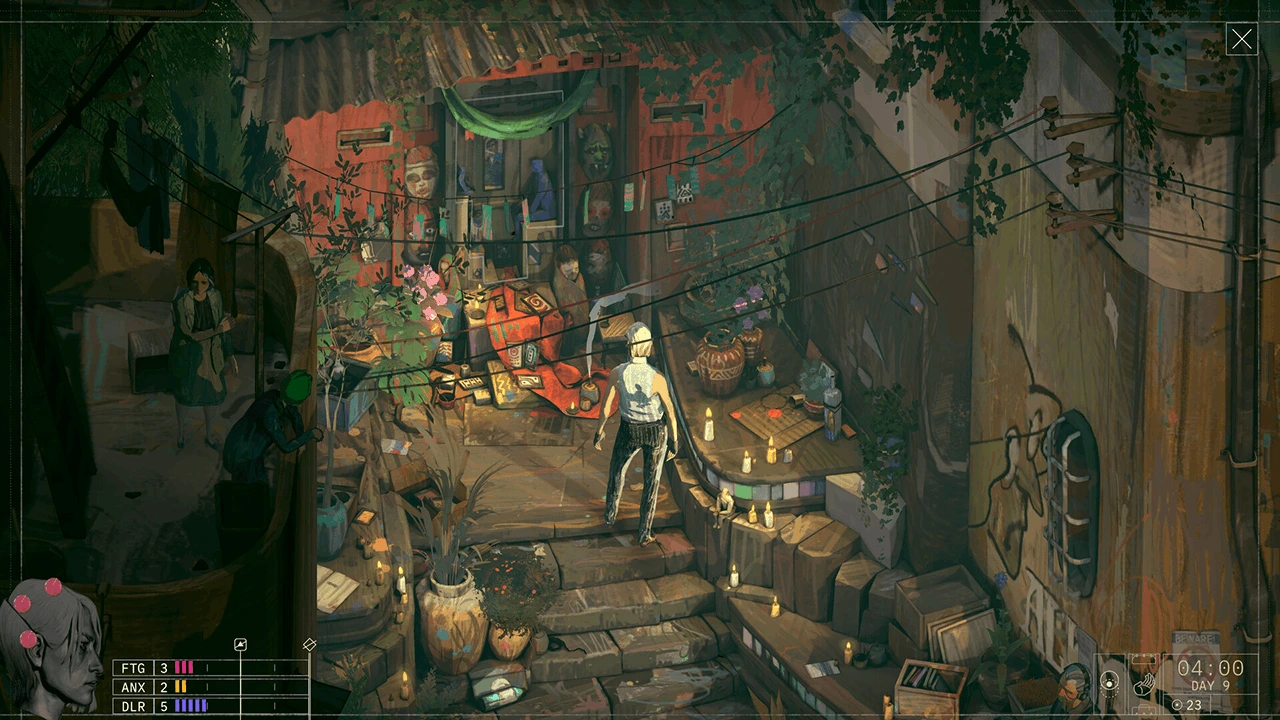
Another innovative feature is the trio of psychological meters: Fatigue, Anxiety, and Delirium. These systems constantly influence gameplay, affecting conversations, perception, and decision-making. Ignoring Cascade’s physical or emotional condition can dramatically alter the story, forcing players to balance mission objectives with their operative’s mental stability. Rather than functioning as simple health bars, these mechanics become active storytelling tools that reflect the enormous psychological burden carried by intelligence agents.
The game introduces Dramatic Encounters, cinematic sequences where time appears to slow while players evaluate possible actions through tactical decision-making and skill checks. Success depends less on statistics alone and more on the choices players have made throughout the investigation.
Cascade is supported by a diverse cast of memorable characters, including former intelligence colleagues, political revolutionaries, informants, diplomats, smugglers, journalists, government officials, and local citizens whose loyalties constantly shift. Every major character possesses believable motivations, hidden agendas, and personal histories that gradually unfold through dialogue. Rather than presenting simple heroes and villains, the narrative explores moral ambiguity, ensuring that alliances remain uncertain until the very end.
Mission design revolves around intelligence gathering rather than repetitive combat. Objectives include rebuilding lost networks, infiltrating political organizations, decoding encrypted communications, locating missing operatives, exposing double agents, negotiating with rival factions, preventing international crises, and making decisions that can dramatically reshape Portofiro’s future. Optional investigations and side stories expand the world considerably while rewarding curious players with additional lore and alternative outcomes.
Story Narrative
The story centers on Hershel Wilk, codenamed CASCADE, a once-celebrated intelligence operative whose career collapsed following a catastrophic mission that destroyed both her reputation and her network of trusted allies. Years later, she receives an unexpected opportunity for redemption when intelligence agencies summon her back into active service.
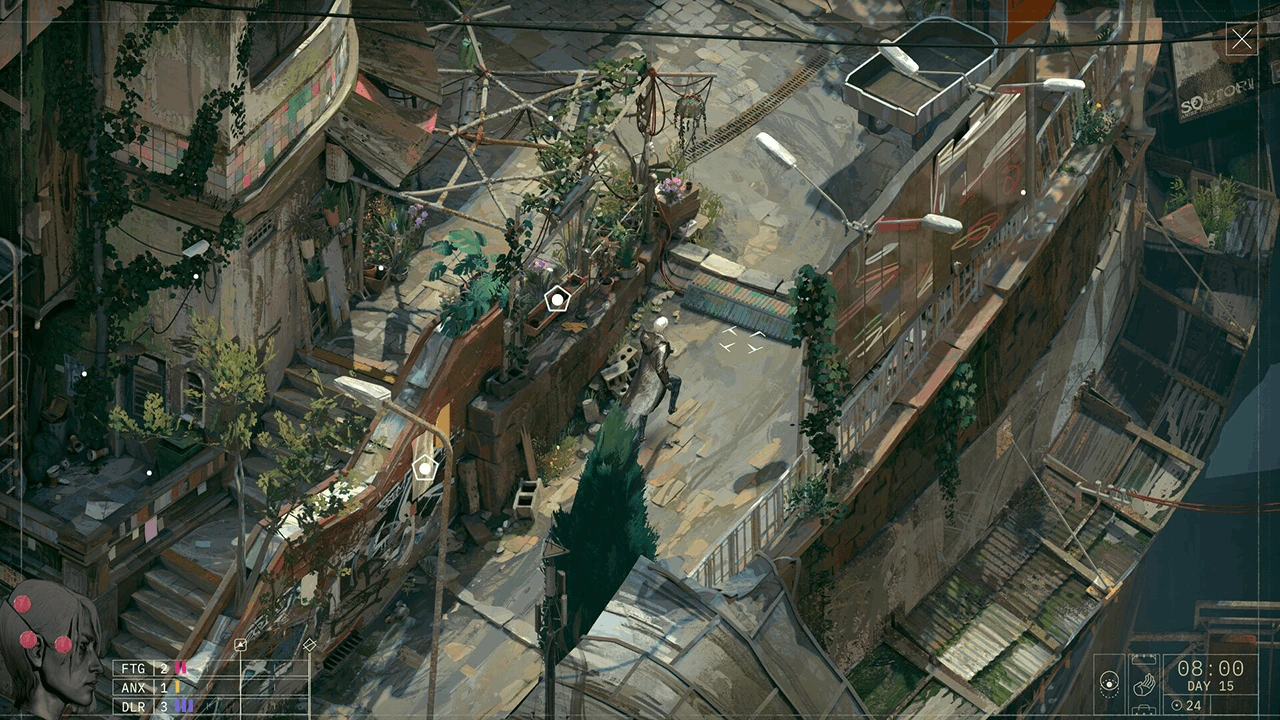
Her destination is Portofiro, a politically unstable coastal city where international powers compete through espionage, propaganda, and covert operations rather than open warfare. Beneath the city’s beautiful architecture lies a dangerous network of spies, revolutionaries, corrupt officials, smugglers, and intelligence agencies pursuing conflicting agendas.
As Cascade investigates a seemingly straightforward assignment, she discovers a conspiracy stretching far beyond national borders. Former allies become enemies, enemies occasionally become reluctant partners, and every decision forces her to question long-held beliefs about loyalty, patriotism, and justice.
Rather than presenting clear moral choices, the narrative constantly challenges players with impossible dilemmas. Saving one group may doom another, while uncovering uncomfortable truths can destabilize entire governments. The emotional weight of Cascade’s personal failures remains central throughout the campaign, giving the espionage story genuine psychological depth that extends well beyond traditional spy fiction. Critics widely praised the writing for its intelligence, philosophical themes, and emotionally layered characters, even though some felt the pacing occasionally slowed during lengthy conversations.
Graphics and Sound Effects
Visually, Zero Parades builds upon ZA/UM’s distinctive painterly art direction while introducing noticeably improved lighting, animation, environmental detail, and cinematic presentation. Every district of Portofiro possesses its own identity, from elegant government buildings and luxury hotels to rain-soaked alleyways, abandoned warehouses, and secret intelligence safe houses. Rich color palettes, dynamic weather, and atmospheric lighting reinforce the game’s tense Cold War-inspired mood.
Character portraits display exceptional artistic quality, while subtle facial animations and expressive body language help conversations feel more immersive. The user interface has also been refined, making investigations and inventory management more intuitive without sacrificing the game’s complex RPG systems.
Sound design contributes enormously to the atmosphere. Ambient city noises, distant conversations, rainfall, passing vehicles, and subtle environmental effects create an authentic sense of place. The orchestral soundtrack alternates between melancholy piano pieces, suspenseful electronic themes, and emotionally charged compositions that perfectly complement major story moments. High-quality voice performances further strengthen the game’s emotionally driven narrative, allowing characters to feel believable and memorable throughout the adventure.
Verdict
Zero Parades: For Dead Spies is an intelligent, emotionally complex RPG that successfully establishes its own identity while showcasing ZA/UM’s mastery of narrative-driven game design. Its emphasis on espionage, psychological storytelling, meaningful player choice, and philosophical writing creates one of the most distinctive role-playing experiences of 2026. While its deliberate pacing and dialogue-heavy structure may not appeal to players seeking constant action, those who appreciate mature storytelling and deep role-playing systems will find an unforgettable adventure.
The game demonstrates that espionage can be just as compelling through conversations, investigations, and emotional conflict as through explosions and shootouts. It is a thoughtful evolution of narrative RPG design that rewards patience, curiosity, and careful decision-making.
The Good
- Outstanding narrative with meaningful player choices.
- Deep psychological and role-playing systems.
- Exceptional world-building and memorable characters.
- Rich dialogue supported by excellent voice acting.
- Beautiful painterly visuals and atmospheric soundtrack.
- High replay value through branching storylines and multiple endings.
- Innovative Conditioning and psychological mechanics.
The Bad
- Slow pacing may not appeal to every player.
- Minimal traditional combat may disappoint action-focused audiences.
- Some investigative sequences can feel lengthy.
- Certain story threads leave questions intentionally unresolved.
Release Date and Platforms
Zero Parades: For Dead Spies launched for Windows PC on May 21, 2026, with a PlayStation 5 version arriving later in 2026. The PC edition is available through Steam, Epic Games Store, and GOG, offering multiple ways for players to experience ZA/UM’s latest narrative RPG.
Genre
Zero Parades belongs primarily to the Role-Playing Game (RPG) genre while incorporating elements of narrative adventure, investigative simulation, espionage thriller, and psychological drama. Rather than emphasizing combat, the game focuses on dialogue-driven storytelling, branching choices, character development, and exploration. Its systems encourage players to role-play an intelligence operative whose greatest weapons are perception, persuasion, and deduction rather than firearms.
Developer and Publisher
Zero Parades: For Dead Spies was both developed and published by ZA/UM, the acclaimed Estonian studio responsible for Disco Elysium. Building upon years of experience crafting narrative-heavy RPGs, the development team created an entirely original universe that explores espionage through philosophical writing, psychological mechanics, and politically charged storytelling. Despite its different setting, the game retains ZA/UM’s signature focus on complex dialogue, mature themes, and player-driven narratives.
Zero Parades: For Dead Spies System Requirements
Minimum
- Requires a 64-bit processor and operating system
- OS: Windows 10
- Processor: Intel Core i5 6500
- Memory: 16 GB RAM
- Graphics: Nvidia GTX 1060 6GB GDDR5
- DirectX: Version 11
Recommended
- Requires a 64-bit processor and operating system
- OS: Windows 11
- Processor: Intel Core i5-10400
- Memory: 16 GB RAM
- Graphics: Nvidia GTX 2070 8GB GDDR6
- DirectX: Version 11