
Capcom’s Next Survival Horror Masterpiece Looks More Terrifying Than Ever
Introduction
After successfully reinventing the franchise with Resident Evil 7: Biohazard, Resident Evil Village, and a series of critically acclaimed remakes, Capcom returns with Resident Evil Requiem, the ninth mainline entry in one of gaming’s most iconic survival horror series. Built on the latest version of the RE Engine, the game promises a darker atmosphere, more psychological horror, refined combat, and an emotionally driven story that revisits the aftermath of one of the franchise’s most significant tragedies.
Unlike previous entries that focused primarily on remote villages or isolated mansions, Resident Evil Requiem returns players to the ruins of Raccoon City while introducing entirely new locations and a fresh protagonist. Capcom has described the game as a blend of classic survival horror and modern cinematic storytelling, emphasizing exploration, limited resources, environmental puzzles, and relentless enemy encounters.
Everything shown so far suggests that Resident Evil Requiem aims to balance the tense atmosphere of the franchise’s earliest entries with the action-oriented mechanics introduced in more recent installments. The result appears to be an ambitious evolution that could become one of the defining survival horror experiences of the current console generation.
Resident Evil Requiem Gameplay
The gameplay of Resident Evil Requiem continues the series’ signature blend of exploration, survival, puzzle-solving, and intense combat while introducing several meaningful improvements. Players primarily control Grace Ashcroft, an FBI intelligence analyst investigating a series of mysterious deaths connected to the remnants of Umbrella’s biological research. Unlike heavily trained military protagonists, Grace approaches dangerous situations with limited combat experience, reinforcing the vulnerability that has always defined the franchise’s best survival horror moments.





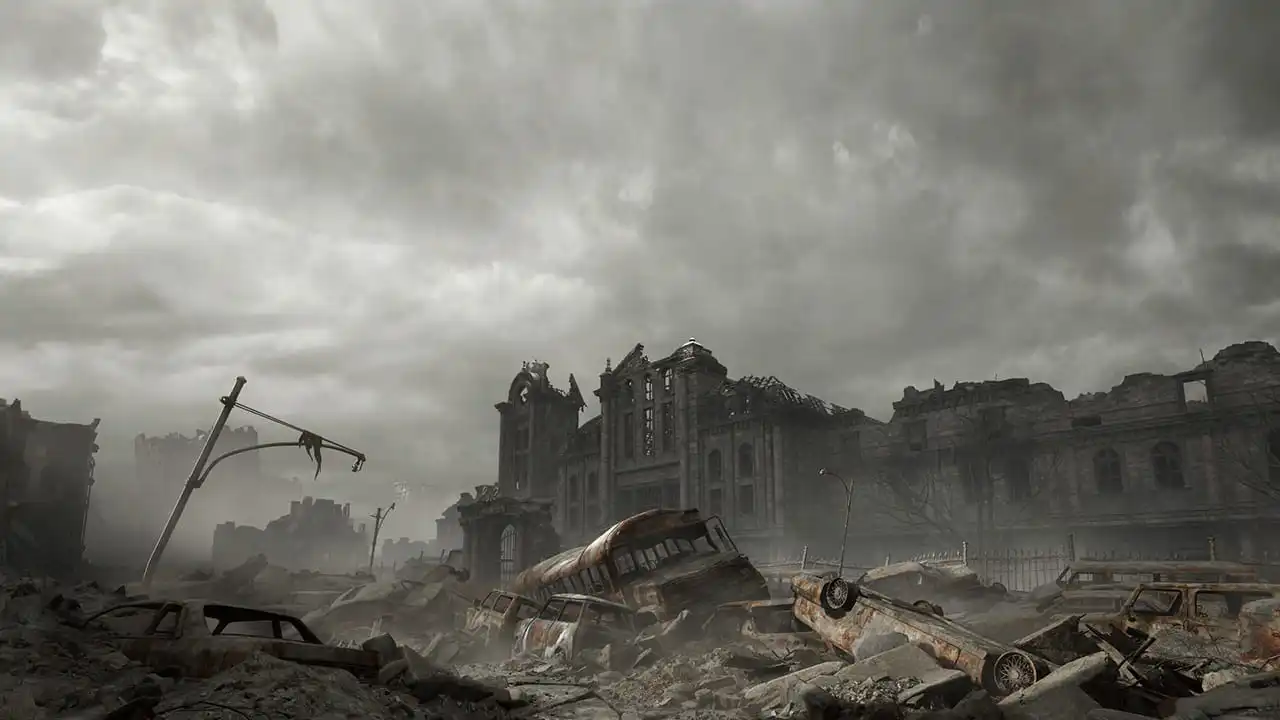
Exploration once again serves as the foundation of the gameplay experience. Players investigate abandoned laboratories, ruined hospitals, underground research facilities, devastated city districts, government installations, and forgotten Umbrella complexes while uncovering documents, solving environmental puzzles, and collecting valuable resources. Every location contains hidden secrets, optional rooms, weapon upgrades, and narrative details that reward careful observation.
Resource management remains central to survival. Ammunition, healing items, crafting materials, and inventory space are intentionally limited, forcing players to make difficult decisions about which weapons to carry and when to engage enemies. The familiar item storage system returns, encouraging strategic planning before entering dangerous areas.
Combat has been refined without sacrificing the tension that defines the series. Firearms feel heavier and more realistic, while melee attacks remain limited to emergency situations. Players can utilize pistols, shotguns, assault rifles, sniper rifles, grenades, and specialized experimental weapons discovered throughout the campaign. Enemy encounters require careful positioning, accurate shooting, and efficient resource management rather than overwhelming firepower.
One of the most notable additions is the enhanced enemy AI. Infected creatures actively coordinate attacks, investigate sounds, react to environmental changes, and pursue players across interconnected locations. Some enemies adapt to player tactics, making repeated encounters increasingly unpredictable.
Boss battles appear considerably more dynamic than previous entries. Massive bio-organic weapons evolve throughout encounters, altering attack patterns and requiring players to exploit environmental hazards or weak points instead of relying solely on weapon damage.
The game’s supporting cast includes Grace Ashcroft alongside several FBI agents, government officials, surviving researchers, mysterious civilians, and familiar faces from the wider Resident Evil universe. While Capcom has intentionally kept much of the roster secret, trailers strongly suggest connections to previous characters and organizations that longtime fans will recognize.
Mission progression follows a semi-open structure, allowing players to revisit certain locations after acquiring new equipment or solving key puzzles. Main objectives focus on investigating outbreaks, uncovering hidden experiments, rescuing survivors, escaping infected facilities, and confronting the masterminds behind the latest biological catastrophe. Optional objectives reward exploration with additional lore, weapon attachments, crafting recipes, and valuable resources.
Story Narrative
The story follows Grace Ashcroft, an FBI analyst assigned to investigate a string of mysterious deaths linked to the abandoned remains of Raccoon City. What initially appears to be a routine investigation quickly evolves into a terrifying conspiracy involving secret biological research, forgotten Umbrella experiments, and a new generation of bio-organic weapons.
As Grace ventures deeper into abandoned facilities and devastated urban environments, she uncovers evidence suggesting that remnants of Umbrella’s research have survived long after the company’s apparent downfall. The investigation reveals hidden laboratories, classified government operations, and disturbing experiments that threaten to unleash another global catastrophe.
Throughout the journey, Grace encounters survivors struggling to escape the outbreak, government agents pursuing conflicting objectives, and horrifying creatures created through advanced viral experimentation. Psychological horror plays a larger role than in recent entries, with hallucinations, distorted memories, and emotionally charged encounters blurring the line between reality and nightmare.
The narrative explores themes of guilt, trauma, corporate greed, scientific ethics, and the lasting consequences of the Raccoon City incident. By revisiting the series’ most iconic location while introducing a new protagonist, Resident Evil Requiem seeks to bridge the franchise’s past and future in a compelling and emotionally engaging way.
Graphics and Sound Effects
Powered by the latest version of the RE Engine, Resident Evil Requiem showcases some of the most realistic visuals ever seen in the franchise. Environmental detail has been significantly improved, with decaying buildings, abandoned laboratories, ruined city streets, and underground facilities rendered with exceptional realism. Dynamic lighting, volumetric fog, advanced reflections, and highly detailed textures create an oppressive atmosphere that constantly keeps players on edge.
Character models feature lifelike facial animations and realistic motion capture performances, allowing subtle expressions to enhance emotional storytelling. Enemy designs are particularly impressive, combining grotesque biological mutations with highly detailed animation systems that make every encounter feel unsettling.
Audio design remains one of the game’s greatest strengths. Environmental sounds such as distant footsteps, dripping water, creaking structures, and unsettling ambient noises create constant tension, even when no enemies are present. The soundtrack uses restrained orchestral compositions and haunting atmospheric music to amplify suspense rather than overwhelm it. Voice acting delivers convincing performances that support the game’s cinematic presentation, while advanced 3D audio technology allows players to accurately identify nearby threats through sound alone.
Verdict
Based on everything Capcom has officially revealed, Resident Evil Requiem has all the ingredients necessary to become another landmark entry in the legendary survival horror franchise. Its return to psychological horror, atmospheric exploration, refined combat mechanics, and compelling new protagonist suggest a carefully crafted evolution rather than a radical departure from the series’ successful formula.
While the final product cannot be fully evaluated until release, the impressive gameplay demonstrations and Capcom’s recent track record inspire considerable confidence. If the finished game delivers on its current promises, Resident Evil Requiem could stand alongside the franchise’s greatest installments and further cement Capcom’s position as the industry leader in survival horror.
The Good
- Outstanding visual presentation powered by the latest RE Engine
- Strong return to classic survival horror atmosphere
- Improved enemy AI and more dynamic combat encounters
- Intriguing new protagonist with a compelling mystery
- Rich environmental storytelling and exploration
- Exceptional sound design and immersive 3D audio
- Promising blend of psychological horror and cinematic narrative
The Bad
- Final gameplay balance cannot be assessed before release
- Several major characters and story elements remain undisclosed
- Long-term replay features have not been fully detailed
- Technical performance on all platforms remains unverified until launch
Release Date and Platforms
Resident Evil Requiem is scheduled to launch on February 27, 2026, for PlayStation 5, Xbox Series X|S, and Windows PC via Steam. Capcom has confirmed that the game is being developed exclusively for current-generation hardware, allowing the development team to fully utilize advanced lighting technology, faster SSD loading, improved physics, and higher-quality environmental detail.
Genre
Resident Evil Requiem belongs primarily to the survival horror genre while incorporating elements of action-adventure, psychological horror, exploration, puzzle-solving, and third-person shooting. Like the franchise’s most celebrated entries, the game emphasizes atmosphere, limited resources, environmental storytelling, and constant tension rather than uninterrupted action. This careful balance between horror and combat continues to distinguish the series from other modern action games.
Developer and Publisher
The game is developed and published by Capcom, one of the industry’s most respected studios in the survival horror genre. Following the critical success of Resident Evil Village and the remakes of Resident Evil 2, Resident Evil 3, and Resident Evil 4, Capcom has once again utilized its proprietary RE Engine to deliver cutting-edge visuals, realistic character animations, advanced environmental effects, and cinematic storytelling. The studio’s experience with the franchise is evident in every aspect of the game’s design.
Resident Evil Requiem System Requirements
Minimum
- Requires a 64-bit processor and operating system
- OS: Windows 11 (64bit required)
- Processor: Intel corei5-8500 / AMD Ryzen 5 3500
- Memory: 16 GB RAM
- Graphics: GeForce GTX 1660 6GB / Radeon RX 5500 XT 8GB
- DirectX: Version 12
- Additional Notes: Supports 1080p gameplay (using upscaling, native resolution of 640p)/30fps. Note: Frame rate may drop when the processing load is high. An SSD is required.
Recommended
- Requires a 64-bit processor and operating system
- OS: Windows 11 (64bit required)
- Processor: Intel Core i7-8700 / AMD Ryzen 5 5500
- Memory: 16 GB RAM
- Graphics: GeForce RTX 2060 Super 8GB / Radeon RX 6600 8GB
- DirectX: Version 12
- Additional Notes: Supports 1080p gameplay (using upscaling, native resolution of 720p)/60fps. Note: Frame rate may drop when the processing load is high. An SSD is required.