A Bloody, Chaotic and Surprisingly Fun Co-op Zombie Shooter
Game Introduction
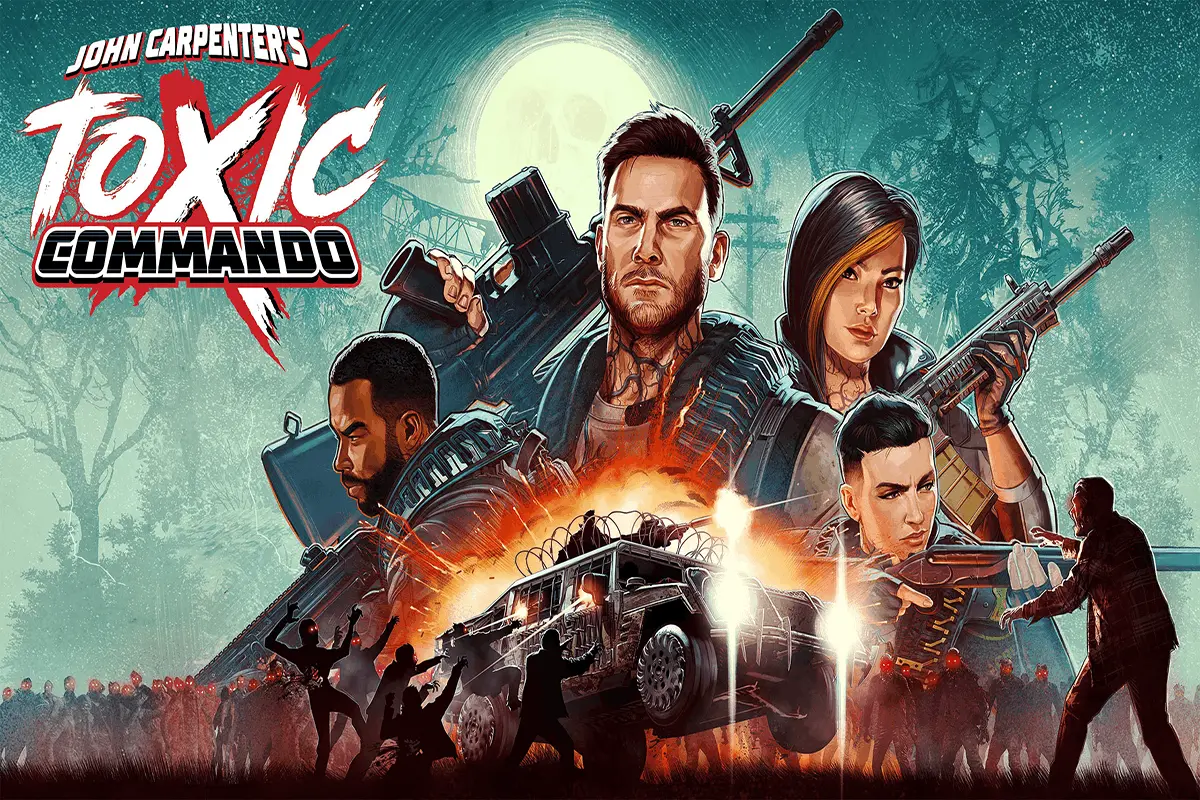
John Carpenter’s Toxic Commando is a fast-paced cooperative first-person shooter that combines massive zombie hordes, off-road driving, class-based progression and the exaggerated attitude of 1980s action-horror cinema. Developed by Saber Interactive and published by Focus Entertainment, the game takes inspiration from the filmmaker’s distinctive style while also drawing on Saber’s experience with large-scale enemy encounters in World War Z and Warhammer 40,000: Space Marine 2. The result is a deliberately excessive zombie shooter in which four mercenaries fight through a landscape contaminated by an otherworldly substance and attempt to stop the entity responsible for the apocalypse.
The game is not trying to be a slow, atmospheric survival-horror experience. Instead, its personality comes from enormous enemy swarms, loud weapons, ridiculous vehicles, sarcastic characters and a story that embraces the spirit of a cheesy action movie. Reviews from GamesRadar, GameSpot, TechRadar and other outlets consistently identify the same basic strength: Toxic Commando is at its best when played with friends, where the combination of teamwork, exploration and overwhelming zombie attacks produces memorable moments. At the same time, critics have pointed toward its relatively short campaign and repetitive progression as limitations that prevent the game from reaching the genre-defining heights of its inspirations.
John Carpenter’s Toxic Commando Gameplay
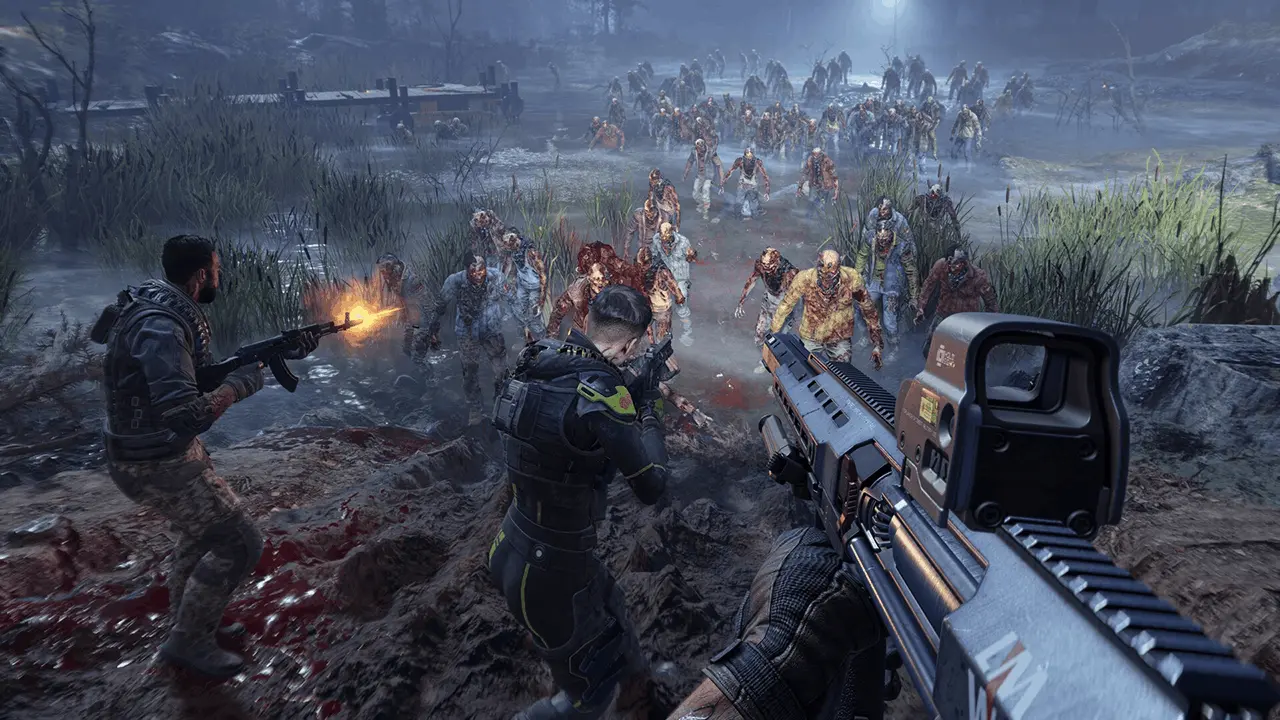
The basic gameplay loop is straightforward but highly effective. A squad of up to four players enters a semi-open map, completes objectives, searches the environment for resources and weapons, fights enormous groups of undead and eventually survives a major defensive encounter or other large-scale set piece. Unlike many co-op shooters that push players through narrow corridors, Toxic Commando gives squads considerably more room to explore. Players can follow the fastest route toward an objective or investigate side locations for useful supplies, weapons, ammunition, spare parts and other resources.
The four playable characters are Walter Irons, Ruby Pelicano, Cato Arman and Astrid Xu. They are intentionally designed as recognizable 1980s action-movie archetypes rather than deeply complex RPG characters. Walter is the laid-back and sometimes foolish apparent leader, Ruby is the rebellious and nihilistic member of the group, Cato provides a calmer and more empathetic presence, while Astrid is the professional and natural problem-solver. Their constant banter reinforces the game’s deliberately campy personality. The characters are also voiced and visually represented by actors including Clive Standen as Walter, Lucy Martin as Ruby, Omari Hardwick as Cato and Charlet Chung as Astrid.
An important design decision is that characters and classes are separate. Choosing Walter does not force the player to use a particular combat role. Instead, any of the four characters can be assigned to any of the four available classes, allowing players to select their preferred personality or appearance while independently building their preferred gameplay style. This gives the customization system more flexibility than a conventional hero shooter.
The four classes are Strike, Medic, Operator and Defender. Strike focuses on offensive power and uses explosive abilities to clear large groups of enemies. Medic is designed around keeping the squad alive through healing abilities and support equipment. Operator provides utility through a combat drone and additional vehicle-oriented benefits, while Defender specializes in protection and crowd control, including defensive barriers that help squads survive overwhelming attacks. Each class has its own skill tree, and classes can be leveled independently up to Level 40.
The progression system encourages players to experiment rather than permanently commit to one role. Class experience is earned by completing missions, with harder difficulties providing greater rewards. Skill points unlock upgrades through class-specific trees, and special variations of class abilities become available as the class reaches important progression levels. Sludge Seeds discovered while exploring missions can also contribute to skill progression, giving players another reason to investigate areas away from the primary objective.
Weapons are another major part of the experience. The game offers a broad collection of firearms, melee weapons, grenades and special equipment, allowing players to switch between conventional shooting and more unusual methods of destroying the undead. Shotguns provide powerful close-range attacks, assault rifles offer reliable sustained fire, while heavier weapons are useful when particularly dangerous enemies or enormous hordes appear. Melee weapons, including katanas and other blades, add another layer of visceral combat, although some reviews have noted that melee stamina and responsiveness can be less consistent than the game’s excellent firearms.
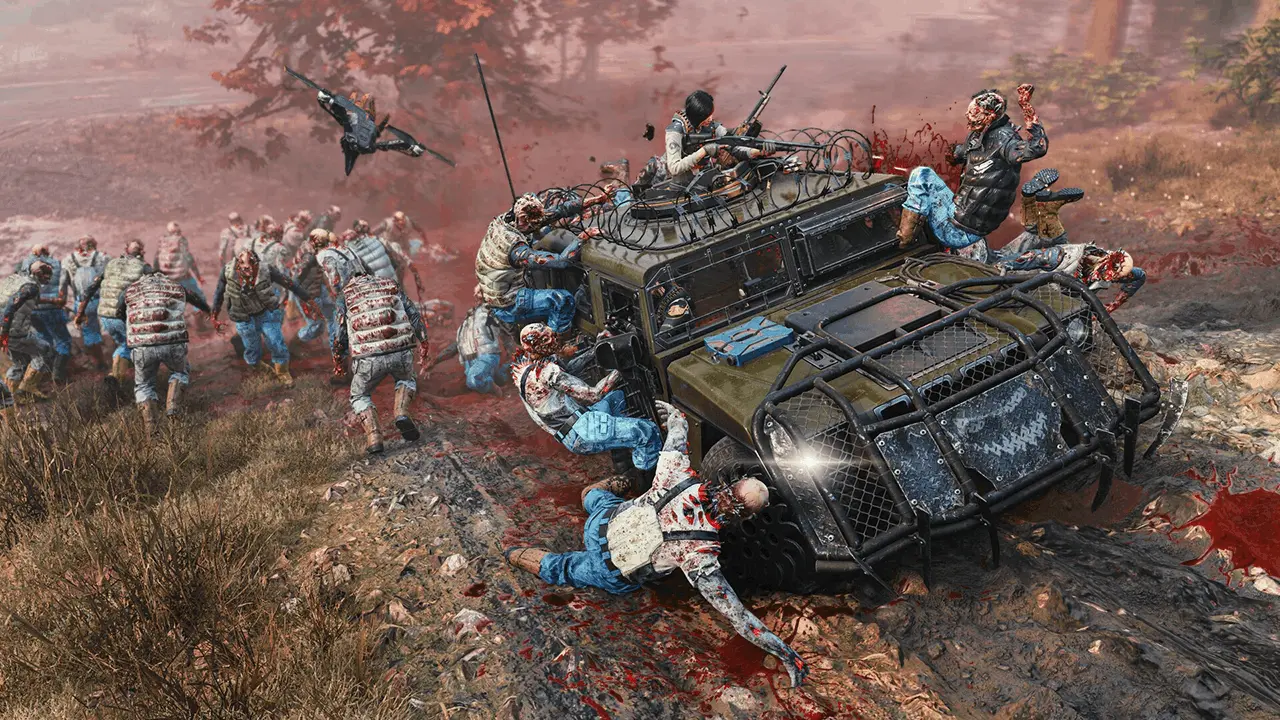
Vehicles are perhaps the feature that gives Toxic Commando its clearest identity. The large maps contain different vehicles that can transport the entire squad and provide specialized tactical advantages. Military trucks can mount weapons such as machine guns or flamethrowers, ambulances can provide support, and police vehicles can be used as explosive bait. The vehicle system also borrows ideas from Saber’s SnowRunner heritage, with mud, sludge, terrain and winches occasionally turning a simple escape into a desperate struggle to get the vehicle moving again.
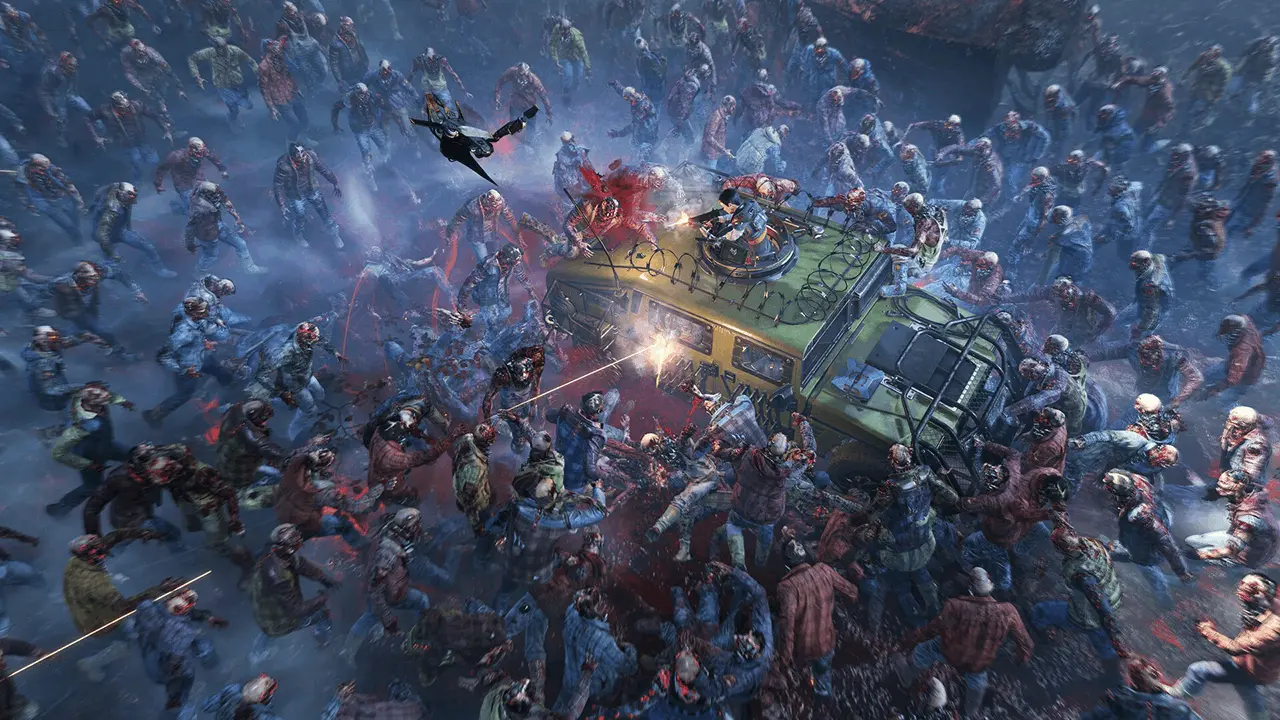
Vehicle combat becomes particularly entertaining when the entire squad participates. The driver controls the vehicle, passengers can fire through windows and additional players can occupy mounted weapons. This means everyone has something useful to do during driving sections rather than simply sitting in the back. When zombies climb onto a vehicle or the wheels become trapped in sludge, teamwork becomes essential.
The campaign contains nine missions in total when the tutorial is included. The opening mission, The Drop, introduces the controls, combat, exploration, vehicles, resources and defensive mechanics. The remaining eight missions take place across larger semi-open environments, where objectives can involve travelling between locations, collecting items, destroying infected structures, activating equipment, defending positions and surviving enormous waves of undead.
The semi-open structure makes exploration meaningful. Players can discover spare parts used to repair defensive equipment such as turrets and barbed wire, while other areas contain weapons, ammunition and resources. The game frequently creates a choice between moving quickly toward the next objective and spending additional time preparing for the major fight that is coming. Reviews have praised this system because exploration can directly affect how manageable later defense sequences become.
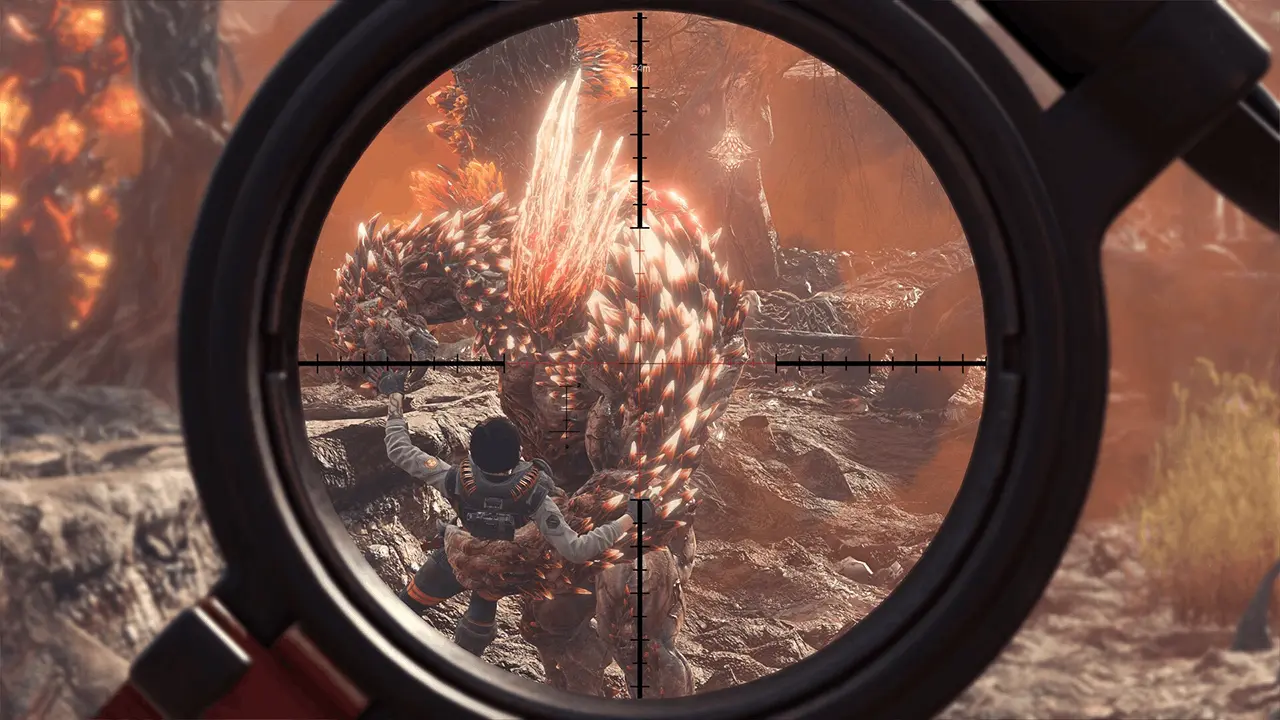
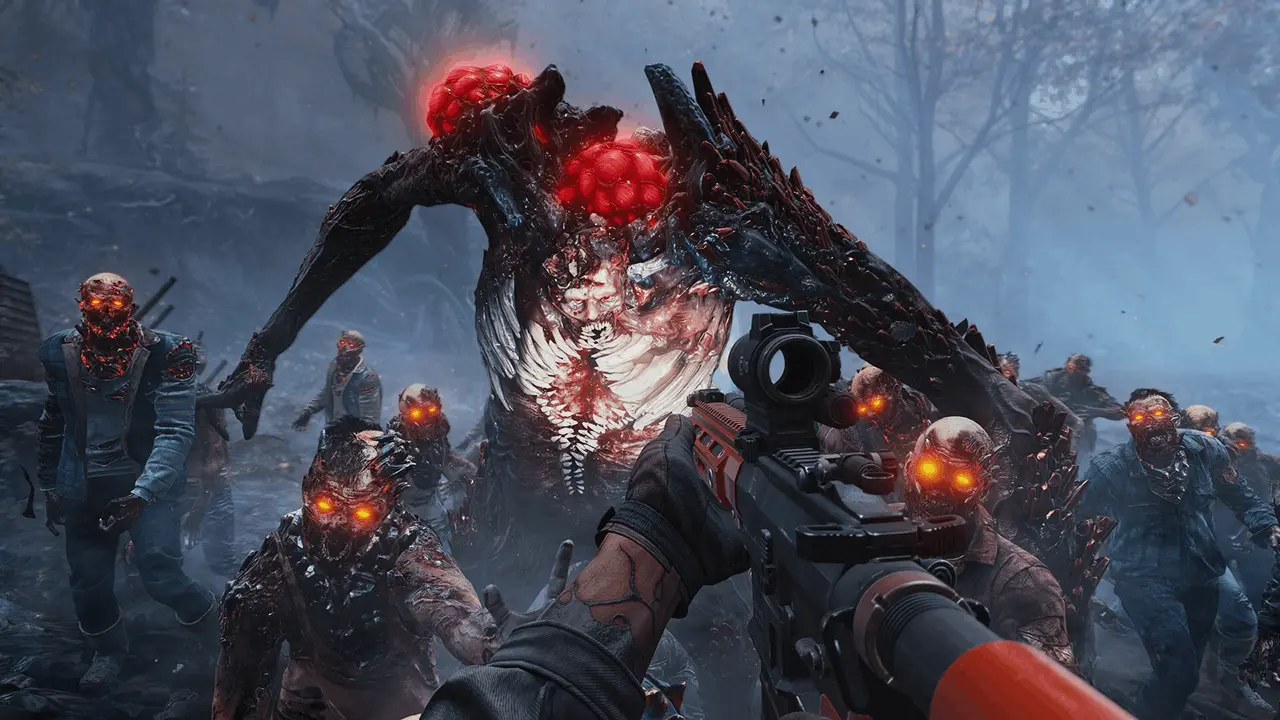
Enemy encounters are powered by Saber’s Swarm Engine, technology previously used to impressive effect in World War Z and Space Marine 2. Hundreds of undead can appear simultaneously, turning defensive encounters into spectacular battles where the screen becomes overwhelmed by enemies. Alongside ordinary zombies are specialized creatures with different attack behaviors, including enemies capable of grabbing, charging or exploding near the player. While reviewers have found some enemy archetypes familiar, the sheer scale of the hordes remains one of the game’s most impressive features.
Story Narrative
The story begins in the near future when Leon Dorsey, the head of the Obsidian Group, attempts to harness the energy of Earth’s core. Instead of delivering a limitless source of clean power, the experiment awakens an ancient supernatural entity known as the Sludge God. Its influence transforms the surrounding land into toxic sludge and turns infected people into monstrous undead creatures. The disaster spreads rapidly enough that a massive quarantine barrier is constructed to contain the infected territory.
Leon remains behind and develops a desperate plan to stop his own creation. Unfortunately, professional mercenaries are too expensive, so he recruits Walter, Ruby, Cato and Astrid. The four commandos are sent to retrieve and deliver an important package that could help Leon combat the Sludge God. Predictably, the operation goes wrong. The package is destroyed and the four mercenaries become infected themselves. Leon saves them from immediate transformation by giving them devices capable of slowing the infection, effectively turning their condition into a temporary source of supernatural power.
From there, the Commandos travel through the infected region searching for the resources, equipment and components necessary to develop a new solution. Leon acts as their handler and frequently communicates with the squad, providing exposition and instructions while the characters respond with sarcasm and 1980s-style one-liners. The story is intentionally uncomplicated: the Commandos need to survive long enough to assemble a way of stopping the Sludge God and sending its undead army back to the underworld.
The narrative is less interested in deep character development than in establishing a cinematic tone. Walter, Ruby, Cato and Astrid function as a dysfunctional action-movie team whose personalities create humor between firefights. This works well for the game’s overall mood, although several reviewers have argued that the characters and story are not particularly memorable once the campaign ends.
Graphics and Sound Effects
Visually, Toxic Commando delivers impressive large-scale spectacle. The combination of ruined environments, toxic sludge, grotesque undead creatures, explosions and enormous enemy crowds creates a cinematic presentation that fits the game’s grindhouse aesthetic. Game8 praised the game as one of the prettier horde shooters available, particularly because its battles can become almost overwhelming visual displays of light, destruction and movement.
The Swarm Engine is particularly important to the presentation. Instead of fighting a handful of enemies at a time, players can watch enormous groups pour through streets, around buildings and toward defensive positions. Individual enemies react to weapons through staggering, dismemberment, explosions and other visual effects, making every shot feel impactful even when hundreds of enemies are present.
Sound design is equally strong. Weapons have considerable impact, vehicles produce appropriately heavy mechanical sounds and the undead provide a constant layer of environmental noise. Special enemies are also accompanied by distinct audio cues, helping players recognize incoming threats even when the screen is crowded. The soundtrack is one of the game’s strongest stylistic elements, with John Carpenter, Cody Carpenter and Daniel Davies contributing to a synth-heavy score that reinforces the retro action-horror atmosphere.
The voice performances also contribute substantially to the game’s personality. Clive Standen, Lucy Martin, Omari Hardwick and Charlet Chung give the four Commandos distinct personalities, while the frequent banter helps prevent long stretches of shooting from feeling completely anonymous. The result is an audio presentation that feels much closer to a deliberately exaggerated 1980s action movie than a traditional modern zombie drama.
Verdict
John Carpenter’s Toxic Commando is an entertaining co-op shooter that understands exactly what it wants to be: loud, bloody, funny and unapologetically ridiculous. Its strongest qualities are the enormous zombie hordes, satisfying gunplay, enjoyable vehicles, flexible class system, excellent cooperative design, striking presentation and outstanding retro-inspired soundtrack. Its biggest problems are the short campaign, familiar enemy archetypes, limited long-term mission variety and progression that may lose its appeal once the initial excitement disappears. Critics have consequently arrived at a generally favorable but qualified view, with many praising the moment-to-moment action while warning that the game lacks enough content to fully capitalize on its excellent foundation.
The Good
- Huge zombie hordes powered by Saber’s impressive Swarm Engine.
- Strong and satisfying first-person gunplay.
- Four flexible classes with individual skill trees.
- Characters can be freely combined with any class.
- Excellent four-player cooperative design and full crossplay.
- Vehicles add a genuinely enjoyable new dimension to zombie combat.
- Semi-open maps reward exploration and resource gathering.
- Excellent retro action-horror atmosphere.
- Strong voice performances and an outstanding synth-driven soundtrack.
- Higher difficulties provide additional reasons to replay missions.
The Bad
- Only nine missions at launch, including the tutorial.
- Mission objectives can become repetitive over repeated runs.
- Some enemy types feel familiar to the genre.
- Class abilities can have long cooldowns and limited active durations.
- Solo AI teammates struggle with certain objectives and interactions.
- Long-term progression may not be compelling enough for every player.
- Melee combat and stamina can feel inconsistent.
Release Date and Platforms
John Carpenter’s Toxic Commando was released on March 12, 2026 for PlayStation 5, Xbox Series X|S and PC. On PC, the game is available through both Steam and the Epic Games Store. It supports four-player cooperative play and full crossplay between PC and consoles, allowing friends on different platforms to form a single squad. The game also includes a solo option with AI-controlled teammates, although it remains an always-online experience.
Genre
Toxic Commando belongs primarily to the first-person shooter and cooperative action genres, with strong elements of horde survival, arcade shooting and vehicular combat. Its structure places it somewhere between a traditional co-op zombie shooter and a more open exploration-focused action game. The combination of huge enemy waves, class abilities, weapon progression and semi-open environments makes it particularly comparable to games such as World War Z and Left 4 Dead, while its vehicles and off-road mechanics provide an additional layer that those comparisons do not completely capture.
Developer and Publisher
John Carpenter’s Toxic Commando was developed by Saber Interactive and published by Focus Entertainment. Saber is responsible for games including World War Z, SnowRunner and Warhammer 40,000: Space Marine 2, and that history is clearly reflected in Toxic Commando. The enormous zombie swarms come from the studio’s experience with large-scale enemy simulation, while the vehicle handling and difficult terrain recall the company’s work on off-road driving games. John Carpenter’s contribution is primarily associated with the game’s creative influence, music and overall 1980s action-horror identity rather than conventional full-scale game development.
John Carpenter’s Toxic Commando System Requirements
Minimum
- Requires a 64-bit processor and operating system
- OS: Windows 10/11 64-bit
- Processor: AMD Ryzen 5 1500X / Intel Core i5-8400
- Memory: 16 GB RAM
- Graphics: AMD Radeon RX 580 / Nvidia GeForce GTX 1070
- Network: Broadband Internet connection
- Storage: 58 GB available space
- Additional Notes: SSD required.
Recommended
- Requires a 64-bit processor and operating system
- OS: Windows 10/11 64-bit
- Processor: AMD Ryzen 5 5600X / Intel Core i5-11600K
- Memory: 16 GB RAM
- Graphics: AMD Radeon RX 6800 XT / Nvidia GeForce RTX 3060 Ti
- Network: Broadband Internet connection
- Storage: 58 GB available space
- Additional Notes: SSD required.